Corporations bought 1 in 4 homes sold in Philly from 2017 to 2022, new report says
Researchers have seen an increase in larger corporate landlords coming to Philadelphia. Investors who buy lower-priced single-family homes to rent out compete with low-income homebuyers.
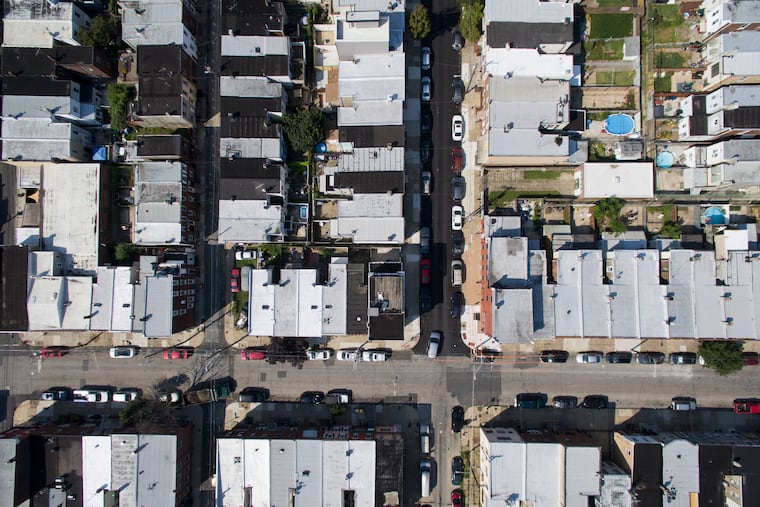
Roughly one in four small residential buildings bought in Philadelphia from 2017 and 2022 were purchased by corporations, according to a new report about investor activity in the city.
Most of these corporate buyers are renting out the properties, which have one to four housing units, according to a report about corporate investors that was released Monday by researchers at Reinvestment Fund, a Philadelphia-based community investment nonprofit, and the Center for Law, Inequality, and Metropolitan Equity at Rutgers Law School in Newark.
Investors compete with low-income homebuyers. They are more likely to pay with cash and less likely to be denied mortgages. They sometimes pursue properties before they hit the market.
“There are a lot of neighborhoods that are seeing investor activity, that are raising concerns,” said Emily Dowdall, president of policy solutions at Reinvestment Fund. “Our hope is that this report, that other reports, are going to help inform a strategy going forward.”

Corporate investors: Buyers who acted through a limited liability company; can be as small as one person, or made up of many people.
Smaller investors: Buyers who purchased fewer than 100 properties
Smaller operators are buying most Philadelphia homes purchased by investors. But researchers have seen an increase in larger corporate landlords.
Researchers looked at sales of residential buildings with one to four housing units. Most were single-unit homes, but the city records that researchers used classified properties with one to four units as single-family housing.
Researchers found that 13 investors bought 100 or more properties and eight bought more than 200 from 2017 through 2022.
Here are some other takeaways from the new study.
No sign of big national players
From 2020 through 2022, 91% of homes purchased by corporations were bought by smaller investors.
Researchers said they found no evidence that the biggest national investors in single-family homes — such as the private equity firm Blackstone and Invitation Homes, one of the country’s largest landlords of single-family homes — are active in Philadelphia.
Private equity-backed national investment organizations have bought single-family homes in bulk in places such as the southeastern United States, which has been targeted because it has newer housing stock and fewer tenant protections, Dowdall said.
These types of investors have been tied to rent increases and fewer opportunities for first-time homebuyers and buyers with low and moderate incomes.
Philadelphia is less likely to see these organizations operating here because of the city’s many renter protections and an older housing stock that needs a lot of investment, Dowdall said. The city’s foreclosure prevention program and the relatively long foreclosure process in Pennsylvania also deter these organizations, which like to quickly buy and lease homes on a large scale.
“It’s still possible that we could see more national players, as they have already saturated the easier markets to get into,” she said.
During the pandemic, some larger regional and national companies started to come to Philadelphia, researchers found.
Investor activity is concentrated in certain areas
Corporate investors mostly buy single-family homes in areas of the city where prices are lowest. Those neighborhoods also are predominately Black and Hispanic, including Brewerytown, Germantown, Juniata Park, and Kingsessing.
From 2020 to 2022, the median purchase price for an investor was $129,000, compared to the citywide median purchase price of $225,000 and individual buyers’ median purchase price of $247,000.
During this time, investors were most active in North, West, and Southwest Philadelphia and sections of Lower Northeast and Northwest Philadelphia. Investors bought more than half of all homes sold in these areas.
Before sheriff sales paused because of the pandemic, investors often bought a chunk of their properties that way.
The share of foreclosed homes purchased by investors grew from 31% of properties sold in sheriff sales in 2012 to 60% in 2019.
From 2017 to 2019, high-volume investors got about a third of their single-family properties through sheriff sales.
From 2020 through 2022, fewer than 40 properties were auctioned off each year. So investors relied more on other ways of acquiring properties, including buying directly from homeowners, “potentially creating more direct competition with individual homebuyers,” the report said.
More eviction filings and code violations
Large corporate landlords were more likely to file in court to evict tenants than smaller investors.
About one in seven homes bought by high-volume investors were associated with eviction filings within five years, compared to less than one in 20 homes bought by smaller investors.
Investors of all sizes were more likely than individual homebuyers to have code violations. About 20% of properties bought by investors had violations within five years of the purchase. The share of violations in owner-occupied properties was 9%.
Researchers plan to learn more about the types of code violations these properties generate, since violations can range from trash issues to unsafe conditions.
More work on properties
Researchers also uncovered “potentially positive findings” about large investors, Dowdall said.
Philadelphia’s aging housing stock needs investment for renovations and maintenance, and the report found that larger investors were more likely to get permits to alter their properties than smaller investors. “Bringing much needed dollars in to refurbish our housing stock,” she said.
Large corporate investors received alteration permits for 42% of the properties they bought, compared to 29% for smaller investors and 13% for individual homebuyers.
Like code violations, projects that need permits can range from the minor to the major, from adding electrical outlets to total renovation.
In future analyses, researchers plan to drill down on the specific work being done on investors’ properties.
Researchers’ recommendations
Many investors purchase properties using a variety of corporate names, so identifying who is in control of corporations can be challenging, researchers said. That makes it difficult to hold operators accountable for problems at their properties.
Researchers recommend state lawmakers require limited liability companies to disclose who is in control.
They also recommended that the city:
Enforce rental license requirements to create a more complete inventory of rental properties
Use public data to understand how investors operate and their effects on the market and renters
Prioritize individuals and nonprofits at sheriff sales
Help individual homebuyers compete in the housing market, including by giving more money to homebuyer assistance programs