Philadelphia is at risk of losing more than 7,500 subsidized rental homes during the next decade, report says
Federal housing programs directly subsidize at least 34,350 rental units. The city is at risk of losing more than one in five of these affordable housing units between 2026 and 2036.
Across Philadelphia, low- and moderate-income households rely on federal subsidies that reduce the cost of their rent.
Federal housing programs directly subsidize at least 476 properties, totaling about 34,350 rental units. But the city is at risk of losing more than one in five of these affordable housing units during the next decade, according to an analysis by the Housing Initiative at Penn published Thursday.
Between 2026 and 2036, federal contracts or mandates that cap the rents at these properties can expire.
Owners can decide whether to renew contracts or let them end and then charge higher market-rate rents or sell their properties in potentially lucrative deals as property values in the city continue to rise.
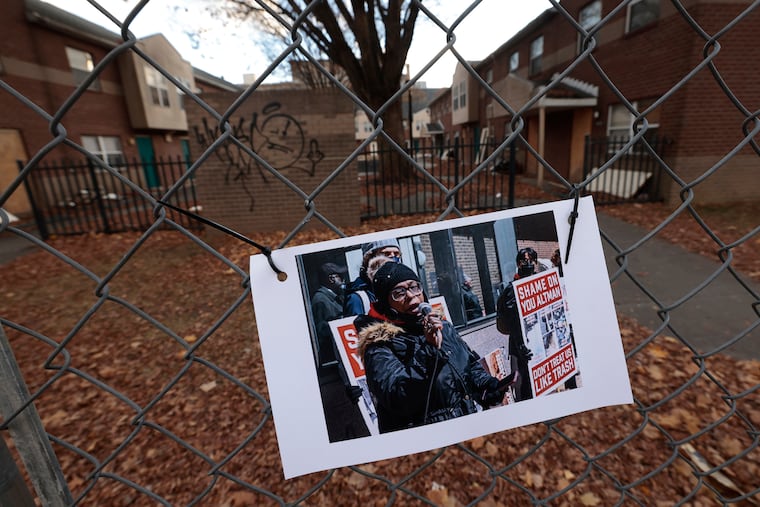
A property owner’s decision in 2021 not to renew a subsidy contract at the University City Townhomes in West Philadelphia is a recent high-profile example of what’s at stake. The site had grown much more valuable since the subsidized townhomes were built four decades earlier, and the owner decided to sell the property, displacing 69 households.
“Philadelphia has long relied on a large number of federally subsidized properties to provide affordable housing options that are protected from market forces,” researchers at the Housing Initiative at Penn wrote.
» READ MORE: After the UC Townhomes fight, City Council members consider 1,000s of other at-risk affordable housing units
They said the report can help policymakers, advocates, and others plan how to preserve affordable housing as subsidies reach their expiration dates. The report relies on data from the National Housing Preservation Database developed by the Public and Affordable Housing Research Corp. and the National Low Income Housing Coalition.
Also helpful, researchers noted, will be the public database of subsidized housing properties and their subsidy expiration dates that the city is creating, as directed by legislation City Council passed in 2023. City officials said they hope to launch the database early next year.
Here are some takeaways from Penn researchers’ analysis of subsidized properties in Philadelphia.
These properties are concentrated in certain areas
Subsidized properties, including those at risk of having their subsidies expire, operate in neighborhoods across the city.
But they are most concentrated in three City Council districts: the Third in West Philadelphia, the Fifth in North Philadelphia, and the Eighth, which includes the area around Germantown and Mount Airy.
The report’s total count of federally subsidized properties does not include those added in the last two to three years, due to limitations of the data.
Subsidies face several risk factors
Researchers found that where properties are located influences the odds of an owner ending participation in a subsidy program and if they do, how much rents potentially could increase.
Thirty-eight of the 136 Philadelphia properties whose subsidies will be up for renewal during the next decade are in areas where rents, household incomes, and home values have increased more than in the city as a whole.
In census tracts that have properties with expiring subsidies, home values increased by 28% in the last decade, compared to 21% citywide.
In areas with strong housing markets, property owners have more incentive to end subsidy contracts and charge market-rate rents.
For-profit property owners are less likely than nonprofit owners to renew subsidy contracts. And about six in 10 properties with expiring subsidies are owned by for-profit owners.
Researchers also noted that any policy change by President Donald Trump’s administration that reduces federal funding for subsidy programs would make properties less affordable for tenants.
These are the most common subsidies
The country’s largest source of funding for new and renovated subsidized rental housing is the Low-Income Housing Tax Credit program. It’s also the most common subsidy source in Philadelphia.
These properties have to keep rents affordable for 30 to 40 years after they are built.
Of the properties that have subsidies that expire within the next 10 years, 57% use Low-Income Housing Tax Credit subsidies, either alone or in combination with other programs.
In a 2024 report, Fannie Mae said the credit was “one of the most successful” programs that support affordable housing for “some of the most vulnerable renters in the country.”
Fannie Mae found that in early 2024, the average asking rent for Low-Income Housing Tax Credit properties in the Philadelphia metropolitan area was about half the average asking rent for a market-rate property.
For Philadelphia properties, the next largest source of federal housing subsidies is the Section 8 program that ties subsidies to units, not households.
This program, either alone or in combination with other programs, covers 27% of the city’s subsidized properties that have agreements that expire during the next decade.
Property owners can choose whether to renew these contracts when they end, which is usually after five to 20 years. Current contracts are all renewals of agreements that date back to before 1983, when Congress ended the program.