Philadelphia filed stop-work orders for Mole Street’s redevelopment. What happens next?
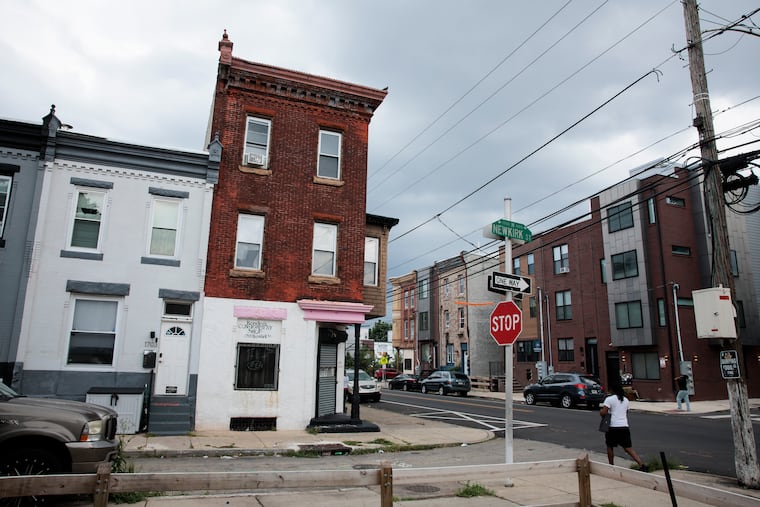
The block has long stood out as a stronghold of affordability and quirk in an otherwise staid corner of Center City.
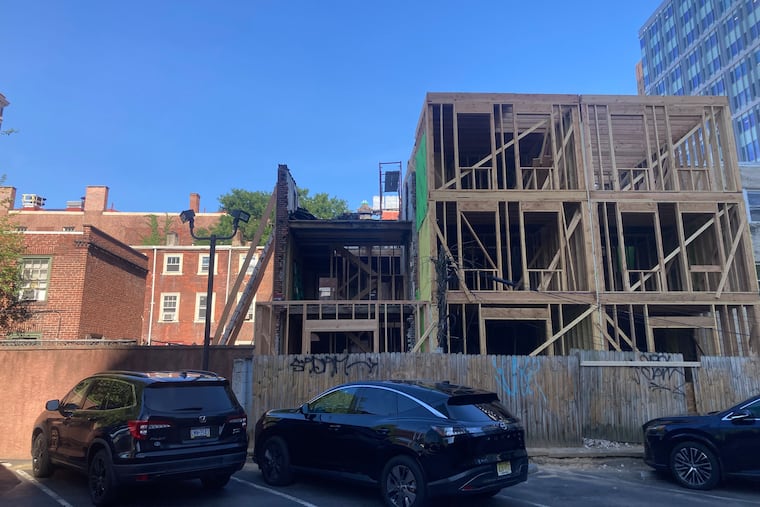
The work has stopped on the 100 block of North Mole Street, where developers have been attempting to remake this redoubt of historically protected below-market-rate housing.
The developer Purity Homes Inc. and its architect Canno Design got permission from the city’s Historical Commission last year to redevelop a handful of these almost 200-year-old rowhouses.
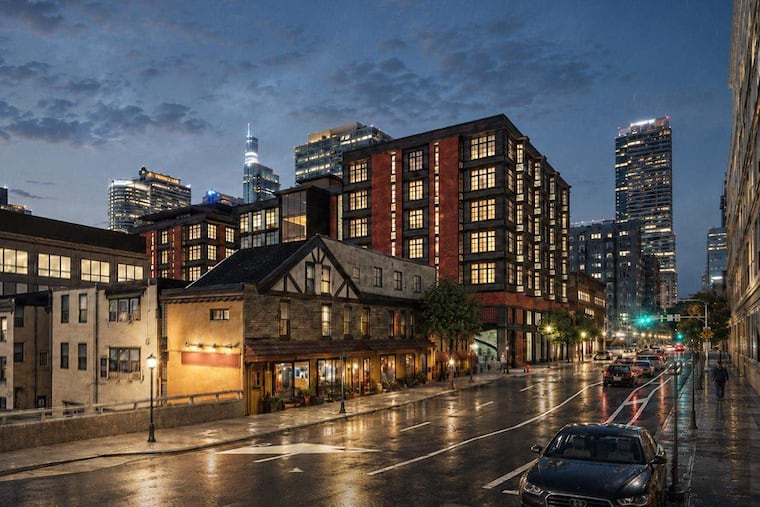
They planned to build expansive additions on the rear of the houses to allow for more square footage and rentable space and to eventually transform the rest of the block.
However, following an Inquirer article about the project, the Department of Licenses and Inspections issued stop work orders in June for “work not according to approved plans.”
“The Historical Commission had approved modest alterations to the properties,” said city spokesperson Karen Guss.
“The PHC staff member who managed the process of reviewing the developer’s proposed alterations observed out the window that the work actually going on seemed way out of line,” Guss said, referring to the fact that the 100 block of North Mole Street is visible from the offices of the commission, a block to the site’s south.
Armando Ahmad, whose name and address in Arlington, Texas, is listed on several permits for the project, did not respond to requests for comment. Further attempts to reach Purity Homes were unsuccessful as well.
Last year, Purity Homes bought eight of the 30 North Mole Street homes for $3.1 million. More purchases are in the works, although the original architect has left the project.
“We have terminated our agreement with the client, no further comment at this point,” said Carey Jackson Yonce of Philadelphia-based Canno Design.
A Department of Licenses and Inspections spokesperson noted that work continued on the house at 127 N. Mole St., despite the city’s order.
“The police have been assisting with enforcement efforts,” L&I spokesperson Shemeka Moore wrote in a June 26 email.
She also noted that 108 N. Mole had been approved for only a small addition and that a new construction permit would be required for the company’s more expansive plans.
However, following the stop work orders, preservationists and the Historical Commission said Purity Homes was reacting to city regulators in good faith.
“The Historical Commission’s staff is engaged in ongoing, productive discussions with the development team for the 100 block of North Mole Street,” said Jon Farnham, executive director of the Historical Commission. “The developers have acknowledged their missteps and are working diligently to develop a plan to bring the block into compliance.”
For decades, this block of North Mole Street has been a holdout of inexpensive rental rowhouses in an area of Center City otherwise dominated by tall buildings and surface parking lots.
Just west of the Central Friends Meeting, the street has been owned by a family trust, which dates to the 1800s and belongs to descendants of founding father Robert Morris. In 1960, the 30 homes on the block were given historic preservation protections.
The buildings were largely carved into group houses, where airline workers, artists, students, and journalists (including Inquirer reporters) have made their homes.
The block had a reputation for a vigorous party scene, culminating in an annual bacchanalia at the Molestice Festival block party. The celebration began when Jimmy Carter was president and was ended by the COVID-19 pandemic.
As Purity moved on to the block, the company wrote letters to tenants promising to “minimize disruption.” Leases have not been renewed for residents living in the houses controlled by the company.
Tenants who remain have complained about developers starting work extremely early in the morning, parking trucks on the sidewalk in front of their homes, and cutting down all the trees before a scorching summer.
“They definitely don’t mean what they said about minimizing disruption,” said Alex Numan, a resident whose home is not yet owned by Purity, although his lease has been switched to month-to-month in preparation for a sale.
Since the stop work orders, construction has paused, but many longtime tenants still anticipate being made to leave their homes.
“The planning is still underway, and nothing has been submitted to the Historical Commission yet, but we will ensure that the revised plans preserve the historic character of the designated buildings,” Farnham said.