They own their homes but not the land. In N.J., a new law could help change that.
A state lawmaker said residents of mobile home and manufactured home communities are “held captive,” because they own their homes but not the land. Landowning companies can hike rents or sell.
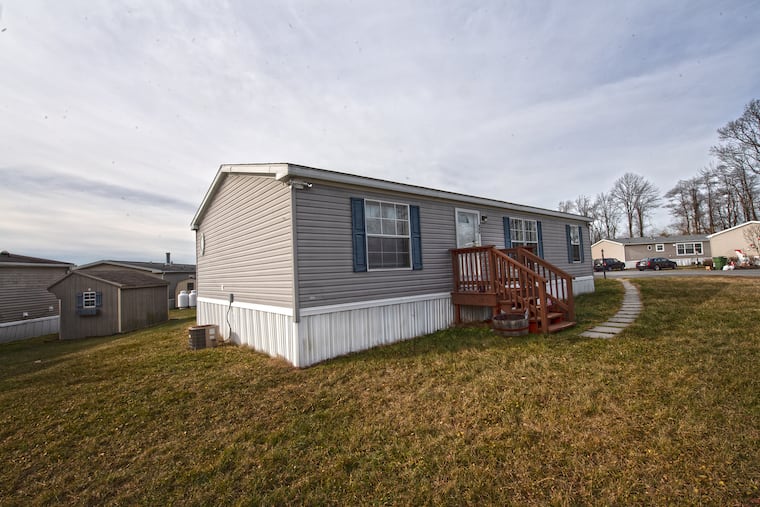
Manufactured homes — single-family dwellings often built off-site and placed on a lot — are one of the most affordable forms of homeownership. But families who live in these homes are often left vulnerable, because companies that own the land can hike rents for their lots or sell communities for redevelopment.
This type of unsubsidized affordable housing tends to be more accessible for low-income households than typically built homes.
A bill that former N.J. Gov. Phil Murphy signed last week makes it easier for manufactured home and mobile home residents to buy their communities when a landowner decides to sell or change the use of the land.
» READ MORE: Manufactured-home communities aren’t just in rural Pa. Owners on rented land are often unprotected.
Landowners who want to sell or redevelop these communities must give notice to residents and local and state leaders. If 51% of residents agree to purchase the community, and they meet the price and conditions of the sale, they have 120 days to buy it. Previously, this action required two-thirds of residents, who had 45 days to sign a contract.
Lawmakers found that the prior parameters were too high of a bar for residents to meet.
New Jersey’s new law is based on model legislation from the National Consumer Law Center. There are more than 1,000 resident-owned mobile and manufactured home communities across the country. None are in New Jersey.
Almost 100,000 New Jersey residents live in 250 manufactured or mobile home communities, many of which are in South Jersey, said State Assembly member David Bailey Jr., a Democrat who sponsored the legislation and represents residents in Gloucester, Salem, and Cumberland Counties.
Imagine you’ve owned your home for 20 years and “somebody comes and says, ‘We’re selling this land and you either follow these new rules or you gotta move,’” Bailey said. “That would never happen in suburbia. But that’s what could happen to these people. Because they have no choice. They’re stuck.”
He said that when he took office in 2024, he immediately started getting calls from constituents in Salem County who lived in manufactured home communities. They told him about rising costs to rent the land their homes were on and deteriorating property conditions and infrastructure in their communities.
» READ MORE: Most mobile homes are overtaxed. Chester County owners are getting relief. (From 2020
Many of the properties had been owned by local families who later sold the land to companies that hiked rents, Bailey said. In 2022, the CEO of the Lincoln Institute of Land Policy said that in the prior eight years, roughly 800,000 home sites in manufactured housing communities were bought by private equity companies and other institutional investors. Rent hikes tended to follow.
Another recent New Jersey law addresses this reality.
In July, the state enacted a law that caps annual rent increases at 3.5%. Landlords who want higher increases must ask the state’s Department of Community Affairs for permission.
After an earlier version of the legislation passed the state Senate this spring, Sen. Paul Moriarty said in a statement that the usual renting setup of mobile and manufactured home communities “often leads to unfair price hikes by landlords, as they know that there is no other option besides moving the home to another site.”
Moriarty, a Democrat who represents residents in Gloucester, Camden, and Atlantic Counties, noted that moving these homes to different sites can be “incredibly difficult” because of “potential difficulties in financing a move, exclusionary zoning practices, and restrictions on the age and condition of incoming homes.”
A previous version of this story misstated the number of mobile homes purchased by private equity companies. It is roughly 800,000 manufactured home sites.
