Preserving older properties drives housing affordability, population growth, and investment, says study by historic preservation group
The Preservation Alliance for Greater Philadelphia commissioned its most comprehensive analysis on how historic preservation affects the city’s economy and housing.

For years, the Preservation Alliance for Greater Philadelphia has heard the same arguments: Preservation is a barrier to development. It reduces density. It restricts the housing supply.
“And we knew in our gut that that wasn’t true, but we didn’t have the data to support it,” said Paul Steinke, executive director of the Preservation Alliance, which works to protect historic properties from demolition. “Now, we do.”
The Preservation Alliance commissioned its most comprehensive analysis of how historic preservation affects the city’s economy and housing. The report, released Wednesday, found that preservation of Philadelphia’s older properties protects housing affordability, drives investment, preserves housing density, and supports population growth.
In Philadelphia, $4 billion has been invested in historic rehabilitation projects, which have created thousands of jobs each year.
Steinke said the Preservation Alliance commissioned this study now because of current debates about Philadelphia’s growth and affordability, the need to increase the housing supply, and development policy as Mayor Cherelle L. Parker rolls out her Housing Opportunities Made Easy, or H.O.M.E., initiative to build or preserve 30,000 homes.
“We wanted to develop some data to demonstrate preservation’s role in those conversations,” said Steinke, who is on the H.O.M.E. advisory committee. “And the reality is the data show that historic preservation is a powerful engine ... for investment, jobs, affordability, and inclusive growth.”
The study was completed by PlaceEconomics, a Washington-based firm that analyzes the economic impacts of historic preservation in cities across the country. The purpose of the analysis in Philadelphia was to understand the economics of the preservation of older properties in general and not only those properties that are historically designated, Steinke said.
Preservation debates
Historic designation is a divisive topic, and preservationists have found themselves clashing not only with developers who want to demolish properties but also with homeowners and pro-housing groups.
Historic designation shields properties from demolition and means owners have some restrictions on what they can do to the outside of their properties. Decisions about doors and windows, for example, are subject to the scrutiny of preservation officials. And owners who fight the designation of their properties argue that regulations can be a burden.
Residents have challenged in court three historic districts that Philadelphia recently created — the most significant pushback against the city’s preservation ordinance in 15 years.
In response to the Preservation Alliance’s study, 5th Square, a Philadelphia-based urbanist political action committee, said it supports efforts to rehabilitate older buildings and that “Philadelphia’s dense, historic neighborhoods are a beloved feature of the city.”
“However, we remain concerned about the proliferation of historical preservation districts across the city,” Brennan Maragh, cochair of the group’s housing committee, said in an emailed statement. “These districts ... impose real costs on families, small businesses, and owners attempting to maintain or improve their properties.”
Almost 5% of Philadelphia is historically designated
Almost 5% of the city’s land area is a historic district or is property individually designated as historic outside of historic districts, the study found.
The share of properties historically designated by the city has increased from 2.2% to 4.4% since 2016, when the city started ramping up its historic designations. Philadelphia has caught up with other large cities.
In 2023, about 56,000 residents lived in a local historic district.
Tax credits have created jobs and revenue
Between 2010 and 2024, 295 projects that used state and/or federal historic preservation tax credits were completed in Philadelphia, according to the study. This ranks Philadelphia first in the nation.
Projects that use historic tax credits have created an average of 1,777 direct jobs and 729 indirect jobs each year in Philadelphia over the last 15 years. Each year, they have created an average of about $95 million in direct income and about $47 million in indirect income.
If historic rehabilitation were a single industry, it would be the city’s 25th-largest employer.
Historic tax credit activity also has generated about $8 million in local tax revenue.
» READ MORE: Pennsylvania’s historic preservation incentive received a huge boost this summer (From 2024)
Older homes are more affordable
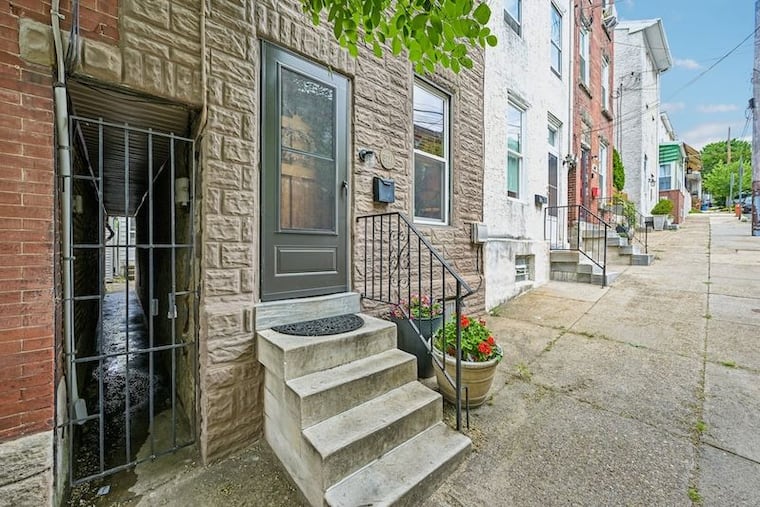
Two-thirds of Philadelphia’s residential buildings and half of the city’s housing units were built before 1950, according to the study. This older housing tends to be smaller in size and lower in cost.
So preserving older homes helps preserve housing affordability. The study did not consider the historic designation status of these homes.
“While it is true that Philadelphia’s older housing stock remains affordable compared to new construction,” said Maragh at 5th Square, “historic preservation districts can also have the unintended consequences of excluding low-income residents from large parts of the city, raising lifetime housing costs on owners and creating unnecessary regulations that slow down the process of adaptive reuse.”
The study found that the city’s historic districts have higher shares of high-income households and lower shares of low-income households compared to the rest of the city.
Outsize population growth in historic districts
Donovan Rypkema, principal and CEO at PlaceEconomics, said a “myth” of historic preservation is if “you create those historic districts, you just set neighborhoods in amber and nothing can ever change.”
The firm’s study found that population growth in historic districts outpaced growth in the rest of the city.
In historic districts created before 2010 — so before the recent push for more districts and ones that are more geographically and racially inclusive — the population grew by about 27% between 2010 and 2020. Over the same time, the rest of the city’s population grew by less than 5%.
More than 79% of the homes in historic districts are in buildings with two or more units, compared to 32% in the rest of Philadelphia. Historic districts also offer a wider range of housing types.
The densest areas of the city are in historic districts, according to the study. There are 10,000 more people per square mile in historic districts than in the rest of the city’s residential areas.
These statistics speak to the “inherent attractiveness” of historic districts and also that “they can accommodate that growth,” Rypkema said.