More Philly-area seniors are renting their homes. Here’s why.
People 65 and older are the fastest-growing population of renters in the Philadelphia region.

Ken Mann had an epiphany watching his oldest granddaughter graduate from her Lower Merion elementary school in June.
This is where he needed to be.
Mann regularly drove from his house on Long Island to visit his three granddaughters, but he wanted more time with them. His parents had lived in Florida while his children grew up in New York, so his kids didn’t really get to know their grandparents, he said.
Mann didn’t want that to happen to him.
So a few weeks after his granddaughter’s graduation, the retired mortgage banker and longtime homeowner moved into an apartment in Lower Merion.
“My grandchildren can literally walk here,” said Mann, 73.
In the Philadelphia region, people aged 65 and older are the fastest-growing population of renters.
From 2013 to 2023, the Philadelphia metropolitan area, which includes Camden and Wilmington, gained about 39,200 of these renters — a 24% increase. That’s according to an analysis of the most recently available Census Bureau data by Point2Homes, a national rental home listing portal.
» READ MORE: The fastest-growing population of renters in the Philly area? People aged 65+.
People are living longer, so seniors’ numbers are growing across demographics.
Some seniors have rented all their lives, by choice or because they can’t afford homeownership. Others, like Mann, were once homeowners and started renting either out of necessity or for convenience.
Mann knew he didn’t want to be a homeowner again.
“I like to travel. I’m a single guy,” he said. “I know owning a home is a different mindset.”
Noticing a shift
When Helen Aster, senior general manager at an Ardmore-based property management company, started at Harrison Richards in 1991, there were no senior tenants in its properties across the region, she said. She saw a lot of young families.
“Everyone wanted to get their kids into Lower Merion schools,” Aster said. “That was the No. 1 driver.”
College students and newlyweds also filled her property tours. Tenants usually stayed for a time and then left to buy a home well before they hit middle age.
But she noticed a subtle shift a couple years ago. Some families with young children were looking at apartments — but for their parents.
“It’s a market share I’m really thrilled about,” Aster said. “They pay their rent on time. They have a great attitude about life.”
Older renters have told Aster they like living among younger people.
Charlie Marshall, a leasing associate at Harrison Richards, said he’s gotten calls from live-in aides looking for apartments for their clients. Last month, a woman called who wanted to move from her assisted-living community in Newtown Square into an apartment.
Ellen Gloria Payne, 83, moved into a Harrison Richards apartment in Ardmore in 2023. And she plans to stay for the foreseeable future.
She sold her house in Queens, N.Y., after her husband died and her three children, who live in Montgomery County and Virginia, wanted her to move south.
“I wasn’t excited about moving and leaving the home I’d been in for 57 years,” Payne said. But “as I’m aging, being closer to them is probably better.”
She is now near her children, grandchildren, and great-grandchildren.
Her apartment has a balcony, is near public transportation, and is in a walkable area. And, importantly, she no longer has the responsibilities of homeownership.
“At this point in life,” Payne said, “I just wanted to be able to live comfortably, feel safe, and not worry about any maintenance.”
A ‘hot segment’
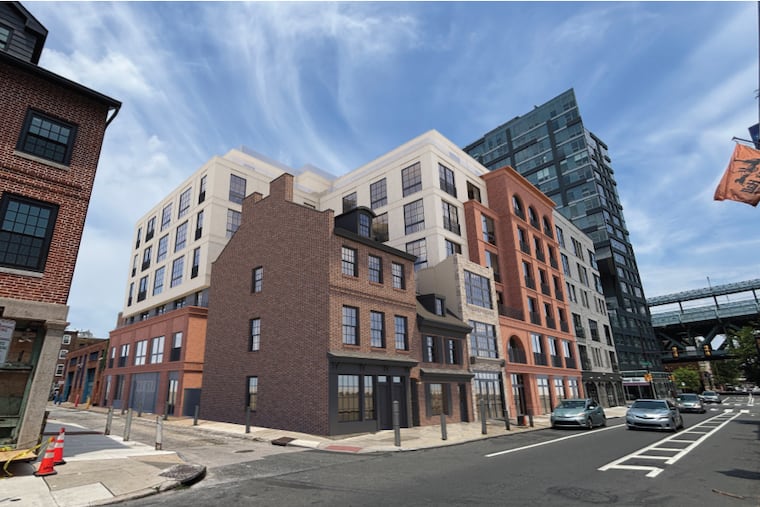
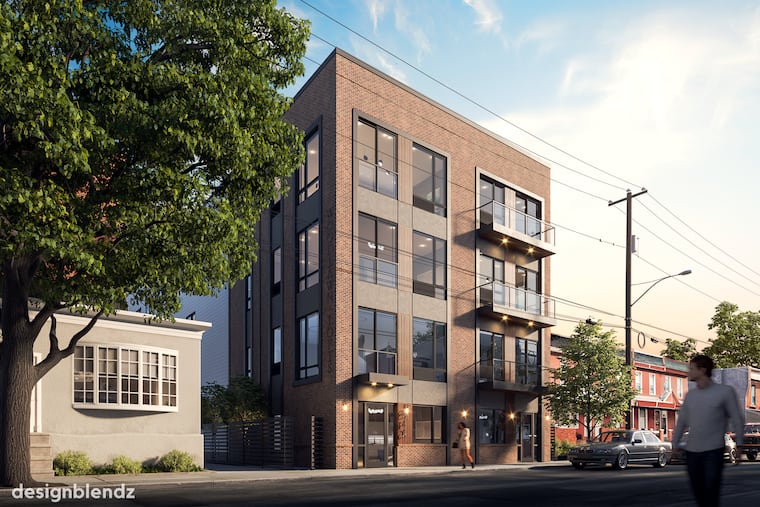
Developers in the Philadelphia area are continuing to build apartments geared toward older adults to meet the demand.
Abrams Realty & Development’s new plans to redevelop Exton Square Mall now include a rental building for people 55 and older. The proposed redevelopment also would include other apartments, shops, restaurants, and office space.
“It’s a really wonderful addition to a mixed-use project,” said CEO Peter Abrams. “Because it doesn’t bring school kids. That makes the township happy, makes the school district happy.”
The company tweaked its previous plans because local officials and residents were not happy with the density of housing. So Abrams removed some of the townhouses and added the “active adult” community for people 55 and older.
The 55 to 64 age group was the second-fastest-growing renter population in the Philadelphia metro area from 2013 to 2023. The number of renters in this group grew by about 22%, or about 27,600 people.
“It’s safe to say if you’re doing a mixed-use project” in a relatively high-income area, “you’re going to take a look at whether active adult is a fit,” Abrams said. “It’s just a hot segment right now.”
Subsidized rental housing also is very much in demand among older adults.
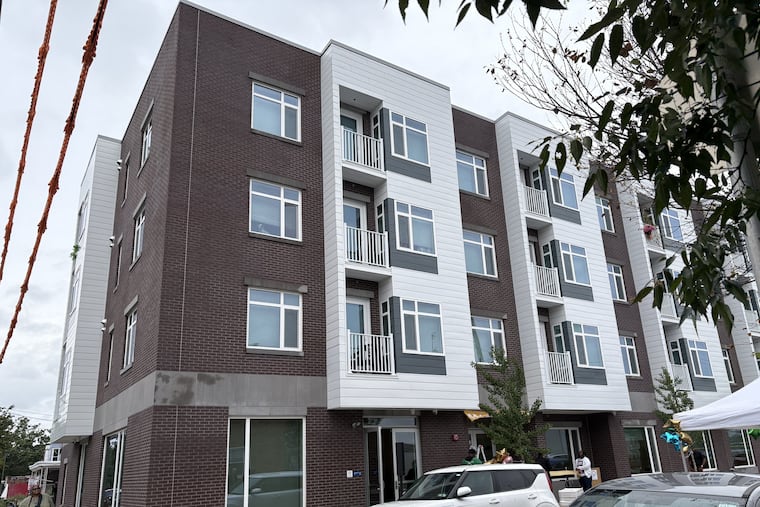
Developer Pennrose celebrated the grand opening in June of a 51-unit apartment building for seniors in Chinatown called Man An House. And the company plans to finish construction in October on a 55-unit senior apartment community called Good Shepherd in the city’s Overbrook neighborhood. Both developments are for renters 62 and older.
Senior housing makes up about 40% of the company’s portfolio, said Jacob Fisher, regional vice president for New Jersey and Pennsylvania. The properties typically have more demand than units, he said.
Because of how Pennrose finances its subsidized projects, eligible tenants can make a mix of up to 20%, 50%, or 60% of the area median income. Rents range from about $270 to about $1,190 for a one-person household.
“For seniors on fixed incomes, [$1,190] can be a challenging number to get to,” Fisher said.
The longer people live, the longer their resources have to stretch, so more seniors are struggling to pay for what they need, including housing, said Laura Weinbaum, chief operating officer at the nonprofit Philadelphia Corporation for Aging.
» READ MORE: Philly is one of the worst big cities for aging in place. Local experts aren’t surprised.
The organization helps people modify their homes, including installing grab bars, bathtub seats, railings, and ramps, so seniors can stay as long as possible.
Rental housing can help keep people in their neighborhoods if they age out of their homes.
Renting for the long haul
Josie Burri, 48, moved with her husband, Michael, to their Bala Cynwyd apartment complex in 2006, when they returned to the Philadelphia region from Oregon. The Harrison Richards property was affordable, close to public transportation, in a walkable area, and in a good school district.
“It was the best of everything we were looking for,” Burri said. “And we didn’t have jobs yet where we thought we could afford a house.”
Nineteen years later, the Burris, who both work in higher education, still can’t afford to buy a home in the neighborhood. So they keep renting.
In 2009, they moved into a larger two-bedroom unit with a basement that could accommodate their growing family. Their daughter is now going into 10th grade.
“These are really sizable apartments,” Burri said. “It’s like a small house.”
Three years ago, the Burris did end up buying a house — in Maine. The fixer-upper is partly an investment. It cost about $300,000, far less than any house they’d want in Bala Cynwyd.
They might live in their house full time someday. But they have no plans to leave their apartment.
“For now,” Burri said, “we’re just enjoying living where we are and in the community where we are.”