The Sixers continue to have a third-quarter problem, even after their lineup switch against Toronto Raptors
That lineup tweak, however, did not solve the issue Wednesday. The Raptors began the third on a 10-2 run, and never surrendered the lead after that.

About 10 days ago, Nick Nurse jokingly proclaimed that maybe the 76ers would play better in the third quarter if they spent halftime regrouping on the bench, instead of inside the locker room. Veteran Kyle Lowry suggested to star guard Tyrese Maxey that perhaps the players should try another round of layup lines before the second half begins.
There was no making light of the ongoing problem late Wednesday, when another dreadful third quarter doomed the Sixers in a 121-112 loss to the Toronto Raptors on the front end of a back-to-back. For a season that so far has been a pleasant 8-6 surprise, the Sixers’ perplexing struggles during that specific quarter remain a worthy criticism.
“A lot of bad, right?” Nurse said when asked again Wednesday about the blunders.
The Sixers were outscored 44-26 in Wednesday’s third quarter, flipping a three-point halftime advantage into a 15-point deficit entering the final frame. And though they rallied in the fourth — another quality consistently flashed throughout the early season — that hole ultimately was too deep to fully overcome against the streaking Raptors (10-5).




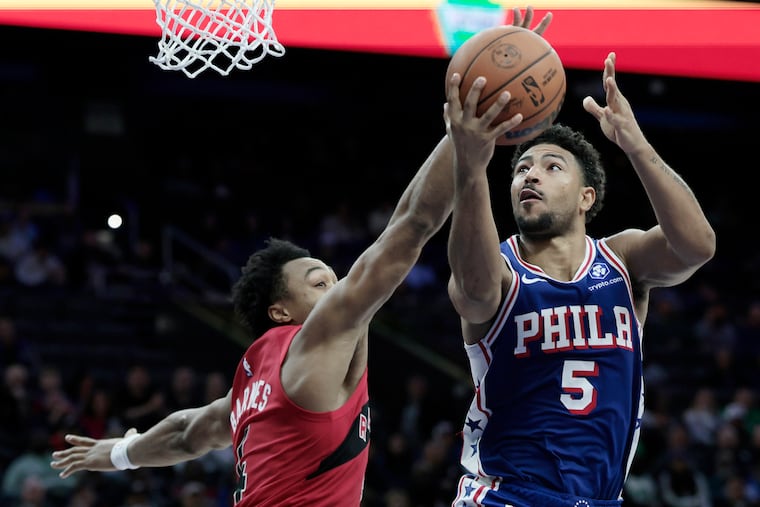
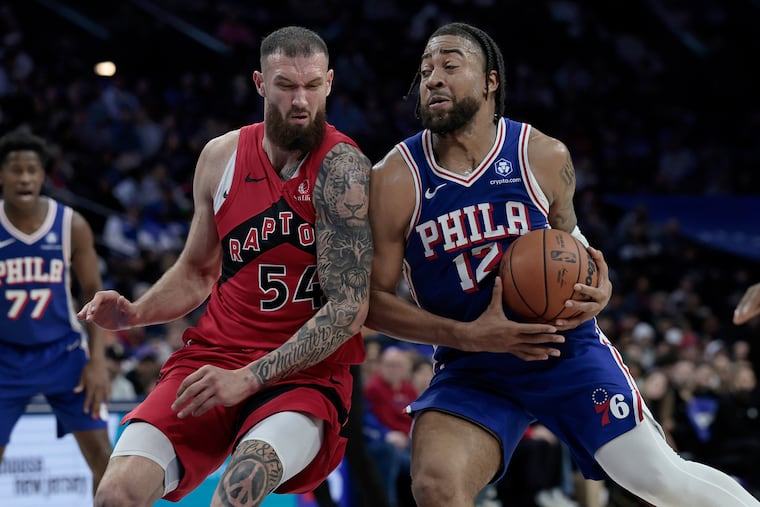

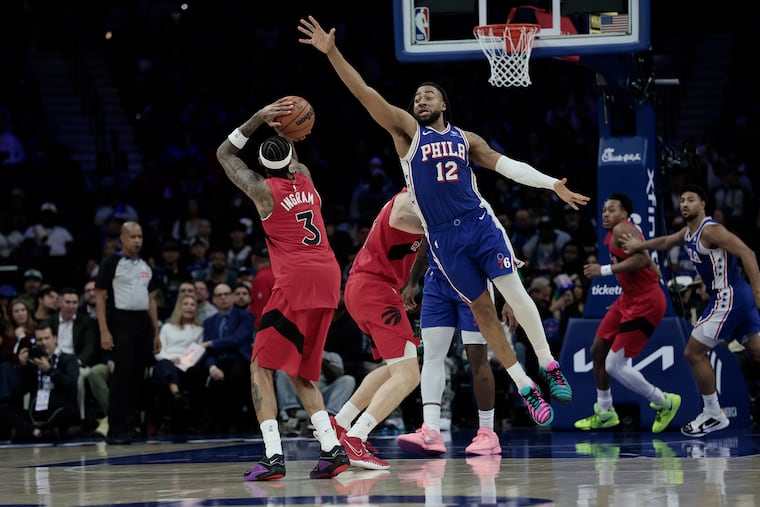


When the third-quarter topic was broached again Wednesday, a far more terse Maxey pointed to the Sixers’ turnovers (eight, which Toronto parlayed into 15 points) and defensive breakdowns (the Raptors shot 68.4% from the floor, including a blistering 5-of-6 on three-pointers) as the primary areas to blame. Nurse added that the Sixers committed five fouls in less than four minutes, leading to a whopping 16 free-throw attempts (and 13 shots made) for the Raptors during that period.
“Just set the tone for a really bad quarter,” Nurse said.
It was the latest on a growing list of “really bad” third quarters populating the regular season’s opening month. The Sixers have “lost” 11 of their 14 third quarters, with one tie. They have been outscored by 111 total points (454-343) in that frame, with an average of 24.5 points per third quarter.
On Oct. 30, Nurse said the reasons for the Sixers’ woes during those 12 minutes were “under investigation.” Subsequent questions to the coach as the dilemma persisted did not yield revelations about correctable through-lines or themes.
» READ MORE: What Paul George can still give the Sixers — and what might be a thing of the past
Separately and unprompted, Maxey and reserve big man Jabari Walker have suggested that it may now be a collective mental block.
“Man, I think it’s a mindset thing, honestly,” Walker said Wednesday, after a long exhale. “We’ll figure it out. But it’s honestly mindset. It’s nothing besides that.”
After a Nov. 5 loss at the Cleveland Cavaliers, Nurse floated the idea of starting a different group at the beginning of each half, a tactic he has previously used to spark his team coming out of the locker room.
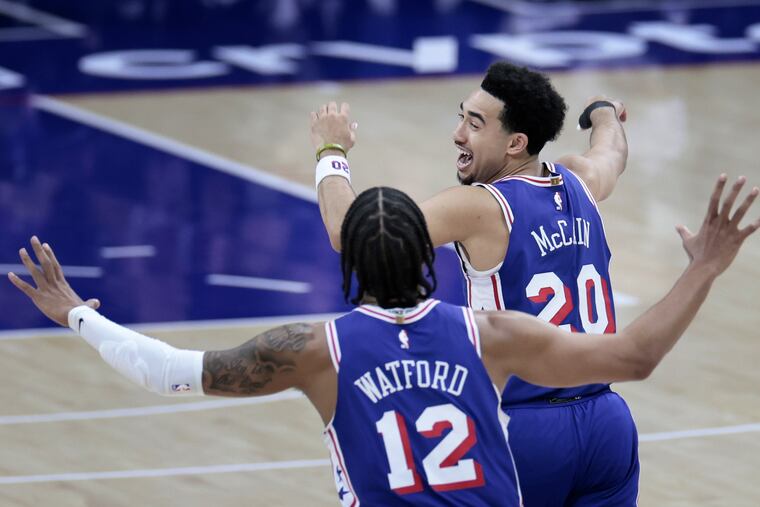
That has transpired in the Sixers’ past three games. One change was out of necessity, when wing Kelly Oubre Jr. went down with an LCL sprain in his left knee in the second quarter of last Friday’s loss at the Detroit Pistons. But Wednesday night, Quentin Grimes and Trendon Watford replaced starters Justin Edwards and Dominick Barlow in the first group to play after the break.
That approach placed Grimes on a better rotation pattern for the closing lineup, with which he scored 15 of his 21 points in Wednesday’s fourth quarter. It also allowed the coaching staff to make judgments in real time, to cater to specific matchups or ride a role player who excelled in the first half.
“It just changes the rhythm of the start of the second half,” Nurse said in Cleveland. “It doesn’t mean you’re penalizing anyone in particular. Just trying to look for solutions.”
That lineup tweak, however, did not solve the issue Wednesday. The Raptors began the third on a 10-2 run, and never surrendered the lead after that.
And perhaps the third-quarter gaffes are even more glaring because of the Sixers’ knack for clawing back in the fourth quarter.
They have already played an NBA-leading 12 “clutch” games, going 7-5 in such situations. They also have already tied an NBA record for most victories by a team that entered the fourth quarter trailing by double digits, with four.
It looked like the Sixers might be on their way to such a result again, when a Grimes three-pointer capped a 24-12 run to slash the Raptors’ lead to 109-106 with 5:25 to play. But the work required to rally meant the Sixers could not afford defensive miscues down the stretch, which helped Toronto re-extend its lead.
» READ MORE: Sixers takeaways: Costly turnovers, another woeful third quarter, and more in loss to Raptors
Before making the quip about staying on the floor during halftime, Nurse bristled a bit at a question about the Boston Celtics outscoring the Sixers, 36-20, in the third before his team rallied to a Nov. 11 win. The coach said, “I’d rather be a better fourth-quarter team” because, “in the fourth quarters, we’re pretty damn good.”
But inside the Sixers’ postgame locker room that night, the phrase “30th in 3Q” had been written on a white board — with the word “STILL” in red. Ten days later, this is still plaguing a positive start to the season.
So why does the Sixers’ third-quarter problem persist?
“To be honest, we don’t know,” rookie VJ Edgecombe said. “If we had it all figured out, there would be no slow starts to third quarters.”