The World Cup may not be a game-changer for the city that hosts the Philly area’s pro soccer team
The Union is hosting watch parties at Subaru Park, but the stadium has long been divided from the neighborhood in Chester, a city facing a rare and historic bankruptcy.
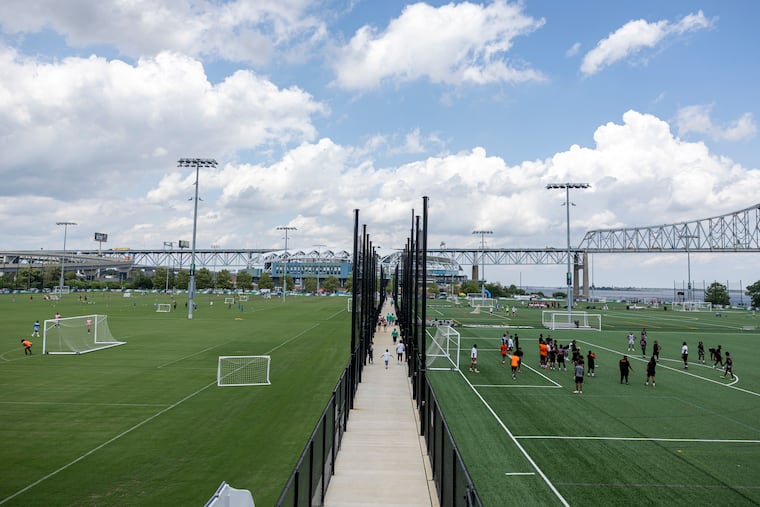
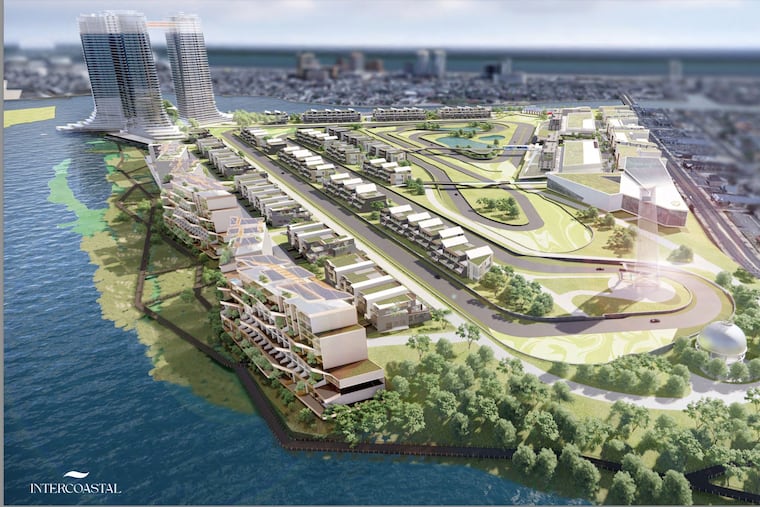
The city of Chester’s riverfront has been a field of development dreams for over half a century, and these days it does host an actual field, even if the team that plays there doesn’t bear the city’s name.
In this instance, it’s a soccer field, with a $100 million sports campus attached. And when the city 15 miles to the north catches the soccer world’s attention next month as the World Cup competition comes to Lincoln Financial Field, Philadelphia Union president Tim McDermott is counting on Chester’s reaping some spillover benefits.
The Union, the region’s only professional soccer franchise, will be hosting World Cup watch parties at its Subaru Park stadium complex on the Delaware River, in the foreground of the Commodore Barry Bridge. Also, the Ivory Coast team is using Chester as its home base, training at the Union’s facilities.
But Chester is also slogging through a rare and historic bankruptcy, and neither the mayor nor other local and state officials expect the World Cup to be a game-changer for Chester’s financial quagmire. It is a city where 30% of households live in poverty, and residents pay the highest wage-tax rate in the state, 3.75%.
“On the positive side, I think the government in Chester is better than it’s been in a long time,” said John Caskey, a Swarthmore College economics professor who is on the board of directors of the Chester Community Improvement Project. Still, Chester faces tremendous obstacles in rebuilding its tax base, he said.
But McDermott says he believes soccer and the Union’s year-old WSFS Sportsplex can have long-term impacts on a city where basketball has traditionally ruled.
The Sportsplex, a venue for a variety of youth sports and other activities, has been attracting large crowds. McDermott reasoned that its popularity eventually might lure investors who want to open restaurants, stores, a hotel, and other amenities.
Those additions are a sine qua non for the future of the waterfront, said Mayor Stefan Roots, who has hailed the Sportsplex as a “landmark project that represents not only the growth of our city, but also the future of our youth and community.”
But for now, he said, “You have parents dropping off their kids and there’s no place for families to go to eat, or drink, or to rest.”
A brief history of the Chester waterfront
During the two world wars, armies of workers on the waterfront made everything from ships to anchors, cars to toilet tissue.
At one point during World War II, the shipyard on the east side of town employed 36,000; the city’s total population now is 34,000.
The shipyard site is occupied by the Harrah’s Philadelphia casino, which provides about 15% of the city’s annual revenue. The other major source of revenue is the unpopular Covanta incinerator plant on the west end, not far from Subaru Park.
Industries began pulling out of Chester in the 1960s, and while the city’s career as an industrial powerhouse is long dead, it is survived by dreams of repurposing the waterfront.
In 2008, lawmakers and private investors proposed a $500 million master plan for development on the riverfront, with the construction of the soccer stadium as the centerpiece.
“It’s going to change the face of Chester forever,” said then-Gov. Ed Rendell. “This development will, I absolutely believe, guarantee that Chester will become one of the first-class cities in Pennsylvania.”
The stadium happened. Unfortunately, so did a recession.
“We have to bring back the developers who were gung-ho back then,” Roots said.
One remnant of that manufacturing heyday is the so-called Industrial Highway, a portion of Route 291 that used to provide access to the factories.
Today in the stadium area, 291 serves as a great divide between the waterfront and the adjacent neighborhood.
What some of the neighbors think
Neighbors on the other side of the highway have long expressed complaints about Subaru Park and the resulting traffic.
“When the game is over, it’s like a bomb dropped,” said Adelaide Evans, who lives about four blocks from the stadium. “They’re flying through here like they’re just trying to get out. I’m saying to myself, ‘If you’re flying that fast to get out, why did you come in?’”
The stadium evidently has done little to generate business at local restaurants or shops in the predominantly Black neighborhood, as the stadium crowd tends not to venture across the highway, Caskey observed.
Said Evans: “If you’re afraid to be here, you’re not going to do that. … You would think that side of the street is not in Chester.”
She added, “Chester is a good place overall,” but “the spotlight that’s put on Chester is negative.”
Neighborhood resident Brown Williams said of the soccer games and crowds: “Don’t mean [expletive] to me.”
Former Mayor Thaddeus Kirkland said the city has reaped important benefits from the stadium, financial and otherwise.
As for the neighbors’ complaints, he said: “It’s not like there’s a soccer game every day.”
The Union plays 17 regular-season home games annually.
The tangible and intangible benefits
The team and the stadium, which has a smallish capacity of 18,500, have not had “major” impacts on the financial state of the city, which has been in “distressed” status since 1995 and in bankruptcy since November 2022, Caskey said.
The construction was heavily subsidized by the county and state, and because the county owns the stadium land, the property is tax-exempt. The team does make an annual $150,000 payment in lieu of taxes, and the city collects up to $1.5 million in other fees from the Union’s operation annually.
That contribution will grow considerably in 2027. The city council has approved a 5% “amusement tax” on all ticket sales that is expected to generate $1 million a year, with Subaru Park events making up a “significant” portion of that, said the state receiver’s office, which is overseeing the city’s bankruptcy.
The stadium has had an intangible benefit, Kirkland said, in that “it has brought greater attention to the city.”
Persuading the Ivory Coast team, one of 48 in the tournament, to make Chester its home base was a huge score for the city, McDermott said.
“I think it speaks volumes to what’s happening down here,” he said. The team will not be staying in Chester, but in Wilmington, a choice made by FIFA.
In addition to professional soccer activities, the complex is home to the nascent soccer team at Chester High School, which historically has been a national basketball power and a training ground for coaches and NBA players.
The Sportsplex also hosts Chester Biddy League basketball for youth, a 70-year tradition in the city.
McDermott said the Union is offering nonprofits, such as Big Brothers and Big Sisters, hundreds of hours of free use of the facilities.
What difference might this make eventually to the future of the riverfront?
If the Sportsplex and stadium crowds keep coming, “you hope that other people see that,” McDermott said. “The hope is that developers start to lean in and explore and figure out … this can be a spot where I can do something pretty big here.”