MLS will move to a winter-centric schedule in 2027
The plan is for the 2027-28 campaign to start in late July, stop from mid-December to mid-February, resume the regular season through April, then have the playoffs in May.
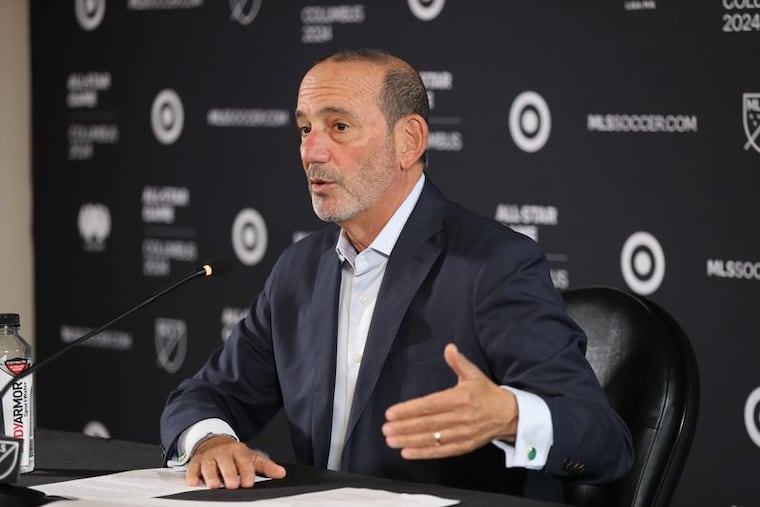
Major League Soccer will make its long-discussed move to a winter-centric schedule in 2027, commissioner Don Garber announced Thursday.
The league approved the change at this week’s board of governors meeting in Palm Beach, Fla., after years of what-ifs and just over a year of serious discussions.
The plan is for the 2027-28 campaign to start in late July, stop from mid-December to mid-February, resume the regular season through April, then have the playoffs in May. A summer break would follow, in the time of year traditionally reserved for the World Cup and other big national team tournaments.
“Today, our owners made a decision that I think is one of the most important decisions in our league’s history,” MLS commissioner Don Garber said in a news conference after the meeting.
It wasn’t immediately clear how the vote fell, but there was never an expectation it would be unanimous. Some northern, cold-weather teams would understandably be against it, while southern teams that bear the worst of summer’s heat were strongly for it.
A Union spokesperson said the team’s vote and every team’s vote would be kept confidential. Garber held the line on not revealing details of how the talks went, but he did say “there was overwhelming support” for the switch.
“Frankly, I think there was more support for it than I expected,” he said. “That’s a positive, but it wasn’t necessary. The level of due diligence that our teams did, their level of support for understanding the transformational impact that this move has on the overall enterprise, both on and off the field, just drove overwhelming support, and I’m proud of them for the decisions that they’ve made.”
Union principal owner Jay Sugarman strongly hinted in July that he would vote yes, heading into the summer’s board meeting when the vote was pushed to November. The league’s news release had endorsements from executives at New York City FC and Sporting Kansas City, and other teams issued their own statements.
» READ MORE: The Union haven't said how they'd on MLS’ calendar change, but they've hinted they’re for it
Toronto FC, one of the league’s northernmost teams, gave one of the most significant endorsements.
“To be sure, the calendar change discussion also raised challenges related to the weather for a number of the league’s most northern-based teams, but we are confident in the efforts that have been made, and will remain a priority for the entire league, to address it,” the team said. “It was our view that with more than 90 percent of the proposed MLS schedule staying consistent with its current format, the benefits to the future league product outweighed the potential challenges.”
The New England Revolution said they “appreciate the league’s proactive steps to minimize the impact of this transition on cold-weather markets.”
A few hours before the vote, Columbus Crew manager Wilfried Nancy gave an emphatic plea for the change in his end-of-year news conference.
“If they don’t do it, there is no logical thought behind the desire of MLS to become a really good league — simple as that,” he said. “If you don’t make the change, you can talk and talk, but it’s impossible people overseas will take us seriously.”
» READ MORE: How MLS has considered the schedule change over the course of this year
Less ‘American exceptionalism’
That was indeed one of the big reasons to make this move. In much of the world, soccer is a winter sport, played in seasons from mid-August to mid-May. When MLS teams want to build their rosters, their offseason purchases come in the middle of other teams’ campaigns.
This also holds back teams like the Union that want to sell players abroad for big sums. Either you sell the player in the middle of a push for the playoffs, or he goes in the winter and the buying team pays less because it cannot integrate the player in a preseason.
“Overall, our owners are very committed to being one of the top leagues in the world,” Garber said. “Being one of the few that isn’t aligned with the international calendar has us almost have an American exceptionalism — saying that we’re going to play the game the way we want to play it, as opposed to the way the rest of the world plays it. And we just believe, even with the impact which could be disproportionate on one team over another, that the great partnership and alignment that our teams have with each other won the day.”
Money also impacts this decision when it comes to broadcast rights. Through all the years the idea of a calendar flip has been discussed, one of the biggest talking points has been getting the playoffs out of the middle of the NFL season, so they can get more attention.
» READ MORE: Jay Sugarman wants the Union to get more respect, and knows winning MLS Cup will make that happen
That will now be solved with the playoffs moving to May. The league’s announcement also said it “intends to limit the number of home matches in northern markets during December and February” to dodge some cold weather.
In the first part of 2027, MLS will have what it’s calling “a transition season from February to May” with 14 regular-season games and playoffs. Those contests will determine qualification for the 2027 U.S. Open Cup, Leagues Cup, Canadian Championship, and Concacaf Champions Cup.
The next regular season could have a new format, as will the playoffs. Although the league didn’t announce details, The Athletic reported that the league will keep both a single table for standings and five divisions of six teams each for scheduling and division champion purposes.
That will allow the league to keep a 34-game slate: home and away against each team in a division (10 games), and one game each against the rest (24).
“As part of this transition, we’ve been working hard on a new regular-season format, potentially a new playoff format,“ Garber said. ”No final decisions have been made sitting here today in November, but we look forward to continue to work on that, and hopefully we’ll have news to announce sometime soon.”
» READ MORE: FIFA admitted that the summer heat had an impact on the Club World Cup in the United States
Climate change and other factors
What else factored in the decision? The world’s warming climate isn’t atop the list, but it’s on there. Garber and Sugarman acknowledged that in July, and Garber did so again on Thursday.
“Our northern teams will be impacted far more than, certainly, our southern teams were” by this change, he said. “But our southern teams were very impacted by playing games in Texas and in Florida, in parts of the United States that were super-hot during the summer window.”
Another factor in the schedule change is how the new calendar format dovetails with FIFA’s global calendar for national teams. For all of MLS’s 30 years to date, the end of the regular season and the playoffs have been cut in pieces by the autumn FIFA windows — as is the case right now. That won’t happen anymore.
There is one hurdle left to clear: a formal agreement with the MLS Players Association. That is expected, but ESPN reported that discussions aren’t settled yet.
“We’ve been working very closely with the MLSPA,” Garber said. “We’ll continue to do that to finalize a transition plan. I want to give them a shout-out for the professionalism that they showed as we went through this negotiation process.”
MLS made one other notable announcement Thursday. Apple will no longer offer its MLS streaming package separately from its main Apple TV subscription, but will instead fold it into the main package.
That means MLS, Friday night baseball games, and Apple’s new Formula 1 auto racing coverage will all be available in one place. Apple TV currently costs $12.99 per month.