Fans from four nations headed to Philly for the World Cup face real obstacles to get here — including travel bans
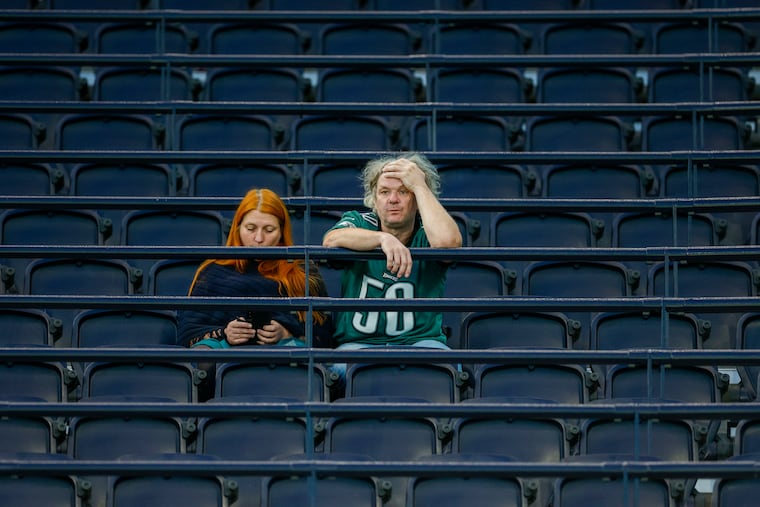
Fans hoping to travel to the World Cup are getting priced out of tickets, forced to pay a visa bond in the thousands upon arrival, or barred from entry because of a Trump administration ban.
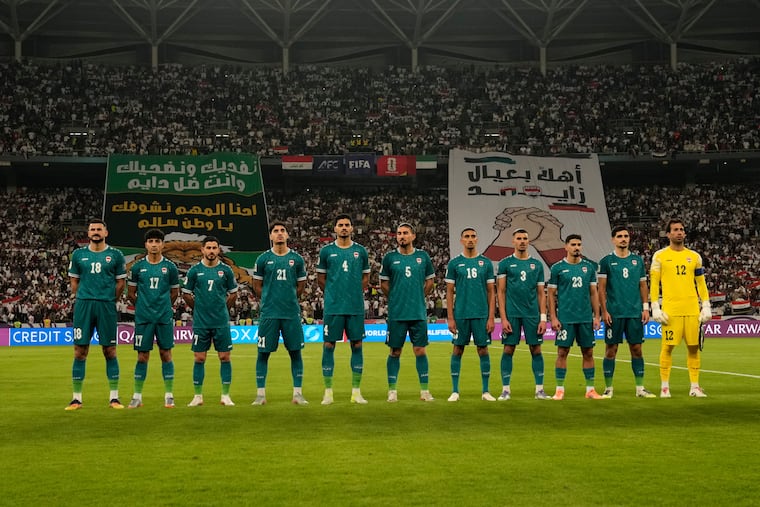
When Iraq booked its trip to the World Cup in the early hours of April 1, it became the final team to qualify for the newly expanded 48-team tournament.
It also determined the final nation scheduled to pass through Philly when Iraq faces France during the group stage on June 22 (5 p.m., Fox29; tickets).
Iraq will return to the World Cup after a 40-year absence, but it is the fourth country coming to Lincoln Financial Field that is on the Trump administration’s list of nations under travel bans. In addition to Iraq, fans living in Haiti, the Ivory Coast, or Ghana will find it difficult, or even impossible, to watch their nation compete in- person.
According to Congress.gov, the bans will not affect the teams themselves, meaning that players, coaches, and immediate family will be able to travel, as of the latest proclamation in December, when the number of banned countries increased to 75. Some countries, like the Ivory Coast, have a partial ban, in which those looking to travel to the U.S. for the tournament would need to post visa bonds ranging from $5,000 to $15,000.
» READ MORE: Philly, get ready to meet Iraq, the final team to qualify for this summer’s FIFA World Cup
With the World Cup positioned as one of the biggest spectacles of the global game, many fans already are incensed by the high cost of tickets for many early matches, with prices in the thousands, mainly on FIFA’s official secondary site.
Philadelphia Soccer 2026, the delegation tasked with all things World Cup for the six matches in Philly from June 14 to July 4, told The Inquirer in an online statement that while it understands the situation regarding fans from countries on the administration’s banned list, it can only focus its preparations for the fans who can make it here.
“We understand the myriad concerns related to international travel given the current geopolitical climate,” the organization said. “In continued coordination with the White House Task Force and the [Trump] administration, we remain confident that any [and] all qualified teams for FIFA World Cup ’26 — including players, coaches, and staff — will be able to compete in Philadelphia.
“As a U.S. host city, however, we cannot speak to — or for — the international visa process for fans. What we can say with confidence is that Philadelphia is prepared to welcome every team, any fan, and all diaspora communities traveling from across the country to be part of this tournament. FIFA World Cup ’26 belongs to the world, and Philadelphia intends to receive it that way.”
» READ MORE: Achilles injury ends U.S. forward Patrick Agyemang’s World Cup hopes
‘Football heals all’
Hussein Hussein couldn’t believe it.
He stayed up past 2 a.m., taking in Iraq’s defeat of Bolivia in the FIFA playoff final. When the final whistle blew, he was elated.
In the Frankford-Torresdale section of the city, people know Hussein, 38, as “AJ,” the owner of Crispy Wonders. Hussein, whose menu focuses on Iraqi-inspired Middle Eastern cuisine, said he chatted with relatives and friends back home in Iraq who found joy in the result, despite the turmoil caused by the conflict between neighboring Iran, the United States, and Israel.
“Oh, my God. What a moment,” Hussein said. “I have friends and cousins in Iraq. They are all celebrating. The government gave [its citizens] off [from work] to people for two days; they have been celebrating since 6 in the morning. The football heals all.”
But many of those people who watched that match don’t have the option to travel to the U.S. for a game this summer, and if they did, Hussein says it’s not feasible or safe to shell out the money for matches.
As of April 7, the cheapest seats for Iraq’s match against France were Category 3 (upper-level) tickets listed at $667. For a seat close to the action? A Category 1 lower-level ticket ranged from $907 to a whopping $28,750.
According to Hussein, securing the ticket is not even the hard part.
“It’s hard for people who live in Iraq to come to this game [in Philadelphia],” he said. “It’s like, even if you have the money, it’s hard to get a visa to come to the United States, right? Especially right now at this time, you know, because of the [Iran-U.S.] war.
“But we are trying to keep our cousins and friends posted on everything that happens here, you know? It’s all we can do. It’s been so long since we’ve been in a World Cup. We can still share this moment, even though we are far away.”
It’s not surprising that because of visa bonds in the thousands or travel restrictions, the pilgrimage of soccer fans flocking to the World Cup might be smaller than anticipated. However, despite FIFA’s claim of high ticket demand, there might be fewer fans in-stadium, even with the tournament’s expansion.
Because of fans’ inability to travel, there’s a belief that some nations would consider boycotting the affair altogether. Earlier this year, Iran threatened to pull its team from the World Cup because of the death of its supreme leader at the hands of the United States, but it has yet to make the claim official.
It’s widely believed that where countries stand on bringing their national teams to matches in the U.S. will be revealed at the upcoming FIFA Congress on April 30 in Vancouver, British Columbia.
Soccer prevails, politics aside
Over the course of 11 seasons as one of the captains of the Union, Alejandro Bedoya has become an ambassador for the sport in the city. He has consistently been a voice on topics from gun violence to grassroots soccer growth.
When asked about Philly’s place in the World Cup and the four nations coming here with bans or restrictions on their fans, Bedoya started out diplomatically. Shades of his frustration emerged, however, in his response as a former U.S. national team player who competed at the 2014 FIFA World Cup in Brazil and is a devout fan of the sport.
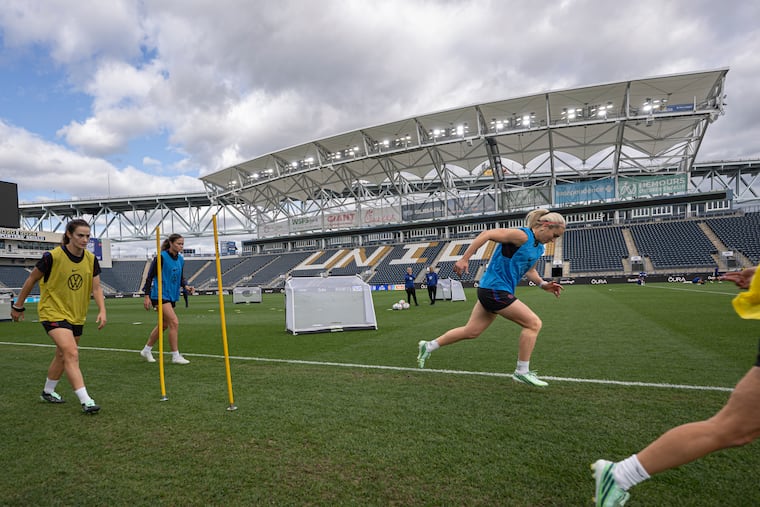
“Yeah, look, it’s just not ideal, right?” he said after a recent Union training session. “I’m not going to get into the politics of it all because I think it is very political in terms of who and what fans from what countries can travel here and there, and that’s way out of my scope.”
But here’s the part that hit home: “But the game of soccer, that’s what it’s all about, bringing people together. … I mean, that’s the beauty of the sport, right? Philly saw some of it last year with the Club World Cup, with fans from Egypt or Brazil ascending here. I recall some articles from Eagles fan bases talking about how crazy they were partying on the Parkway, the flares and the fireworks. That’s passion. That’s the passion that naturally comes when you put all of these cultures together."
And then he said what any fan of the sport would say, whether you choose to get into the politics, or, in Bedoya’s case, choose to remain a purist.
» READ MORE: Can the U.S. play in Philly at the World Cup? It’s complicated.
“For me, it’s disappointing, you know, because you want to be part [of it]. You want to see all that stuff,” he said. “That’s what makes the World Cup the World Cup. I feel for these fans. I feel for these countries. But I know [for] those players, this is the pinnacle of any professional player’s career. So they’re going to want to do everything they can to take great pride in representing their country.”
In this case, even if their own countrymen can’t attend.

Nine nations will compete in five group stage matches this summer, plus two more in a knockout game on July 4. Here’s what you need to know about those countries — and what those fans need to know about Philly. Click here for more.