In a chase for the USMNT’s World Cup roster, Media’s Auston Trusty is all in on the ‘why not me’ mentality
With the U.S. men’s soccer team’s starting centerback group not yet settled, the Media native has a big opportunity in this month's games against the superstars of Belgium and Portugal.

MARIETTA, Ga. — The door creaked ajar for Auston Trusty last November, when he came back to the U.S. men’s soccer team for the first time since the November prior.
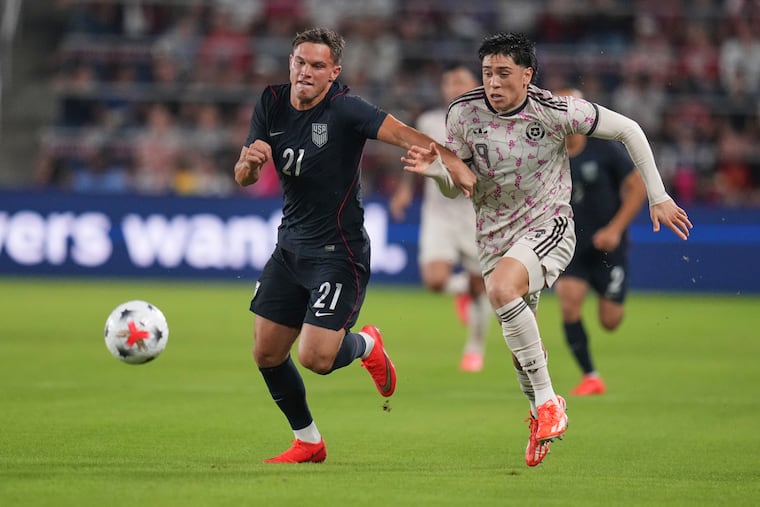
Then he nudged it a little more by playing well in the 5-1 rout of Uruguay. He got the full game and delivered an assist, 45-of-46 passing, five clearances, and one tackle.
Now the door is really open, and at a significant time. With the U.S. men’s soccer team’s starting centerback group not settled, Trusty has a big opportunity this month to earn a trip to the World Cup.
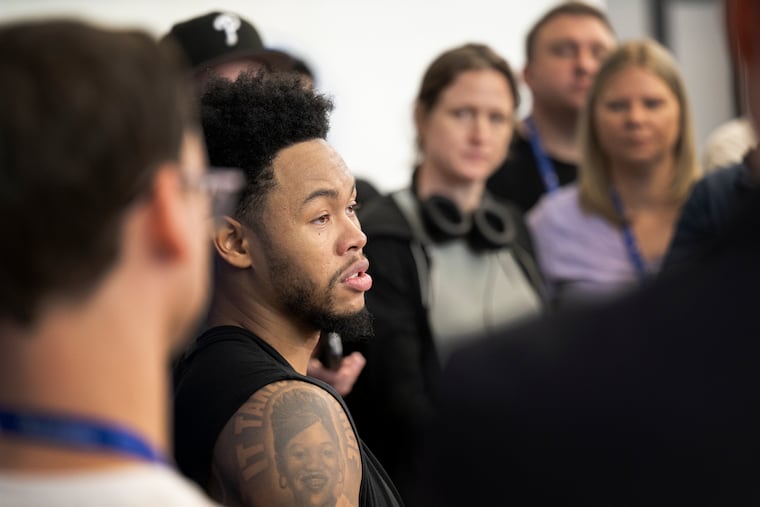
“To have a really good game, and especially to have the team win in that fashion against a really solid team like [Uruguay], I was just so happy,” the 27-year-old Media native told The Inquirer during the Americans’ training camp ahead of games against star-studded teams. They’ll play Belgium on Saturday (3 p.m., TNT, Telemundo 62) and Portugal on Tuesday (7 p.m., TNT, Telemundo 62).
Trusty noted that he’s had an assist in each of his national team starts. That’s true, even if the sample size is small: just two starts in five senior caps. But if anyone’s going to make a player’s case, it will naturally be the player himself.
He said manager Mauricio Pochettino didn’t talk with him individually, instead talking “with everybody as a group. He was very happy for the win, and obviously it just puts more belief [in], and more of a statement, that we’re in a really good spot.”
» READ MORE: Gio Reyna knows it’s ‘controversial’ that he’s back with the USMNT, and aims to show his talent again
Making a case
It’s easy for forwards and attacking midfielders to make a big impression on a national team coach: score goals and deliver assists. But how does a centerback do it when the stats aren’t so obvious?
“I think just being dominant, offensively and defensively,” Trusty said. “I think being a centerback, being a defender, a lot of people think it’s just defending. There’s actually the offensive side, too, being really dominant on that end as well and providing a really good safety net for the team.”
The conventional wisdom is that Pochettino will pick five centerbacks for the 26-player World Cup squad, but that sense is formed, as much as anything, by what other teams do. He hasn’t given any hints, and that’s before factoring in players who can play multiple roles.
Joe Scally and Alex Freeman, for example, are outside backs who also can play inside; and Tanner Tessmann is a midfielder who can drop deeper.
» READ MORE: Brenden Aaronson is fighting to make the World Cup squad, and to stay in the Premier League
There’s also the Noahkai Banks factor. That may be becoming repetitive to fans, but it’s a testament to the 19-year-old prospect’s talent and Pochettino’s high regard for him.
So how, as an individual player, do you try to factor all that into making your case? And how do you form chemistry with teammates against whom you might also be competing for a plane ticket?
Trusty’s answer cut through that.
“You’re in professional sports,” he said. “There’s competition and there’s other players that play the position. You’re not the only soccer player, the only football player in the entire world that plays that position. It’s not really more to it than that.”
An unusual season at Celtic
Trusty’s club, Scotland’s Celtic, has fallen from some of the heights it used to enjoy. Though the Bhoys are four-time defending Scottish champions, they failed to make the Champions League group stage this season and are on their third manager of the campaign — with the second, former Columbus Crew boss Wilfried Nancy, lasting just eight games over 33 days.
» READ MORE: Three key positional battles to watch with the USMNT this month, as the World Cup looms
But the most unusual thing is the domestic scene. Celtic and crosstown rival Rangers have ruled the roost for decades, winning every league title since 1986 and a combined 110 of the all-time 130. (They each have 55 at the moment.)
This season, Edinburgh-based Heart of Midlothian has a chance to break that hegemony. With seven games to go, Hearts are in first place by three points over Rangers and five over Celtic. Their first league crown since 1960 is in reach, and it could be huge for Scottish soccer.
“It’s really our trophy to take,” he said. “Yes, we’ve had a lot of ups and downs this year, but I think if it was years before, the trophy would be ours and we’d be in really good standing. But, obviously, we’ve kind of made it difficult on ourselves this year — we gave other people a chance to make a run for themselves, so now we’re playing catch-up.”
While the green half of Glasgow is incensed, the rest of the soccer world is intrigued. A title race brings more attention to any domestic league. Trusty acknowledged that much, even if he’d obviously rather be winning with Celtic’s usual gusto.
» READ MORE: Tim Ream is Mauricio Pochettino’s captain with the USMNT, but that doesn’t spare him any pressure
“When someone new comes in, negativity sells,” he said. “If Celtic or the big guys or aren’t doing so well, [a team] like Hearts could possibly win the league. People like that story a little better.”
If negativity selling strikes a familiar tone in Trusty’s hometown, so might something else that’s been going around the U.S. program lately. When Pochettino gathered his players on the opening day of this week’s practice, he offered a simple message: “Why not us?”
Trusty was 10 years old when “Why can’t us?” became Phillies fans’ rallying cry on the way to the 2008 World Series. To be fair, that team always stood a better chance of winning the biggest title than this U.S. team, even if the current era is the most talented in men’s national team history.
But as an internal motto, Trusty appreciated hearing it.
» READ MORE: The USMNT’s March squad shows Mauricio Pochettino has much work to do before the World Cup
“It’s kind of the mindset you have to take,” he said. “Even to become a professional athlete, you just have to have the mindset of, ‘Why not me? Why can’t I be the one to make it pro? Why can’t I be the one to put myself, my family, in a [good] position while being pro?’”
Now it extends to a collective.
“It’s a collective, ‘Why not us?’” Trusty said. “‘Why can’t we go far in the World Cup? Why can’t we win the World Cup?’ So, really, that mindset drives a lot.”

Nine nations will compete in five group stage matches this summer, plus two more in a knockout game on July 4. Here’s what you need to know about those countries — and what those fans need to know about Philly. Click here for more.