Mark Franek quit being a lawyer to teach the history of U.S. soccer to the future of U.S. soccer
Cavan Sullivan found the history books about U.S. soccer he was assigned boring and negative. It was Franek’s job to make that subject more engaging, and that led him to write his own book.
Cavan Sullivan slammed his book bag down and told the teacher that he had had enough of those boring, dull readings.
Animal Farm? The House on Mango Street? No, not those.
It was the passages Mark Franek assigned four years ago to the class of ninth-grade soccer phenoms about the sport’s history in America that made Sullivan irate. They weren’t just uninteresting. They were negative.
“You can just take a look at the books and the titles of them,” said Franek, who teaches at YSC Academy, the soccer-specific high school that funnels students to the Union. “One is Why the U.S. will never win a World Cup. Who wants to read that? Let alone, Cavan Sullivan.”
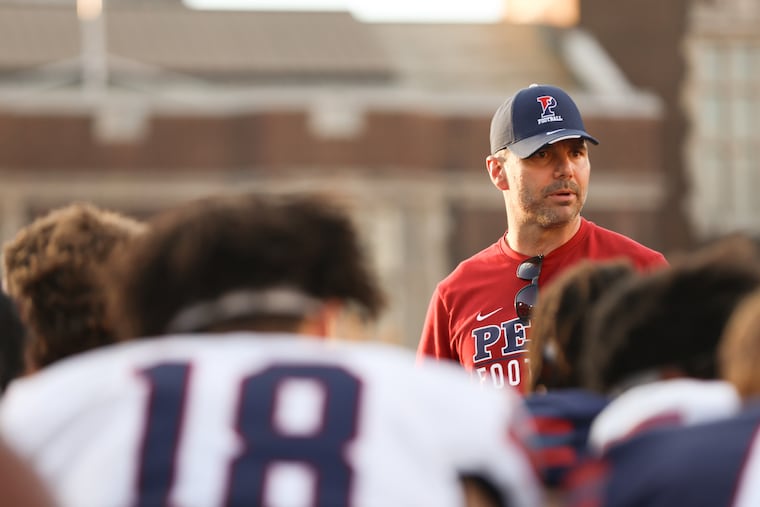
Franek, 57, taught at Penn Charter in the 1990s before becoming a lawyer and then returning to the classroom in 2022 to teach at YSC, the high school for elite boys’ soccer players that produces World Cup players and sits across the parking lot from the Union stadium in Chester.
» READ MORE: Benny McLaughlin was a Philly soccer pioneer. He couldn’t get off work to play in the World Cup.
The school moved from Wayne to Chester in 2023, taking over space in an old power station on the banks of the Delaware River. It is an incubator of soccer talent, and three players on the U.S. World Cup squad — Mark McKenzie, Auston Trusty, and Brenden Aaronson — graduated from YSC.
Sullivan, a 16-year-old who already plays for the Union and has a deal to play for Manchester City in the English Premier League when he turns 18, graduated last month. He might be the future of American soccer. First, Sullivan had to learn the history of American soccer. And it was Franek’s job to make that subject more engaging.
“If you think about where someone is in their formative years and this really critical point of development in mid-adolescence and learning about themselves and the world and the soccer world,” said Jared Micklos, YSC’s Chief Strategy Officer. “Then understanding what comes before them is also this optimistic way to give them hope and confidence and belief that they might be able to write the literal next chapter is something you need to reinforce and you need to inspire.”
Back to school
Franek grew up in York and played soccer at Duke University before starting his teaching career in Montgomery, Ala. He wanted to teach American Literature and coach varsity soccer. An Alabama high school, Franek said, was the only place that would let him. He moved four years later to Penn Charter, where he coached Chris Albright and Bobby Convey — teammates on the 2006 U.S. World Cup team — and taught Matt Ryan.
Franek left Penn Charter in 2007 and enrolled at Temple’s Law School after realizing there was money in litigation. He used to charge his neighbor $20 to mow his grass while his wife — a lawyer — made much more for providing a few hours of legal aid for the neighbor’s painting business.
“I said, ‘I’m in the wrong field,’” Franek said.
» READ MORE: Philadelphia was the star in its men’s World Cup debut
He landed a job with a big firm, enjoyed the money, but hated the hours. Franek was in his early 40s when he passed the bar, but he was working like someone in their 20s. He worked almost every weekend and could see he would soon be missing his son’s soccer games. Something had to give.
He went to YSC to meet Brendan Sullivan shortly after Quinn Sullivan — Cavan’s older brother — signed with the Union in 2022. Franek wanted Sullivan to autograph a jersey for his son. And there he saw Nooha Ahmed-Lee, the former administrator from Penn Charter and current YSC Head of School.
“An hour later, I realized she was actually vetting me and trying to figure out if I was happy being a lawyer,” Franek said. “I talked to my wife and said, ‘I’m going to call Nooha and say if you’re serious about an English position, then I’m serious about getting out of the law and back into teaching.’ It was the right time for me.”
Writing the book
Ahmed-Lee heard about Sullivan’s reaction to those readings and challenged Franek to design a course about the history of American soccer that he could weave into his English class. Franek accepted. He tracked down every book he could find about U.S. soccer, combed through internet articles, and learned everything he could.
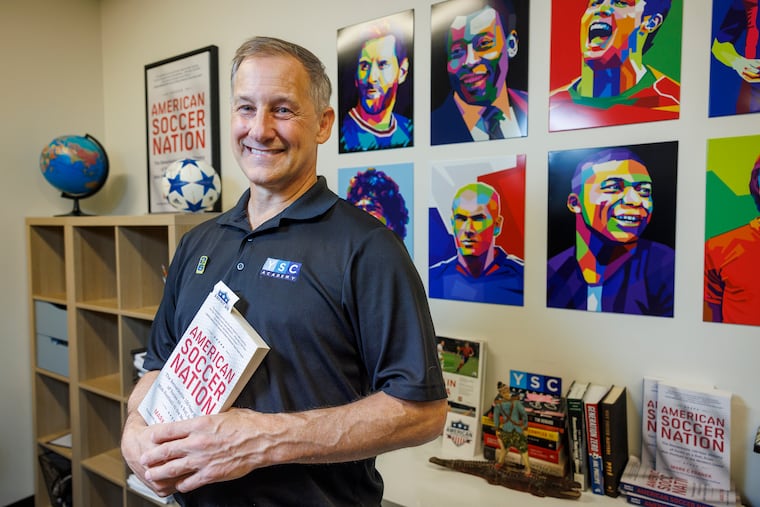
But Franek failed to find something that covered the whole story. So Franek wrote his own: a nearly 300-page book that was published earlier this year titled American Soccer Nation. It is a thorough history of American soccer that tries to deliver the story with optimism. It’s something Sullivan would want to read. He even wrote the foreword.
“It’s incredibly rewarding to see an idea that began in our classrooms grow into a resource that is now helping students and soccer enthusiasts better understand the game,” Ahmed-Lee said.
» READ MORE: Philly’s path to the World Cup was paved at Newt’s, where playing on cinder was a ‘badge of honor’
Franek uses the book in class at YSC as he assigns a chapter every week. The kids who dream of playing professionally learn about the pro league that rivaled baseball in the 1920s and the one that recruited Pele in the 1970s. Yes, there was pro soccer before the MLS. And Franek’s book does not ignore the mistakes that plagued those early leagues or the challenges the MLS faces today.
“I have the best job in the world,” Franek said. “I get to teach young men in small classes who are living the dream. They’re grinding in the pitch and the classroom, trying to get better, and they have little tolerance for busy work or boring work or work that won’t help them get better whether it’s on the pitch or in the classroom.”
The final chapter of Franek’s book details YSC and why he believes that “total immersion” is soccer’s path to success in America. The Union paired their soccer academy with a high school that is centered around soccer.
“Imagine what the United States could do on the international level if one-third or one-half of the 30 MLS teams were able to build an academy and then surround that soccer environment with a learning environment that works for their setting and their community where you’re supercharging the dream and helping the kids along to the college dream,” Franek said. “The Union have shown without a doubt that it works.”
YSC says 86% of its students graduate from college and 68 have signed professional soccer contracts since the school opened in 2013. The academics are not secondary at YSC but everyone understands the importance of soccer. The day starts later so students can train in the morning. Coaches and teachers work together to not overload a student’s schedule.
“We have to remind everyone that their ultimate drive and purpose is to be great at soccer,” Micklos said. “Whether that means they’re a pro directly when they leave our doors and walk off the stage or they go to college and become a pro or it means they go to college, play soccer, and that’s the end of their soccer career, but the journey has prepared them for life and a career off the field.
» READ MORE: Rob Stone has spent half his life broadcasting World Cups. This summer, he leads what could be Fox’s last.
“The thing that drives them and their passion and the reason for the school is to help stimulate that growth and help them on that journey. It’s a hard journey for a young person to have the demands they have. If those things aren’t designed around their schedule then we’re actually doing them a disservice in their day-to-day life by creating a bigger challenge or hurdle than they need vs. saying, ‘Hey, we incorporate everything you need on the soccer field and then integrate that into what we’re doing at the school because an aligned and integrated environment is going to be the one that helps you best prepare.”
Even the food is fit for budding pro athletes.
“I remember two weeks into school and Cavan was eating a T-bone steak in my class,” Franek said. “I’m like, this is weird. I’ve taught for 15 years at Penn Charter and I’ve never seen anyone pull out a T-bone steak with A1 Sauce and then grab House on Mango Street. You’re living with alpha males. There’s a certain energy around the building that’s palpable and it’s glorious. Cavan was great and so is pretty much everyone. They’re moving in a direction and they’re super-focused.”
Franek had Sullivan and his classmates autograph a ball during their freshman year. It was a keepsake of a class that pushed him to write that book. So far, several of them have already signed pro contracts. Sullivan should soon be playing in England for one of the world’s biggest clubs, and he’ll be a contender in four years to make the U.S. World Cup roster. Perhaps he’ll even team with his older brother, who graduated from YSC in 2022. If so, Franek will have more positive stories about American soccer to share with his students. And his book will need some more chapters.

Nine nations will compete in five group stage matches this summer, plus two more in a knockout game on July 4. Here’s what you need to know about those countries — and what those fans need to know about Philly. Click here for more.