The NFL’s stadium greed, the Flyers’ missing component, and other thoughts
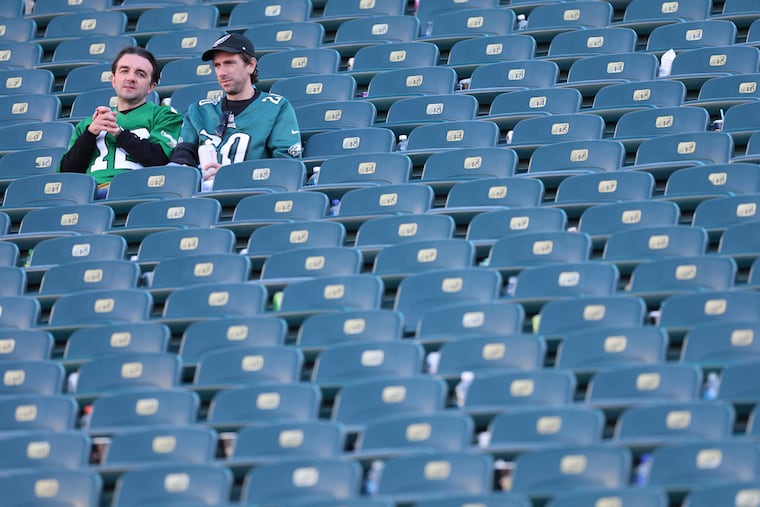
Attending a major pro sports contest became a luxury buy long ago. Now it’s on its way to becoming a sterile exercise only a select few can afford.
First and final thoughts …
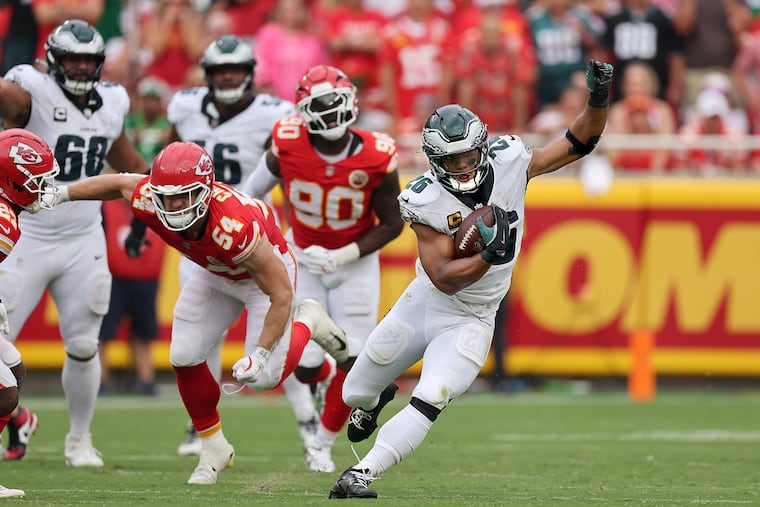
Clark Hunt and his family, who own the Kansas City Chiefs and are worth a reported $25 billion, are going to build a new domed stadium for the team in Wyandotte County, Kan. Wait, that’s not quite right. The Hunts aren’t really the ones building it. The construction is projected to take $3 billion to complete, but $1.8 billion — 60% of the cost — will come from Kansas taxpayers.
That’s OK, though, because once the stadium is finished, it’ll be a gleaming football palace where the Chiefs’ opponents will never have to face harsh Midwest winter conditions during December and January. The teams will play football the way it was meant to be played: inside an aseptic arena where the temperature is always 72.3 degrees Fahrenheit.
» READ MORE: Why waste a Christmas wish on the Eagles? Phillies, Sixers need all the help they can get
Best of all, the NFL is sure to hold at least one Super Bowl at the stadium. And by at least one, I mean one, because if there’s anywhere that the celebrities and fat cats and influencers who populate Super Bowl week can’t wait to go, it’s … the Missouri-Kansas border.
What we’re seeing here, of course, is the privatization of profit and the socialization of cost, a dynamic as old as the modern multibillion-dollar industry of pro sports. What we’re also seeing — and it will accelerate — is the slow death of the un-rich sports crowd. Those with the financial means to go to a game in the Chiefs’ new stadium — or in a new Eagles stadium, if Jeffrey Lurie eventually gets his way — don’t want cold and snow to mar their fun. They don’t want the experience they’re having to be common or accessible.
Attending a major pro sports contest became a luxury buy long ago. Now it’s on its way to becoming a sterile exercise only a select few can afford, and those fans who care the most, who drive interest and revenue in these games boys and girls can play, end up paying anyway, even while they are kept on the other side of the window.
Still seeking a star
If the NHL season had ended on Christmas … well, that would be a really short NHL season. Also, the Flyers would have qualified for the playoffs for the first time since 2020, and Trevor Zegras would have been considered a brilliant offseason acquisition.
But the season, of course, isn’t even half-finished yet, and, given the Flyers’ recent history, there’s still plenty of reason to wonder whether they’ll keep up a postseason-worthy pace. That natural skepticism accounts for some of the relative indifference to their relative success so far. People will believe the Flyers are a good team when they see the Flyers be a good team over a full 82 games.
There’s another reason, though, why the Flyers haven’t penetrated the broader, more mainstream public conversation about Philly sports so far: They don’t have any stars.
At his current pace, Zegras would finish with 34 goals and 83 points over 82 games, which would lead the team but place him 31st in the league in points per game. Offense has been up in the NHL for a while. This would be the fifth straight season that the average team has scored at least three goals each game, the first such stretch in the league since the early 1990s.
Yet the Flyers haven’t been part of that surge in scoring. They have not had a player with 35 goals or more in a season since 2011-12, when Scott Hartnell had 37. They have not had a player with 40 goals or more in a season since 2008-09, when Jeff Carter had 46. And they have not had a player with 50 goals or more in a season since 1997-98, when John LeClair had 51.
» READ MORE: There’s no denying the Flyers’ good vibes. What’s behind this season’s positive shift?
That recent history also explains part of the frustration and disgruntlement from the fan base over Matvei Michkov’s sluggish sophomore season. Michkov was supposed to be the franchise’s next superstar, and he still can be, but his regression has at least delayed his development into the kind of player who even a hockey neophyte knows and feels compelled to watch. The Flyers haven’t had such a star since Eric Lindros, and, at the moment, they still don’t.
Casty got one thing right
A tip of the cap to Mark Whicker, an all-time great Philadelphia sports columnist, for noting that Nick Castellanos delivered the quote of the year in Philly sports.
After Phillies pitchers Cristopher Sánchez and Ranger Suárez were snubbed for the National League All-Star team in favor of the Milwaukee Brewers’ Jacob Misiorowski, who had made just five starts, Castellanos said:
“This is turning into the Savannah Bananas.”
No offense to the Bananas, who make baseball less stuffy and lots more fun for loads of kids in America. But Castellanos’ point about the All-Star Game being more than just a meaningless exhibition — that it is, still, supposed to be an acknowledgment of and accolade for those players who have performed best through a season’s first half — was well taken. Whatever one might think of his performance on the field in 2025, he launched that answer into the upper deck.
Good stuff, Gramps
In his two games with the Indianapolis Colts this season, nearly five years after he had retired, Philip Rivers — 44 years old, father of 10, grandfather of one — has completed 41 of 62 passes for 397 yards and three touchdowns.
How hard can it be to play quarterback in the NFL if Pop-Pop can do it this well?

Mike Sielski alerts