Fran Dunphy speaks for the first time about how the NCAA point-shaving scandal touched La Salle
Dunphy says he didn't consider that any of his players might be engaged in fixing games. He spoke Monday to acknowledge what many of the game's key figures have seemed content to ignore.
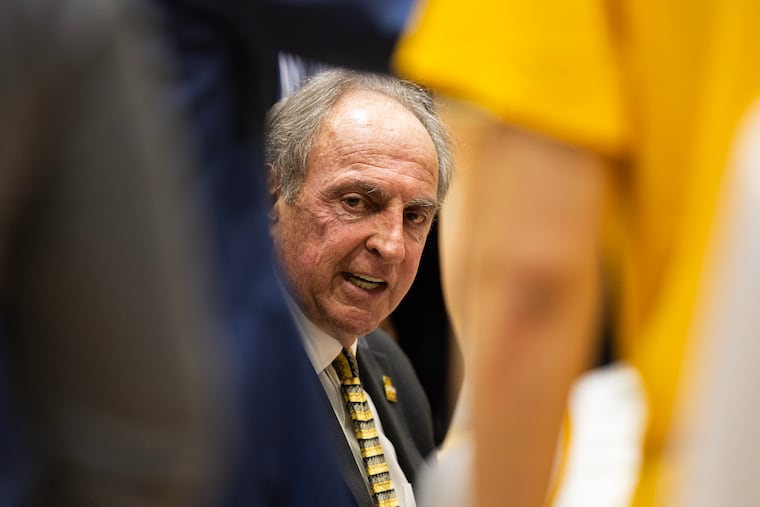
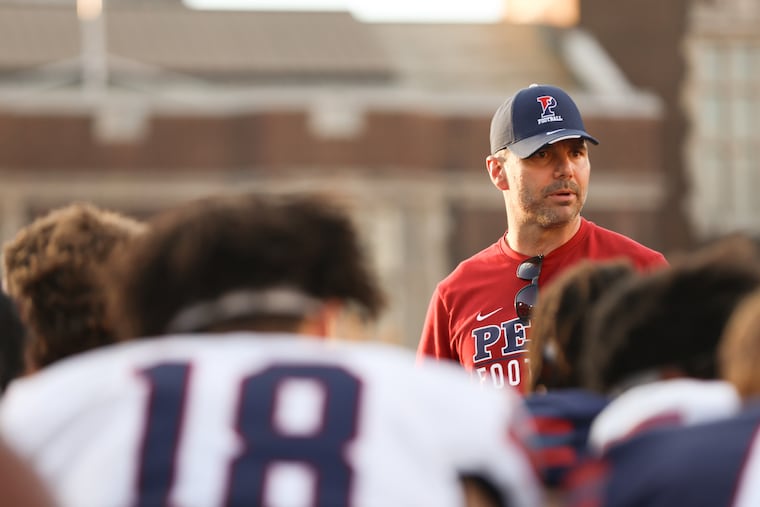
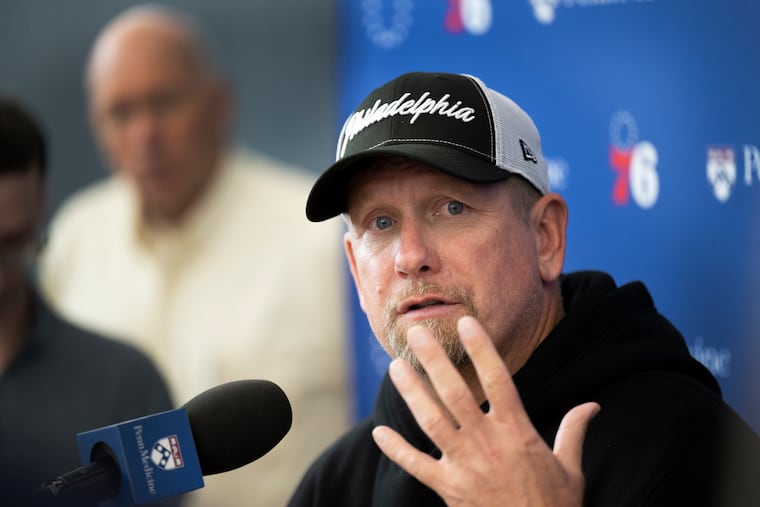
Fran Dunphy sat at a long table inside La Salle University’s athletic center early Monday afternoon, his body turned toward a wide window on the other end of a conference room, as if the difficult discussion topic pained him and he was trying to shield himself from the hurt.
A 70-page federal indictment had dropped Thursday accusing more than 39 college basketball players of fixing games and shaving points during the 2023-24 and 2024-25 seasons. Dunphy had read in disbelief as La Salle was mentioned more than once. One of his team’s games was the target of an alleged fix, and one of his former players, Mac Etienne, appeared in the indictment 28 times for shaving points at DePaul University in ’23-24, the season before he came to La Salle. Etienne reportedly reached a plea agreement with prosecutors on Dec. 8.
La Salle released a statement Thursday noting that no one now connected to the university was charged and that the school would cooperate with any investigation. No one has accused the university’s administrators or coaches of any wrongdoing, and everyone who knows Dunphy knows that his integrity is beyond reproach. Still, there’s no getting around the disturbing implication of the La Salle-related details within the indictment.
Two of the alleged fixers, Jalen Smith and Antonio Blakeney, “attempted to recruit” La Salle players to shave points in a Feb. 21, 2024, game against St. Bonaventure. The Bonnies were favored in the game’s first-half spread by 5.5 points, and the fixers “placed wagers with various sportsbooks totaling at least $247,000 on St. Bonaventure to cover” that spread. The Explorers led, 36-28, at halftime and won, 72-59.
“We did our job that day,” Dunphy, who retired from coaching after last season, said in his first public comments since the indictment’s release. “I felt good about that — that there was nothing there, that we had won the game. I truly liked coaching those guys on that team. That was a good win for us.”
But the fact that the bets failed and the fixers lost doesn’t answer an unsettling question: Why would the defendants have wagered nearly a quarter of a million dollars on a middling Atlantic 10 game if they didn’t already have reason to believe they’d win the bet — if they didn’t think they had someone inside working to help them?
“I couldn’t tell you,” Dunphy said. “Again, I didn’t go down that path even a little bit. I just thought about my team, the fact that we had played fairly well that day, and I was just surprised and disappointed that anybody even thought we were involved in any of that. That was my disappointment.”
Has he been thinking about that team, that season, and asking himself if such a scenario — one or more of his players shaving points — was possible?
“Well, we were about a .500 team,” he said. “It wasn’t like we were superstars. But we had a good group of guys who wanted to work their ass off. That’s how I looked at it. Did I go back to the guys who played a lot of minutes? Yeah. That wasn’t their M.O. That would have been really surprising to me if any of those guys thought that [shaving points] would be something beneficial to them or anybody. …
“Just surprise, disappointment, a bit shocking. Just, how did this happen? Where do we go with it?”
As of Monday afternoon, he had neither rewatched the St. Bonaventure game nor reviewed the box score for anything curious or alarming. He hadn’t thought about the incident in those terms, he said, and perhaps he could not bring himself to think about it that way. How many times had he watched one of his players make a silly, stupid mistake during a game, and how many times had he yelled, What the hell are you doing? “I didn’t think twice about it,” he said. Was he supposed to have considered that a player screwing up like that was doing it on purpose, that the kid was on the take?
Hell, in the Explorers’ 81-74 victory last March over St. Joseph’s, in the final win of Dunphy’s career in his final home game, Etienne had scored 13 points and grabbed 11 rebounds in 36 minutes. “Just a phenomenal game for us, and he was very much a part of it,” Dunphy said. “He was a very interesting guy to coach. Talented. A worker. And he seemed to care very much about his teammates. … He never complained about minutes or any of that.” But now Dunphy was remembering Etienne’s recruitment, the coaxing it took to get him to transfer from DePaul to La Salle, with the hindsight that Etienne had thrown games before he ever showed up and settled in at 20th and Olney. Now Dunphy was searching for signs and tells in retrospect.
“You’re running through every guy who’s hitting the portal,” he said. “‘What do we need? This guy, does anybody know him?’ Some of the staff members knew him, knew about him.
“Years ago, the portal wasn’t like it is. You’d recruit a kid in his sophomore, his junior year. You’d get to him. You’d get to know the parents, get to know his coaches. The coaches tell you what the kid is like, some of the idiosyncrasies. We don’t study that much anymore. There’s not as much vetting in today’s world. But that’s the way it is. It’s a challenge, and you try to meet that challenge.”
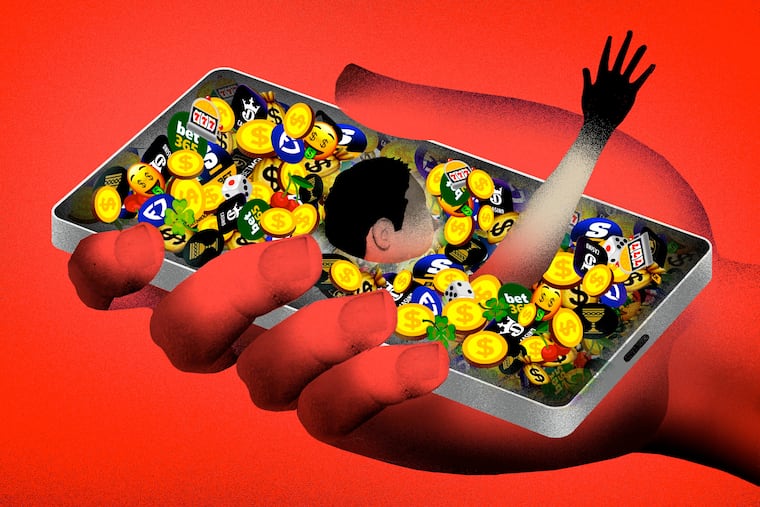
College basketball has had plenty of point-shaving scandals throughout its past, of course; one of the biggest, in 1961, involved St. Joe’s. But it’s so easy now for gamblers to contact players and for anyone to place a bet — just a few taps and swipes on a smartphone — that even if law enforcement authorities keep catching the fixers, the credibility of college basketball and sports overall still will be in peril. The more arrests, the less the public will trust what it sees on the field and the court. The corruption can appear total and endless, yet so many stay strangely silent about it.
Look around. Listen. Who are the giants of college basketball, the big-name coaches, who are speaking out about this scandal, who are sounding bells and alarms about the sanctity of their sport? “Nobody ever talked about this among my fellow coaches. Nobody,” Dunphy said. “It’s just not something that you talk about because you don’t believe it’s happening. You hear these stories that tell you it is, but you just say to yourself, ‘I don’t know how this could happen.’”
The rot may have spread to his program, and Fran Dunphy doesn’t have to be the loudest voice calling for everyone to open their eyes, including his own. He just had to do what he did Monday. He just had to be one of the first.