Golfers can’t wear shorts, but in 1983 at Oakmont, one did. And it started over a beef with officials at Merion.
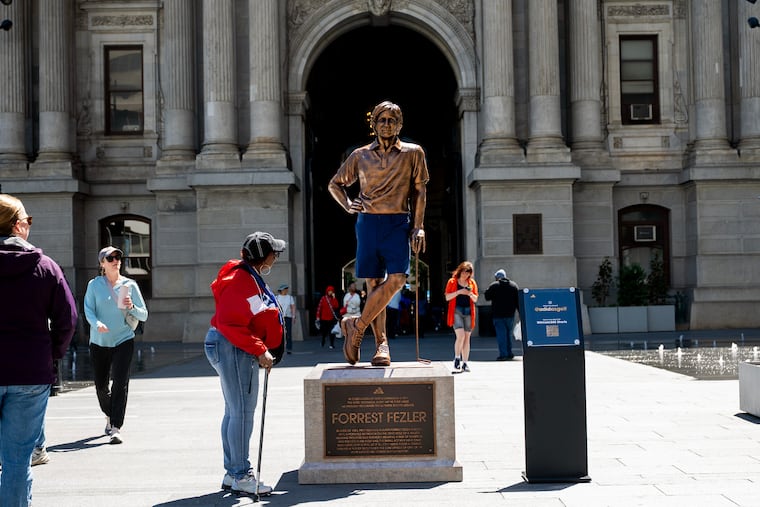
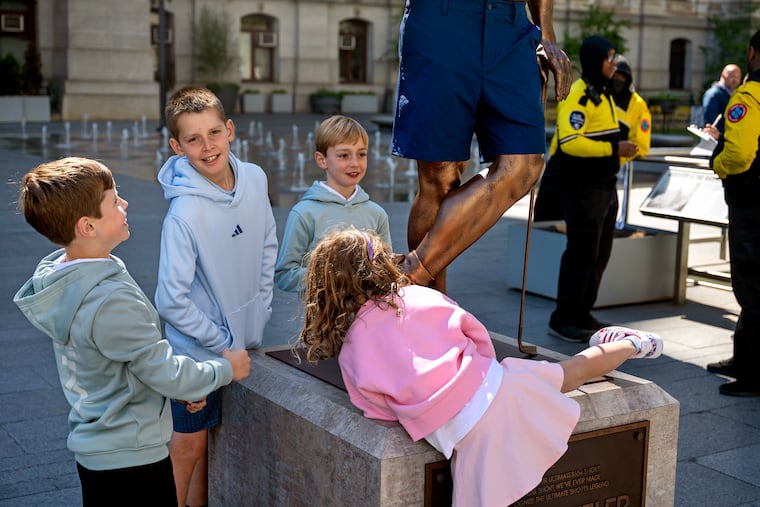
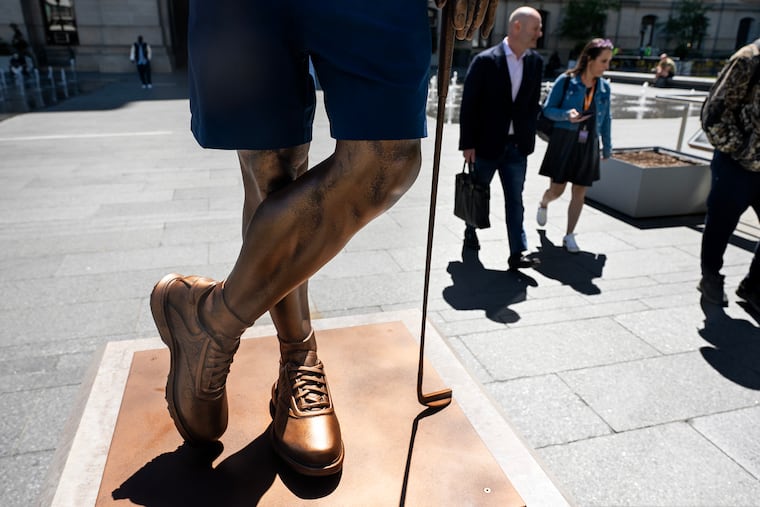
With the PGA Tour descending on Aronimink Golf Club for the PGA Championship this week, Adidas honored Forrest Fezler and his show of rebellion with a statue of the golfer wearing shorts.
Shorts in golf (or the lack thereof, for that matter) has been a decades-long debate within the sport. While players are now allowed to wear shorts in practice rounds, the PGA Tour does not allow its players to wear them during competitive rounds.
But that doesn’t mean players haven’t tried to force a rule change. Forrest Fezler, a golfer in the 1970s and 80s, famously changed out of pants and into shorts as a form of dress code protest during the 1983 U.S. Open at Oakmont, near Pittsburgh. He played the 72nd hole in shorts, and remains the only player ever to do so at a U.S. Open or PGA Tour tournament.
» READ MORE: Delco’s Braden Shattuck brought his 18-year-old Philly caddie along for his PGA Championship ride
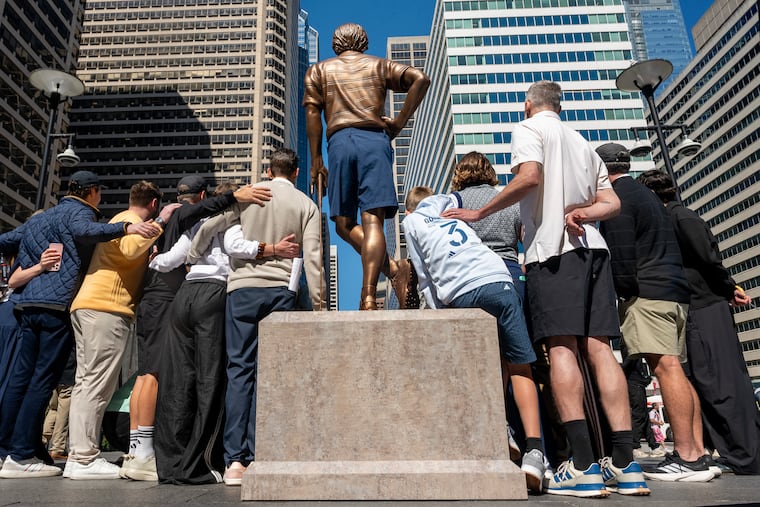
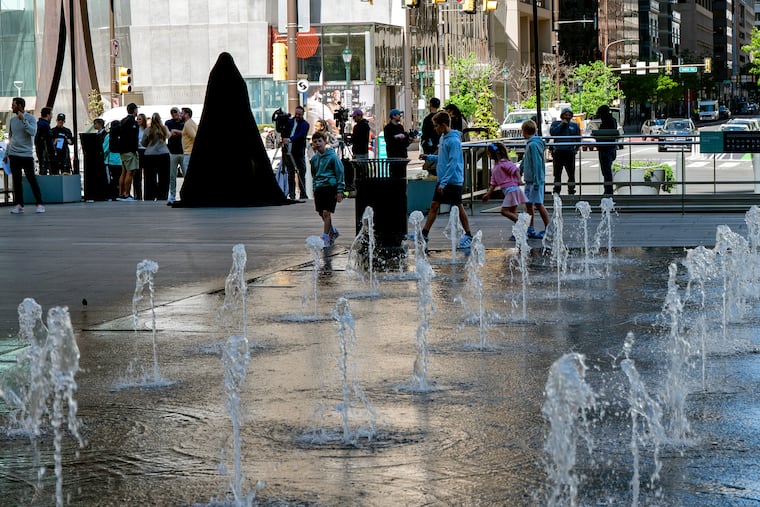
With the PGA Tour descending on Aronimink Golf Club for the PGA Championship this week, Adidas honored Fezler, who died of brain cancer in 2018, and his contributions to golf with a statue of the golfer wearing shorts that will be displayed in Dilworth Park through Sunday. Adidas also signed him to a posthumous name, image, and likeness endorsement deal coinciding with the launch of the brand’s Ultimate365+ Shorts. His children, Brooke and Jordan Fezler, were on site for the unveiling, along with their kids.
“Seeing his legacy continue today through Adidas, with select players sporting the special edition Fezler patch on their polos and the new shorts is truly special to our family,” Brooke Fezler said. “It’s a reminder that his story didn’t end back on the 18th hole. He is still inspiring people and still part of the game today. It also feels especially meaningful to celebrate this during the PGA Championship, which was the first major to allow players to wear shorts during practice rounds.
“There really couldn’t be a more fitting week or place to honor that part of his legacy. The way Adidas connected that history to today’s game has been incredibly meaningful for all of us.”
» READ MORE: LIV superstars, led by Bryson DeChambeau, look to revive their impact in the majors at Aronimink
Jordan added: “Growing up, I knew my father had a real love for the game and was well-respected by the people who knew him in golf. As I’ve gotten older, I’ve come to appreciate the unique place he holds in the sport’s history, especially for the moment that sparked conversation around players wearing shorts during tournaments … Seeing Adidas now celebrate that legacy in such a thoughtful way has made our family reflect even more on the lasting impression he left behind.”
Brooke said Adidas approached the Fezler family a few months ago about the statue and NIL deal for her father. Jordan added that the partnership between their family and Adidas “felt very thoughtful and authentic” from the beginning.
While most people have heard Forrest Fezler’s name in reference to shorts and his stunt at Oakmont, his annoyance with the PGA Tour stemmed from two years earlier. Fezler, who was in a golf group with John Brodie and John Schroeder at the U.S. Open at the Merion Golf Club in 1981, felt he was the subject of unfair officiating.
According to PGA Tour’s website, on the 16th hole, Fezler hit a shot out of the ravine and could not find where it landed for five minutes because of its blind approach and thick rough. Fezler and his group were never told by a U.S. Open executive that the shot landed 10 feet away and threatened a slow-play penalty for the trio.
After protesting, the official withdrew the penalty, but Fezler didn’t forget, and made his statement two years later at Oakmont in what was the final U.S. Open of his career. He finished tied for 37th at the U.S. Open in Merion.
» READ MORE: The designers who restored Aronimink and other greats are Philly guys obsessed with golf — and the Birds
“That special moment at Oakmont in 1983 has always been meaningful to us because it allowed the world to see our dad’s personality beyond the restraints of the game,” Jordan said. “He certainly didn’t set out with the intention of making golf history when he stepped into that porta potty. But he embraced it with the same attitude he brought to everything in life, with passion, authenticity, and a little rebellion.
“I think that’s why the story still resonates over four decades later because it represented something bigger. … Sometimes, progress doesn’t come from big, dramatic changes, but from small, human moments.”
In addition to the endorsement deal and statue, Adidas athletes will wear a special edition patch recognizing Fezler’s impact on golf and wore shorts during practice rounds as a tribute to the late golfer.
Fezler only had one PGA Tour win, in 1974 at the Southern Open, and finished second in four other events.

The 108th PGA Championship returns to Aronimink Golf Club in Newtown Square for the first time in over six decades.
You can watch Marcus Hayes and Jeff Neiburg preview the tournament on Gameday Central from Aronimink, and be sure to check out the PGA Championship Range Show from 12-2 p.m daily, starting Wednesday.
Whether you're going, watching from home, or just curious about what all the fuss is about, we've got you covered with our PGA guide and stories on everything from Aronimink's history and design, to what the players have to say about returning to the Philly area. We even made a golf video game so you can play the course and learn its secrets.
Get it all with our full PGA Championship preview. And follow the latest news and action from the course, right here.