The clock is ticking on the Sixers to prove themselves right on Jared McCain
Six weeks after the Sixers infuriated their fan base by trading McCain to the defending champs for a platter of rest stop quality draft picks, the dynamic guard validated everyone's feelings.
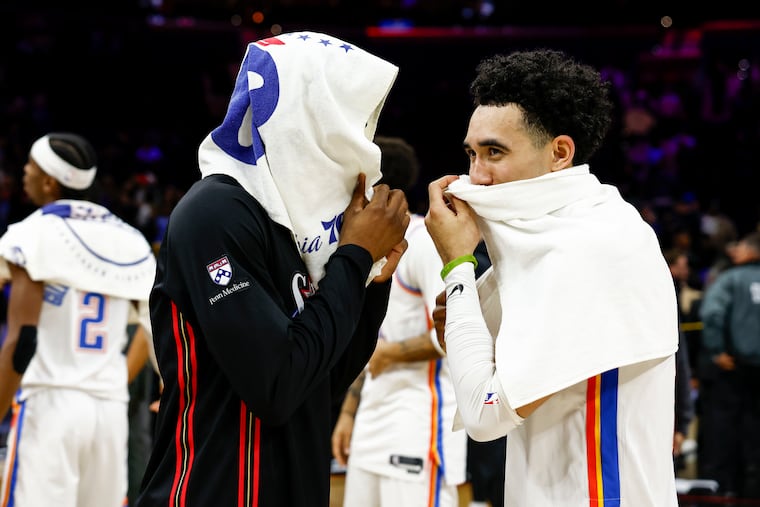
They had to know it was going to go down like this, right?
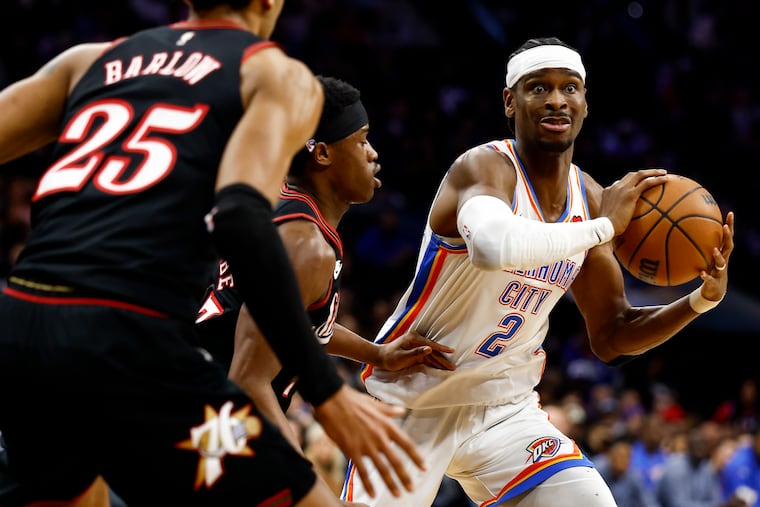
Not only would Jared McCain return to Philadelphia as a martyr, but he would do so in the midst of a heater, and on a night when the Sixers were forced to trot out a one-guard starting lineup that featured luminaries like MarJon Beauchamp, Justin Edwards and Dominick Barlow playing alongside VJ Edgecombe.
If they didn’t know it, they should have. Daryl Morey and Nick Nurse have been around Sixersland long enough to know that hilarity and reality are the most intimate of pair bonds. In this organization, you aren’t just a coach or an executive in this organization. You are gallows humor.
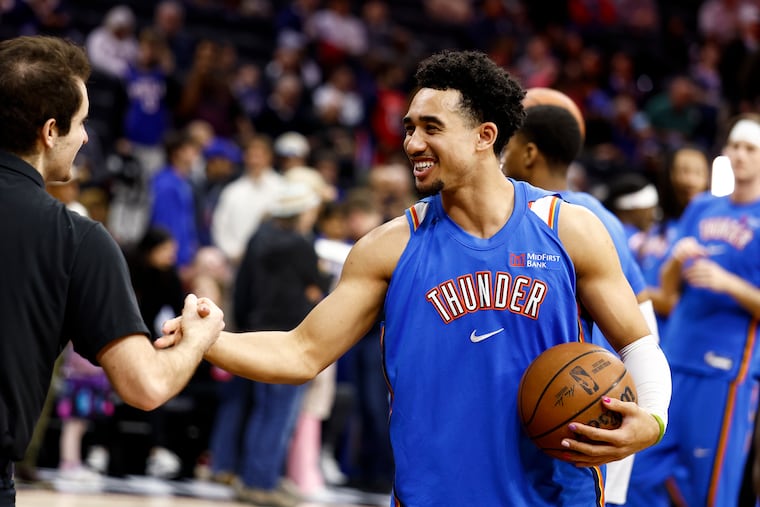
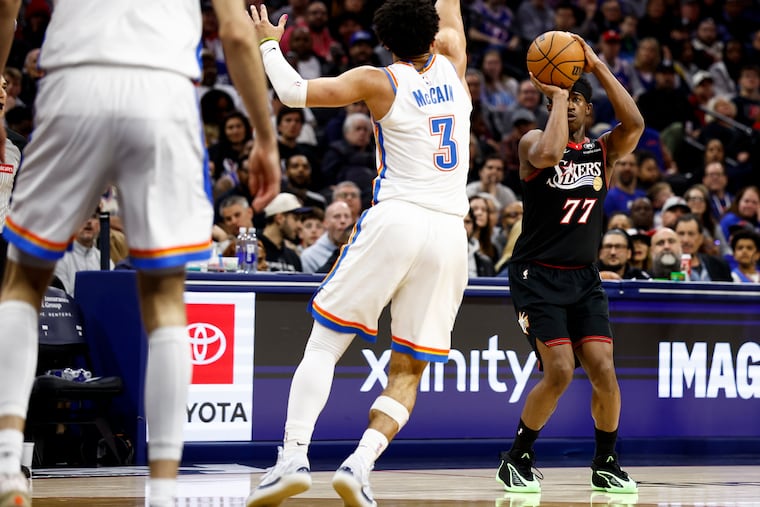
And so it was as it only could have been. Six weeks after the Sixers infuriated their fan base by trading McCain to the defending champs for a platter of rest stop quality draft picks, the second-year guard checked into the game to a spiteful applause and immediately validated everyone’s feelings.
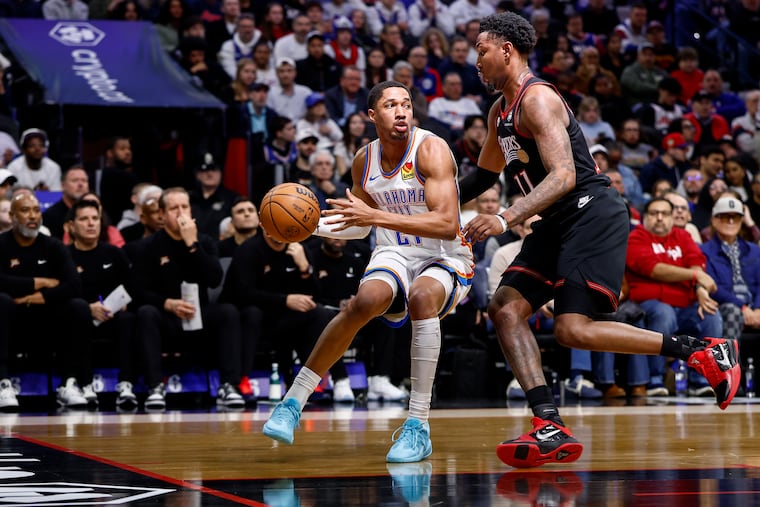
With 4:14 left in the first quarter, he worked himself free off a screen and stepped into a corner three. His next time down the court, McCain knocked down a 28-footer from above the break to give the Thunder a 27-15 lead. And just like that, the Sixers were off and running to their 12th loss in 22 games since the trade deadline.
» READ MORE: For Jared McCain, Philly and the Sixers will always feel like a ‘first love’
“Even just waking up this morning, there’s a lot of anxiety, kind of just about the game, nerves, excitement,” said McCain, who finished with 13 points. “So I knew I just had to control what I can control out there. Make a hustle play. … Hitting those two 3s, a little bit of emotion came out there for sure.”
There may come a day when it is finally revealed what, exactly, the Sixers were thinking when they dealt McCain. That day was not Monday. Nope. Monday was a day when grievances were laid bare. It was a case study.
On one end of the court, you watched McCain log 25 minutes and a game-high plus-19 for a team that has now won 15 of its last 16 and is 57-15 on the season. On the other end of the court, you watched Edgecombe score 35 points on 14-for-28 shooting while everybody else in a Sixers uniform scored 68 points on 27-of-66 shooting.
Aside from Edgecombe, the only guard who logged more than 20 minutes was veteran Cam Payne, whom the team signed off the street after it traded McCain.
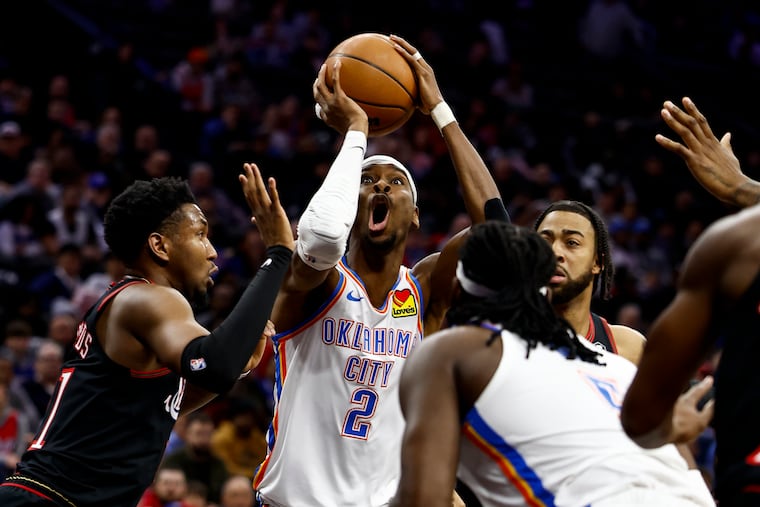
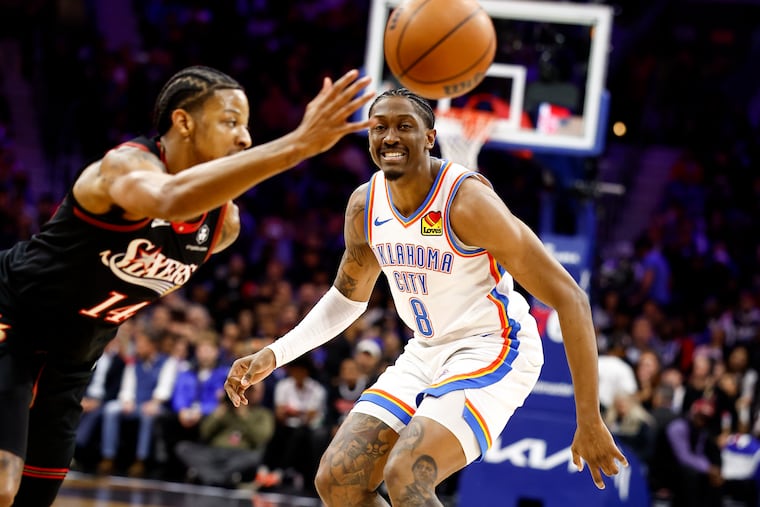
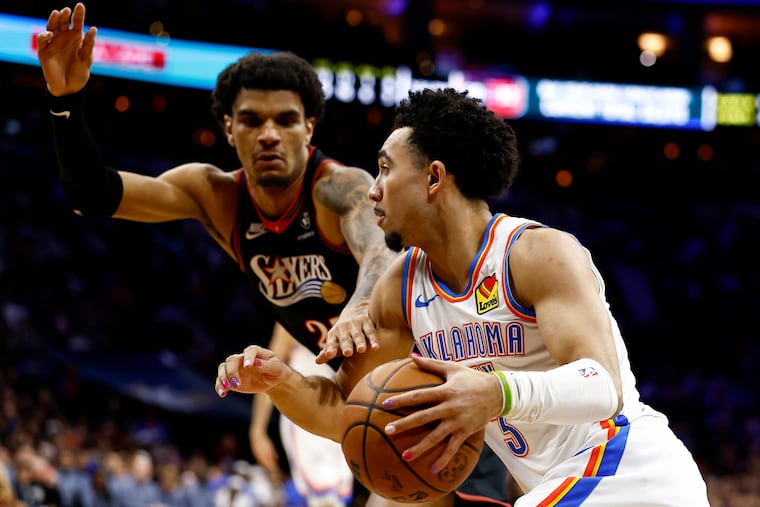
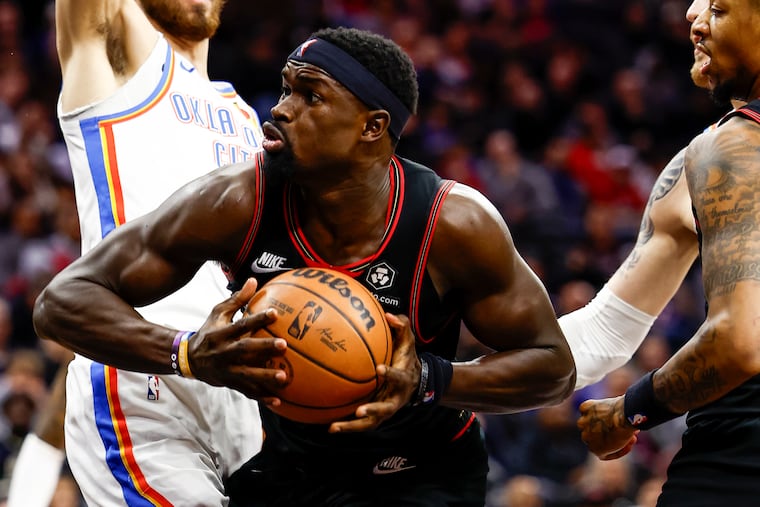
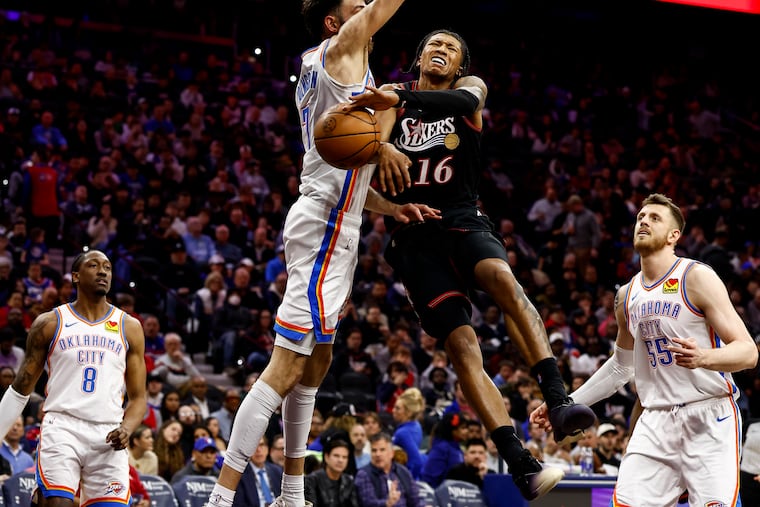
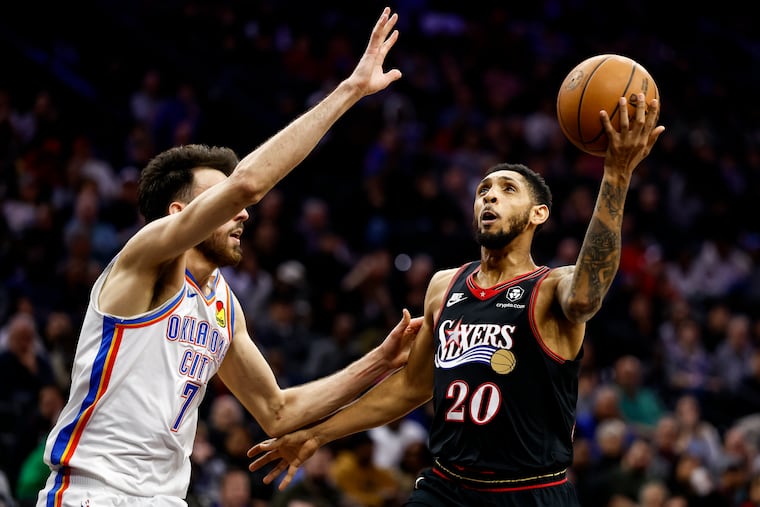
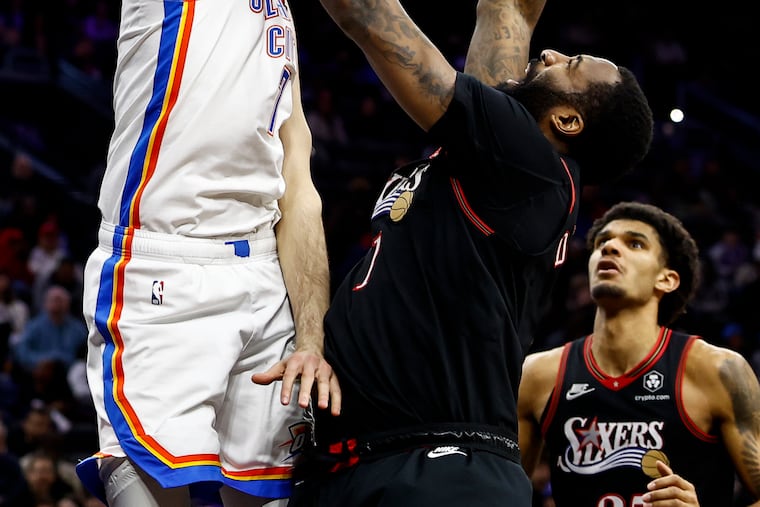
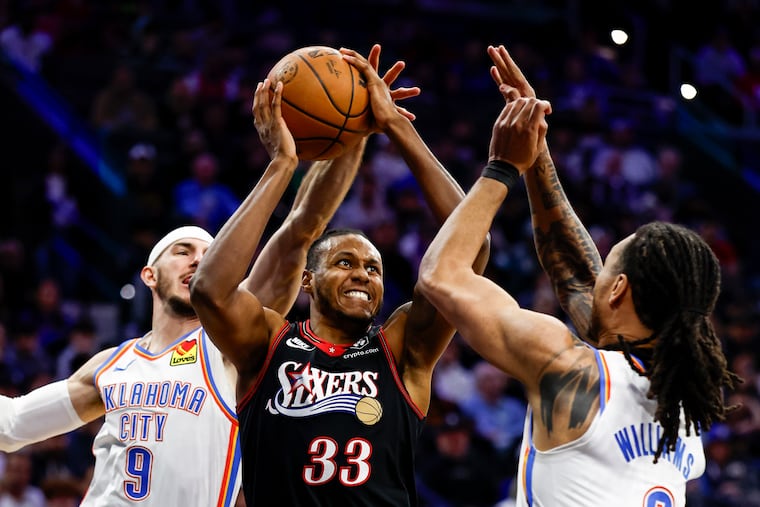
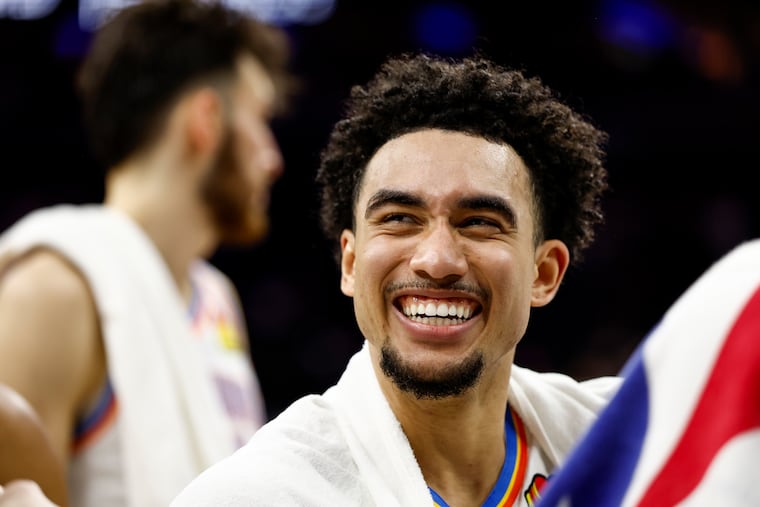
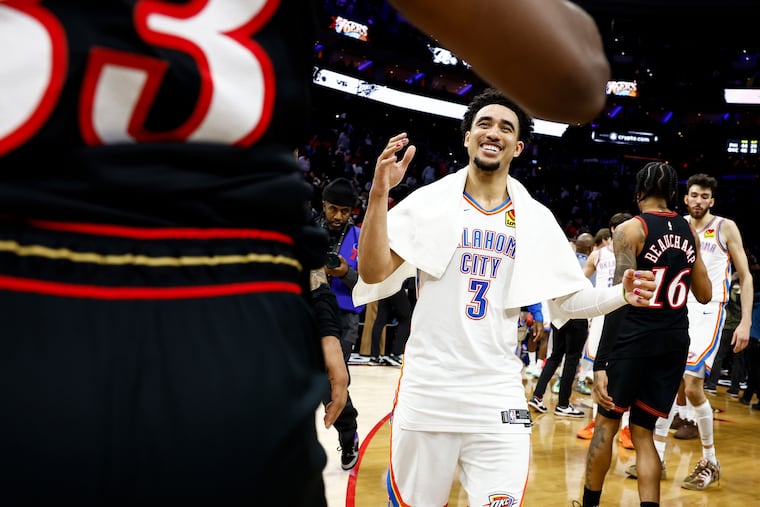
Unfair as the circumstances and sample size may have been — high-volume guards Tyrese Maxey and Quentin Grimes were unavailable due to injury — it was only reasonable to walk away from the Sixers’ 123-103 loss wondering how they possibly could have concluded that McCain would not have helped them.
The player they saw on Monday night wasn’t all that different from the one they’d seen during the run-up to the Feb. 4 deal. In a five-game stretch from Jan. 26 to Feb. 2, McCain averaged 11.0 points in 18.6 minutes while connecting on 15-of-24 three-pointers (.625). In his first 19 games with the Thunder, he averaged 12.3 points in 19.3 minutes while shooting 44% from three-point range. Those stat lines are pretty similar.
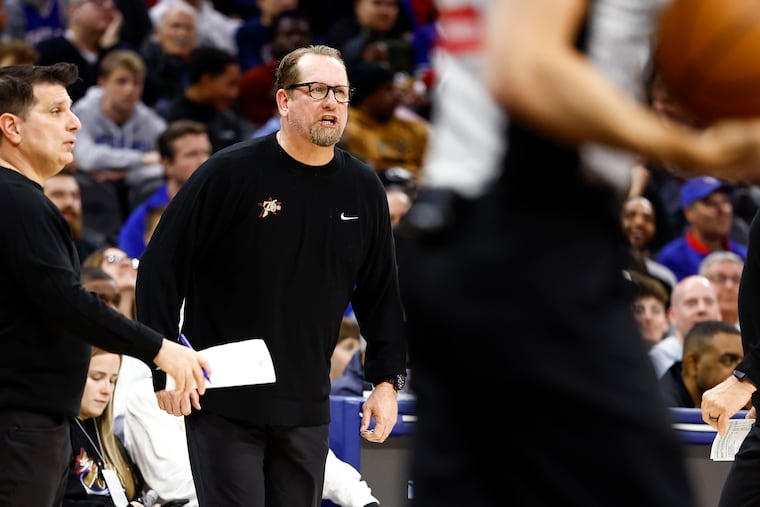
“The 7-for-11 night is coming,” Nurse said before the game. “He still was kind of dragging that knee brace around for quite a bit of the time, and coming off the hand injury. I do think he was affected by that physically for a long stretch, but I thought he was coming out of it. I was expecting him to start getting back to his big, streaky nights where he really gets it going and can score in bunches.”
That leads to an obvious question, doesn’t it? Why trade him if you feel like he will only keep getting better?
» READ MORE: Sixers fans showed love to Jared McCain, but they still hate that he was traded: ‘It hurts’
The idea that the Sixers traded McCain as a cost-cutting move is a duck that doesn’t float. McCain is making $4 million this season, which is basically a rounding error in a world where the luxury tax threshold is $188 million and the first apron is $196 million. The Sixers had plenty of avenues to avoid paying the tax. Kelly Oubre and Andre Drummond are both on expiring contracts and making more than McCain. They could have parted ways with Kyle Lowry and Johni Broome and achieved the same financial goals as trading away McCain.
Clearly, this was a basketball decision. It needs to be judged on those merits.
So, what were the Sixers thinking? They might point you to the Thunder’s 104-102 win over the Celtics on March 12, when McCain posted a minus-10 plus/minus in just 11:37 of court time. Or, the Thunder’s 103-100 win over the Knicks, when McCain finished minus-18 in 15:08 minutes. They might argue that those games are a better indication of the future they imagined for McCain, especially in the postseason.
The Sixers might further argue that McCain’s upside was hard-capped by the fact that he was neither a plus playmaker off the dribble, nor finisher at the rim, and that his relative lack of prowess in those departments meant that he would always first and foremost be a shooter, except one without the length and defensive chops to be anything more than a role player on a team whose primary scorers are a couple of smallish guards.
All of those arguments have merit. It isn’t difficult to accept that McCain wasn’t a long-term fit on a roster with Edgecombe and Maxey. What’s confusing is why Morey felt like he needed to address it when he did, for such an uncertain return.
“I am quite confident we were selling high,” Morey said at the time of the deal. “Obviously, time will tell.”
That statement is the primary source of the confusion. The first-round pick the Sixers acquired from the Thunder originally belonged to the Rockets, who are projected to pick at No. 23. For some context, consider one recent mock draft that has Iowa guard Bennett Stirtz going off the board at No. 17. Stirtz is four months older than McCain, with a lot of the same question marks. It isn’t a stretch to think that McCain would be drafted before Stirtz if McCain had remained at Duke the last two seasons.
The Sixers also received three second-round picks from the Thunder. So, there’s that.
Interestingly enough, Oklahoma City coach Mark Daigneault did a decent job of defending the deal from the Sixers perspective.
“I know that transactions are to be evaluated in a sequence,” Daigneault said. “They aren’t to be evaluated in a vacuum. They are set up by previous transactions, they set up future transactions. It’s hard to evaluate those things in a vacuum. You never know what a team is planning and how it fits in.”
The big question is whether the Sixers misread the whole thing from the jump. Morey said they pulled the trigger on the McCain deal with the hope that they could use the draft capital in another move before the deadline. But no such deal materialized. Now, they need to find such a deal before draft day in June, or use the pick on a player who could be worth less than McCain.
It can still work out. We could easily look back on Morey’s decision as one of those unpopular moves that ultimately validates the mover’s convictions. It still comes down to this: They’d better be right.