The hype train of a ‘golden generation’ of U.S. players and their $6 million coach crashes out of the World Cup
Christian Pulisic, Gio Reyna, and others didn't deliver in the big moments. And since Mauricio Pochettino didn't lead the way to history, should U.S. Soccer go for another big-name manager?
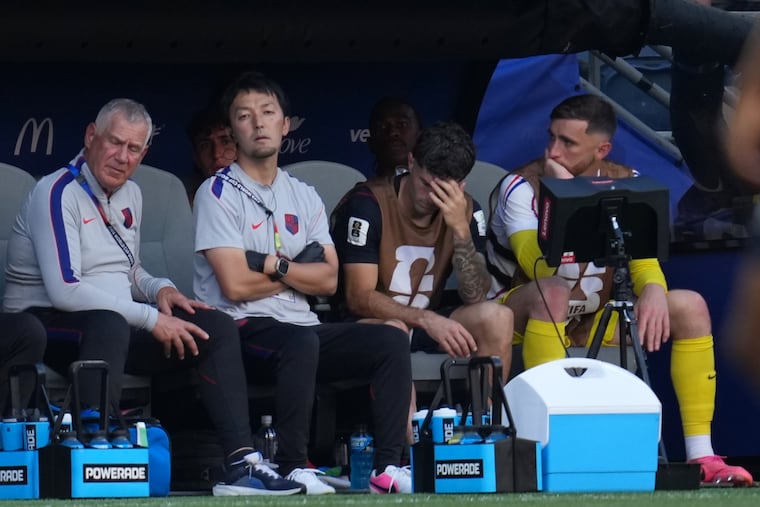
SEATTLE — The hype around this World Cup didn’t just start when the last one ended four years ago. It took off as soon as the U.S. was picked as host, on the eve of the 2018 edition for which they failed to qualify.
By the time this summer arrived, there was enough evidence to believe these players could make the history they dreamed of, wanting to do things no U.S. men’s team had done before on soccer’s biggest stage.
So a bar was set for them. The program had just one knockout game win in its history. Winning two would mean a quarterfinal berth. It also presumably would mean toppling a giant somewhere along the way.
Once the draw was made last fall, the name of that giant was Belgium, the nation that sent the U.S. home in 2014. That made an easy measuring stick for this generation. If they were that much better, they’d do what their predecessors hadn’t.
By kickoff, the pieces were in place: Seattle’s cauldron atmosphere, the Red Devils’ inconsistency in prior games, and Folarin Balogun’s unexpected availability after President Donald Trump lobbied FIFA president Gianni Infantino.
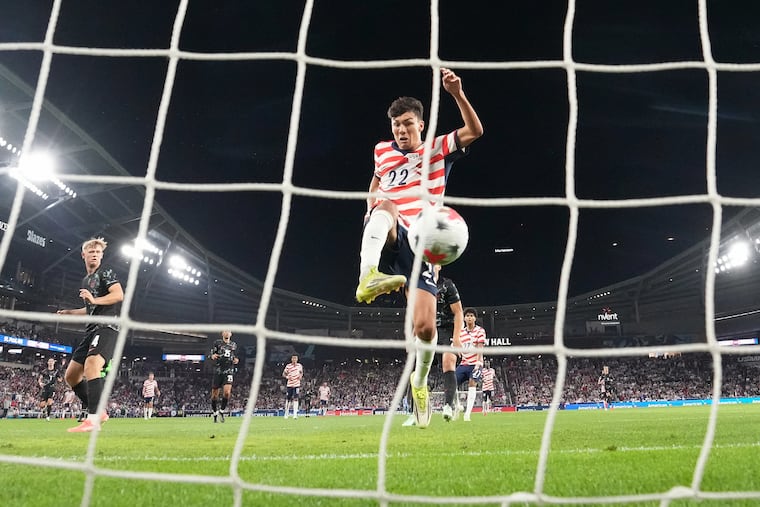
Much has been said about that last part, of course. But by the final whistle of the U.S.’ 4-1 blowout loss, it mattered far less than it had two hours earlier.
» READ MORE: Mike Sielski: The USMNT lived down to Donald Trump’s expectations: They played like the losers he thought they were.
For this game turned out to not be just about Balogun on the American side. The whole squad blew it on the biggest stage, and they knew it.
“This moment hurts more, stings more, than probably any other moment in my life,” Wayne-born goalkeeper Matt Freese said after a horror game, especially on Belgium’s third goal that blew the game open, when he was stripped of the ball after straying out of his 18-yard box.
“Yes, it stings,” midfielder Tyler Adams said. “This was a moment to have the opportunity to advance and really try and do something special, and we fell short.”
Asked why the team was so flat, he answered: “It’s a great question. I wish I had the answer right now. I don’t know.”
» READ MORE: U.S. fans lament loss to Belgium at watch parties across the area: ‘I had a bad feeling from the get-go’
Christian Pulisic tried to lift the mood, but he took some tough questions after leaving a game injured for the second time in this tournament. Along with that, the team’s most important attacker didn’t play the entirety of any game, though at least in the Bosnia win he played 88 minutes.
His stats for the tournament: four games, 224 minutes, zero goals, one assist, four shots (two on target), and three chances created for others. After a first half against Paraguay that perhaps was the best of his career, he largely was muted.
“I didn’t quite have the moments I was hoping to, to try to help us to really push and get over this next step of beating a really good team,” he said. “So I’m disappointed with myself, of course, but I’m going to try to stay positive. I did a lot of good things, and the team did as well.”
Gio Reyna also was underwhelming. After earning enough of Pochettino’s affection to make the World Cup team, he played just 131 minutes over the five games, took two shots, created one chance, and scored a goal that was beautiful, but in a game that already was won.
» READ MORE: Over 36 million people watched the U.S.-Bosnia World Cup game, a record for soccer
“If we lose to Bosnia, it’s obviously a big disappointment, and then if we win today, it’s probably a very big achievement for the group,” he said. “So it felt like we kind of just almost did what was expected. … It’s hard to say, I guess, what’s needed to make the next steps to really push through.”
One thing would be the biggest stars delivering in the biggest moments. That has happened for Kylian Mbappé’s France, Lionel Messi’s Argentina, Jude Bellingham’s England, and Erling Haaland’s Norway.
But it did not happen for the United States.
The Pochettino questions
Questions must also be asked about manager Mauricio Pochettino. Among them: Was his $6 million salary, paid largely by U.S. Soccer donors from the hedge fund world, worth it?
The short answer is yes, for what he did to raise the team from the depths it was in when he began. But the other questions are harder.
» READ MORE: The FIFA World Cup in Philly won’t soon be forgotten. Here are 10 major reasons why.
Will it be worth splashing cash on another big name? Or, since he wasn’t clearly better in the biggest moments than his American predecessors, should there be a serious conversation about whether it’s necessary?
There are good candidates on the men’s side, starting with Ventnor City, N.J., native B.J. Callaghan. His success with Nashville SC combined with his past national team experience make him clearly qualified.
Former Los Angeles FC manager (and longtime stalwart U.S. player) Steve Cherundolo also is on the list. New Jersey native Pellegrino Matarazzo, who has made his coaching name at European clubs, is too, though he might want more time overseas before coming home. Former Union coach Jim Curtin would be on the list if he hadn’t just been hired by Austin FC.
» READ MORE: Ventnor City's B.J. Callaghan could be MLS's coach of the year. Could the USMNT come next?
But will the donors lean on U.S. Soccer to go for another famous name?
One of those donors, Scott Goodwin, has quite a few friends in the soccer world — and some at the White House, too: The New York Times reported that he called them to complain about Balogun’s red card.
Two years ago, Goodwin called his soccer friends to complain about the U.S. team’s flop at the Copa América. They included two former U.S. players who remain well-known in soccer circles, MLS executive Alecko Eskandarian and broadcaster-turned-investor Kyle Martino.
Goodwin was so angry at the U.S. team’s performance that he said, as he recalled to the New York Post last month: “This is a chance to get an amazing coach.”
» READ MORE: FIFA overturned USMNT star Folarin Balogun’s suspension vs. Belgium. Was Trump involved?
Then, as The Athletic put it just before the World Cup started, “To Goodwin, there were three names that fit the bill: Klopp, Pochettino and Manchester City’s Pep Guardiola.”
None of them were American. None had ever coached in the United States. Was there an implicit view there that no American could be good enough for the job?
Good questions for U.S. Soccer CEO JT Batson and chief operating officer Dan Helfrich: Do they think the difference between a big-name foreigner and a qualified American is worth another $6 million bet? And how much sway will the donors hold this time?
U.S. Soccer declined to make leadership available to the media on Tuesday. A spokesperson told The Inquirer that there might be an availability in the coming days.
» READ MORE: Before Auston Trusty scored a World Cup goal, he ‘put the work in’ at Penncrest High and Nether United
And what about a second term for Pochettino, who’s now out of contract? The players grew attached to him, but that happens with almost any manager. He has talked with U.S. Soccer about another term, but there also have been plenty of hints that he’d like to go back to Europe.
“I think now, because we were talking with the federation, it’s about to rest a little bit, to think, to have conversation, and then see what the decision is from the federation and from us,” Pochettino said Monday night. “I think we’ve built a very good relationship, but now is not a moment to talk about that. … For sure, in the next weeks, we can start to talk — if the federation wants to talk.”
Late Tuesday morning, U.S. Soccer issued a statement about its side of those talks.
“We had positive conversations with Mauricio before the World Cup about the future,” the federation said. “We agreed we would continue those conversations following a chance to rest and reflect post-World Cup.”
It hinted at the future, but only barely.
“We have a great deal of respect and gratitude for Mauricio, his staff and everyone part of the program,” it said. “We have shared excitement about our potential and also shared clarity about the amount of work at all levels still required to achieve our ambition.”