A new local improvement district may be needed to care for the Chinatown Stitch cap over I-676
It is estimated construction would be finished between 2029 and 2032.
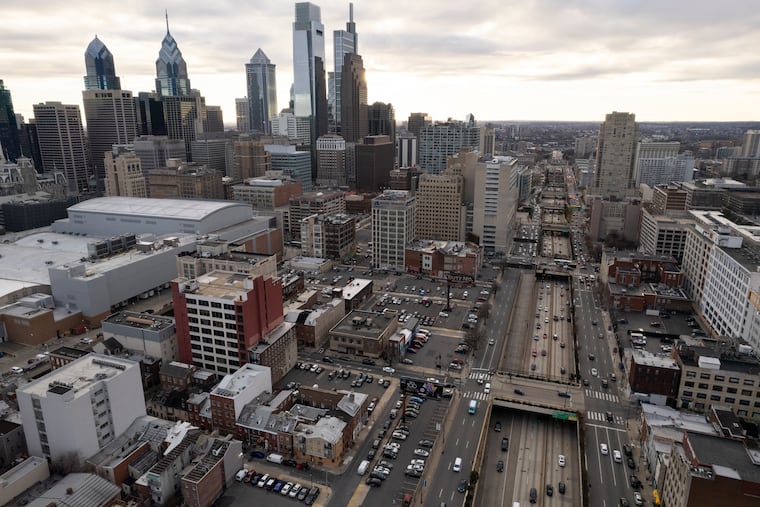
City officials and residents of the Callowhill neighborhood on Monday night discussed design options for a park atop the Chinatown Stitch, a planned cap over part of the Vine Street Expressway.
The Philadelphia Office of Transportation and Infrastructure Systems is thinking about the day the project is complete, with preliminary exploration of a possible improvement district in the area to finance operations and maintenance.
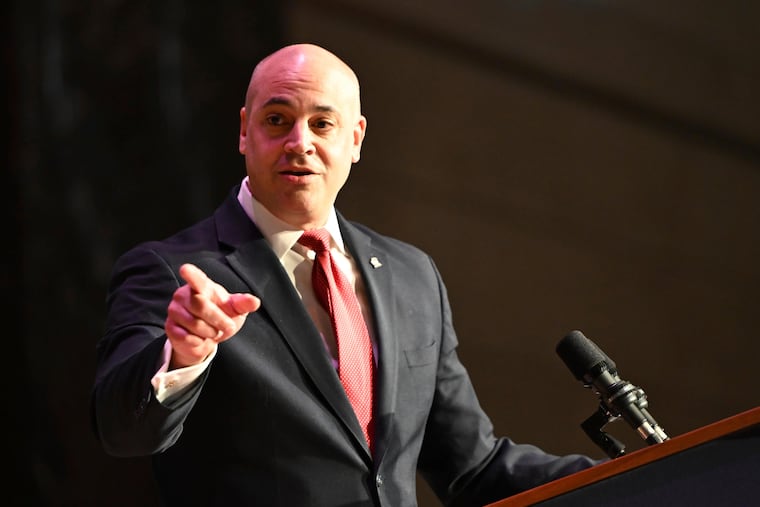
“We’ve come to the conclusion that there’s not really a city department or even nonprofit entity that’s ideally placed to take over that maintenance responsibility,” said Christopher Puchalsky, director of policy and strategic initiatives at OTIS.
The meeting of the Callowhill Neighborhood Association was held at the Folk-Arts Cultural Treasures Charter School.
In March, the Pennsylvania Department of Transportation moved $10 million in regional highway funds that, along with a $2.5 million match from the city, will pay for final design of the Chinatown Stitch.
The Trump administration canceled $150 million in construction money, imperiling the project to rejoin two sections of Chinatown severed for decades by I-676.
Republicans’ “big beautiful” domestic policy and spending bill last July killed most of the Neighborhood Access and Equity grant program in the U.S. Department of Transportation.
The original grant was $159 million, but the city already had spent $8.4 million on preliminary engineering and design work. The rest was rescinded.
Using either a Neighborhood Improvement District or a Business Improvement District would give the neighborhood control over the maintenance of the park and its planned connection to the Rail Park along the Reading viaduct, Puchalsky said.
City money would be subject to a yearly appropriation, and the Stitch would be “not just competing against all the other parks that need to be maintained,” he said. “The Chinatown Stitch would be competing against firefighters and social workers and pothole crews and go down the list.”
People expressed strong support throughout several rounds of community engagement for keeping a completed project safe, clean, and in good repair, Puchalsky said.
He presented three possible annual maintenance and security budgets for a hypothetical improvement district: $1.3 million; $2.2 million; and $3.8 million. A budget would depend on the size of the district and the level of services involved.
The largest budget could likely finance 24-7 security, robust maintenance, and some social service programs, while the smallest budget would provide much less.
Improvement district assessments range from 1% to 7% in Philadelphia, which would be on top of property taxes. Based on rough back-of-the-envelope math, Puchalsky said, the owner of a $500,000 property would pay $140 a year on top of a $7,000 property tax bill at the lowest end of the range and $300 yearly at the highest end.
He stressed that there is no formal proposal for an improvement district or firm estimate for assessments.
“It is a goal to try to get some kind of a neighborhood consensus about what you would like to do,” Puchalsky said. “I’m not hearing anyone jumping up and down, either angrily or cheeringly” — just reasonable questions.