Hoboken has gone 8 years without a traffic death. Can Philly replicate its success?
The densely populated city across from Manhattan is not taking a victory lap. Hoboken transportation officials know that Vision Zero success can be fleeting and vow to keep focusing on it.
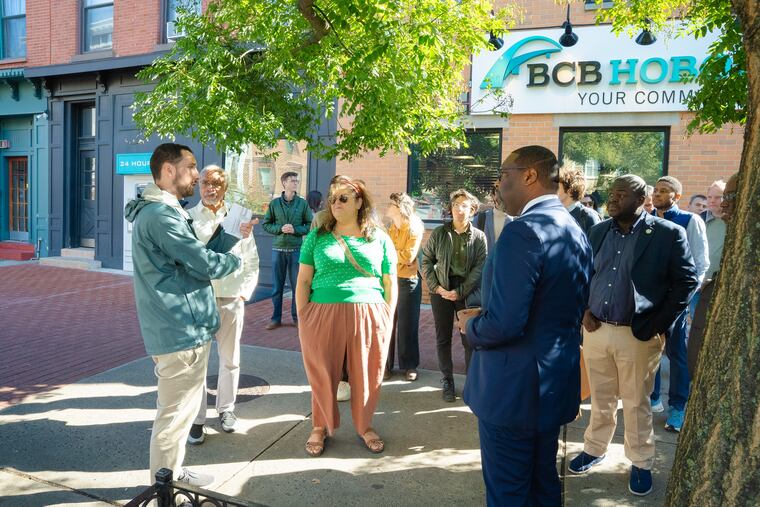
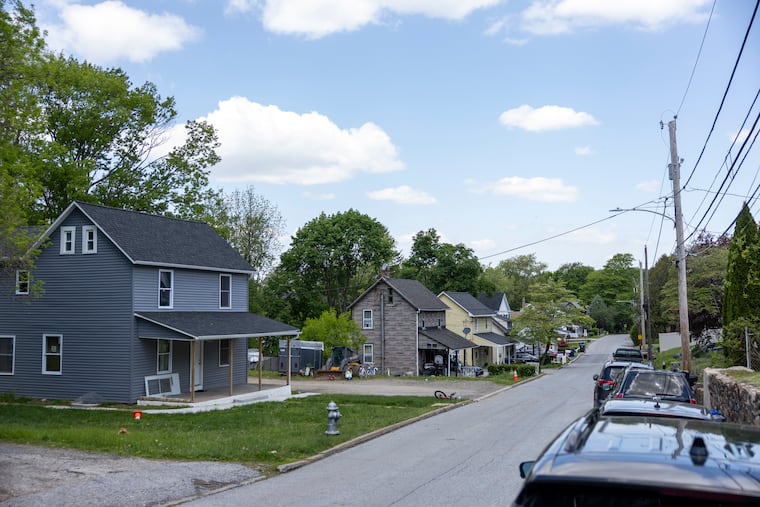
HOBOKEN, N.J. — A navy blue sport utility vehicle glided to a halt on Garden Street well before the red octagon. Not an inch of bumper broke the plane of the crosswalk.
This shocked a group of visitors from Philadelphia, where a stop sign often prompts a brake tap, if that, before a driver rolls through the intersection.
“They’ll shame people here who are driving and not paying attention. It’s a culture change,” said Nora Martinez DeBenedetto, head of constituent services for the city.
Hoboken, with 60,000 people wedged into about one square mile, has had zero traffic deaths since the beginning of 2017, making it a star of the Vision Zero movement, which began in Sweden three decades ago with the aim to cut traffic deaths to nothing.
Philadelphia City Council members and staffers, state representatives, members of registered community organizations, and safety advocates traveled to Hoboken last week to see for themselves, quiz the architects of Vision Zero there, and get some ideas.
Having zero traffic deaths in a city is an aspirational goal, but Hoboken’s success has drawn wide attention, with Mayor Ravi Bhalla and his staff consulted by mayors in Boston, San Francisco, and Berkeley, Calif., among others.
How Hoboken did it
The city has made extensive use of “daylighting,” which means removing street parking close to intersections and using flex posts to cut down on encroachment. It’s meant to improve visibility for drivers.
Hoboken has also built bicycle lanes that ring the city and along major roadways; some are protected, but others are not, including on Washington Street, the town’s main drag.
Curbs have been widened and extra “bump outs” that reduce the amount of time a pedestrian needs to cross built at intersections.
Hoboken integrates its Vision Zero infrastructure with parks and schools and resiliency projects such as rain gardens, which absorb water that is then collected in large barrels for reuse. The city is prone to flooding.
More than a half dozen city departments meet weekly to discuss ongoing development projects, traffic data, and the status of safety improvements. That helps with coordination.
“Hoboken shows us this is possible, as long as everybody is on the same page,” said Christopher Gale, executive director of the Greater Philadelphia Bicycle Coalition, who was on the trip.
A culture of accountability
While about 1.6 million people live in Philadelphia, spread over about 143 square miles, Gale argued that there are similarities, too. The city and Hoboken share an industrial past — for decades the Hudson River waterfront was inaccessible behind fencing and crumbling factories and warehouses. And parts of Philadelphia are just about as dense.
Philadelphia had 134 traffic deaths last year, 59 of which involved pedestrians hit by vehicles.
It makes sense for Philadelphia to build safe infrastructure in the densest parts of the city first and then expand it, Gale said.
“One thing that I noticed is there is a real culture of citizens holding other citizens accountable,” Gale said.
“We have 10 gazillion kids here; moms are fierce about pedestrian safety,” DeBenedetto, 47, said of Hoboken.
Daylighting, for instance, was not popular, but New Jersey law says no car can park within 25 feet of an intersection, and Hoboken enforced it.
“We taught them it was illegal,” she said. “Some cities say no problem, do what you want. We don’t.”
Council President Kenyatta Johnson’s office and the Crosstown Coalition, representing 35 registered community organizations, organized the fact-finding trip.
Johnson has been a strong influence lately for safer streets in Philadelphia even as Mayor Cherelle L. Parker was cutting Vision Zero’s line item in the budget.
He pushed through legislation that bans motorists from stopping in bike lanes and authorizes more protection for cyclists along Pine and Spruce Streets.
A group of Society Hill residents has challenged the legality of those measures. Their lawsuit is pending.
“Now I look at traffic violence as the same kind of issue as gun violence,” which has drawn intense advocacy and intervention programs, Johnson said in a meeting with Bhalla, the mayor, after the tour.
“We should take the same approach when it comes to an individual who may lose their life or be harmed when they bicycle or are pedestrians,” he said.