City asks court to let it strengthen bike lanes on Pine and Spruce Streets
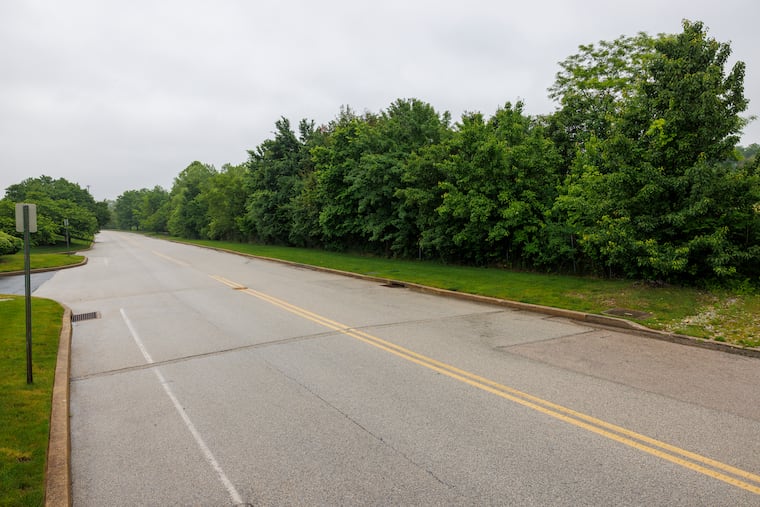
Residents of Pine and Spruce Streets want curbside access to their homes for people with mobility challenges.
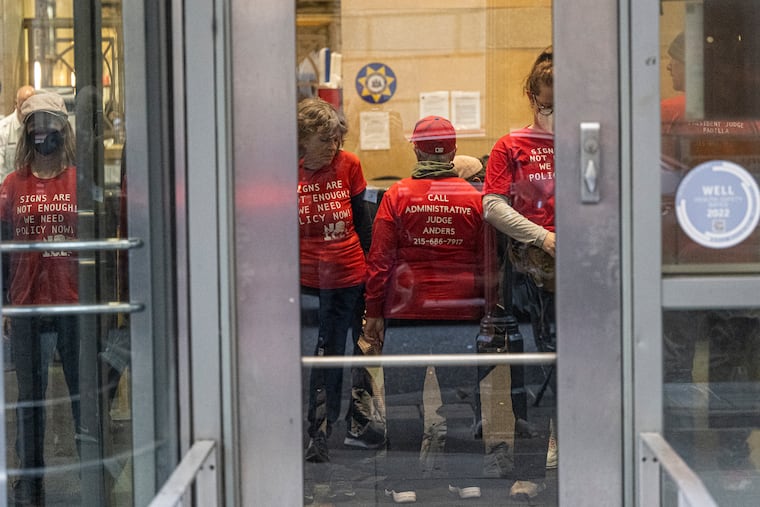
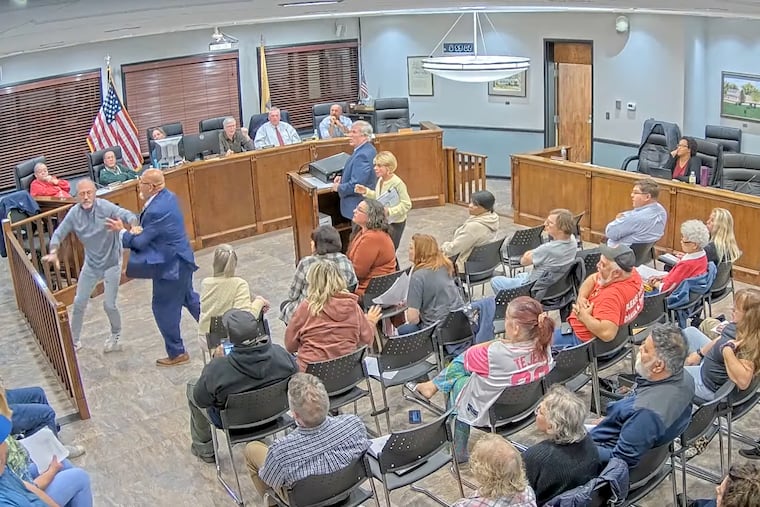
Lawyers for the city and a group of residents faced off in a Philadelphia courtroom Tuesday over the legality of efforts to harden protection of the bike lanes on Pine and Spruce Streets.
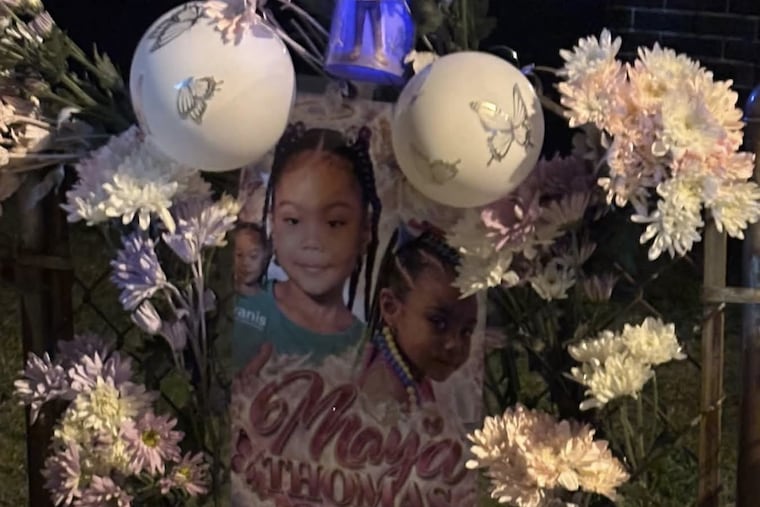
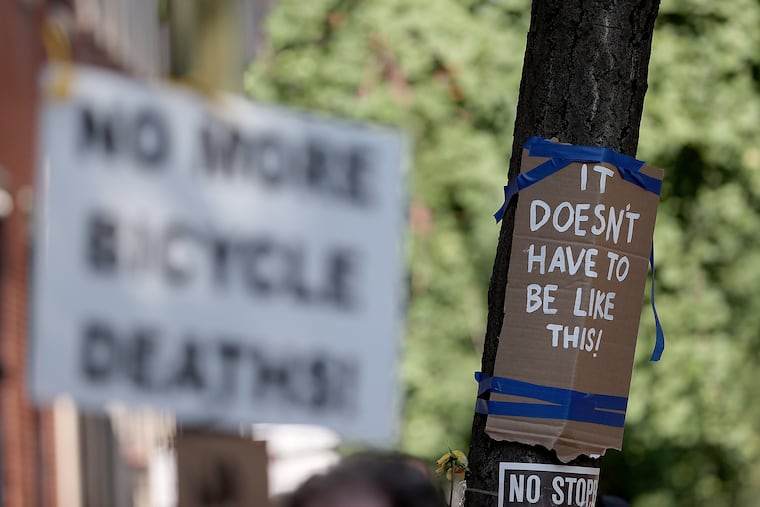
The hearing came nearly two years after a young physician was killed by a drunk driver while cycling on Spruce Street, a crash that helped galvanize legislation to install concrete curbs separating the bike lanes from vehicular traffic.
After more than two hours, Common Pleas Judge Damaris L. Garcia said she would rule soon on the city’s request to dissolve an August 2025 injunction that stopped the Streets Department from making changes to the bike lanes.
Friends of Pine and Spruce, a group of residents with homes along the narrow streets, won the order after suing the city on grounds that there was no legal authority to remove parking spaces for “neighborhood loading zones."
City Council then passed a bill empowering the Streets Department to make any parking changes it deemed necessary.
“City Council knew about the injunction and they addressed the legal authority that was lacking,” said Bailey Axe, a senior attorney for the city Law Department.
She said the FOPS group simply did not like a lawful political decision. The bill is now in the city code, and the order to stop work issued by Judge Sierra Thomas-Street was no longer needed.
As drafted, the bill would have applied to all neighborhoods in the city with bike lanes. But Council amended the bill to narrow its coverage to Pine and Spruce Streets, then changed the bill again to apply in all of Center City.
“What they did was torture the language two weeks later and then re-tortured the language again,” said George Bochetto, the lawyer representing FOPS.
And Council made those amendments privately, with no public notice or input “in the dark recesses of City Hall,” Bochetto said.
FOPS had expanded its lawsuit to include a new complaint that the actions violated sunshine-law requirements that lawmakers conduct business in the open. In addition, it alleges that Council violated the separation of powers in the city charter by delegating its lawmaking function to the executive branch.
Yet, city lawyers said, the residents’ group introduced no evidence that lawmakers changed the legislation in secret. The sponsor of the legislation gave notice in a public committee hearing that it had been amended and the changes also were discussed in an Inquirer article, they said.
The loading zones are designed to give rideshares, delivery drivers, and residents a legal place to stop briefly. This coincides with the city’s ban on stopping or parking inside protected bike lanes, which is punishable by a $125 fine in Center City.
The group claims the changes would eliminate 30% of parking spaces, violate existing permit-parking laws, and irreparably harm residents with disabilities and mobility changes from accessing their homes.
“We hope the Court sees through FOPS’s ‘not-in-my-backyard’ delay tactics, dissolves this injunction, and allows our elected representatives to do their jobs,” said Jessie Amadio, an organizer with Philly Bike Action.