City Hall bike lane faces unclear future after Philadelphia City Councilmember Jeffery Young pumps the brakes on support
Construction has already begun to add the bike lane around Dilworth Plaza and City Hall.
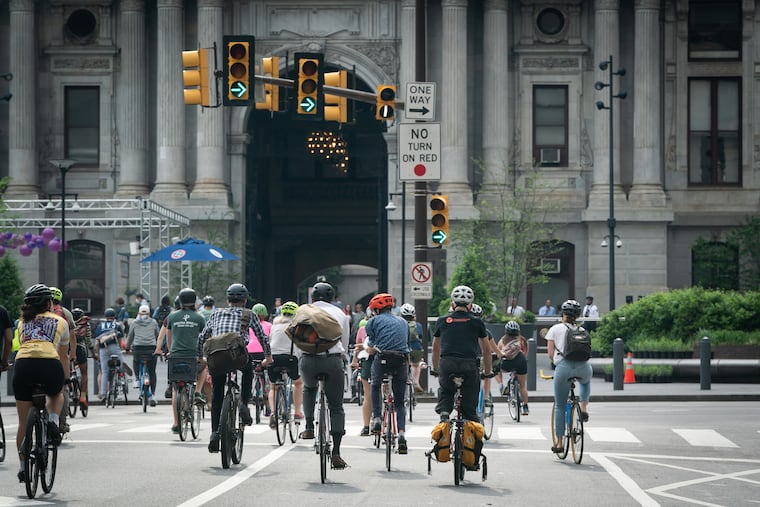
Days after PennDot construction crews ripped up the asphalt around City Hall to make way for a bike lane, the City Council member behind the project appears to be shifting gears on his support for the plan.
Earlier this summer, after more than 1,400 people signed a petition in support, 5th District City Councilmember Jeffery “Jay” Young Jr. wrote a bill authorizing the dedicated lane for cyclists.
But at Monday’s Streets Committee meeting, Young declined to advance his own bill or answer questions about it, baffling cycling advocates who had rallied around him.
“I’m incredibly frustrated,” said David Talone, an organizer with Philly Bike Action!, a nonprofit that seeks to expand safety measures in the city.
Talone said PennDot completed a traffic study last year and agreed to fund the project; the city estimated that it will cost between $9,600 and $78,000.
“PennDot has made a commitment,” Talone said. “It expects the council to legalize the bike lane.”
Philadelphia has a tradition called councilmanic prerogative, which gives Council members a high degree of control over what happens within their districts regarding construction.
If Young doesn’t advance the bill, the PennDot project becomes what’s called a “pilot,” Talone said. That means the bike lane, which would include flexible barriers separating cyclists from motorists, could be dismantled in a few months.
The bike lane would circle Dilworth Plaza and City Hall and involve removing one lane of car traffic from around Penn Square between Market and Broad Streets.
PennDot spokesperson Jennifer Kuntch told The Inquirer the state agency is waiting for “further guidance” from the city on what happens next.
‘Vision Zero’
Young declined an interview request but his spokesperson provided a statement.
“We understand that many people are eager to move forward with this type of traffic infrastructure,” the statement reads. “We want to make sure we have the flexibility to observe the results and make any necessary adjustments” before making the changes permanent.
Though Young has gone back and forth on the issue of bike lanes before, Talone said, this project is in line with what the Council member said he wanted.
“The councilperson has spoken publicly before about the need for a network of bike lanes,” Talone said. “You can’t have a network without City Hall.”
Talone said the bike lane is in line with the city’s “Vision Zero” plan to prevent cyclist and pedestrian deaths — a plan that, so far, has not been successful. The year the city initiated the plan, 2016, there were 76 such deaths, he noted. In 2024, 125 people were killed by “traffic violence” in the city, according to data from Bicycle Coalition of Greater Philadelphia.
Philadelphia drivers are involved in far more fatal crashes than those in Boston and New York, according to city traffic safety studies. Between 2020 and 2023, nearly 600 people in Philadelphia were killed in crashes involving drivers, according to a 2024 Inquirer report.
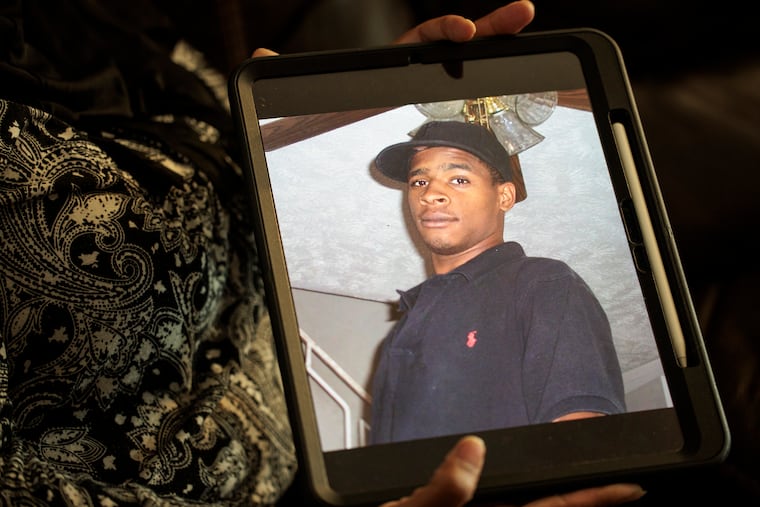
In July 2024, a young doctor cycling near Rittenhouse Square was killed by a drunk driver, and two pedestrians were killed by cars — all within the span of one day — leading to calls for safety measures from members of the local medical community.
In September, Harry Fenton, a 67-year old lawyer and safe streets advocate, was struck and killed by a hit-and-run driver while cycling in Fairmount Park.
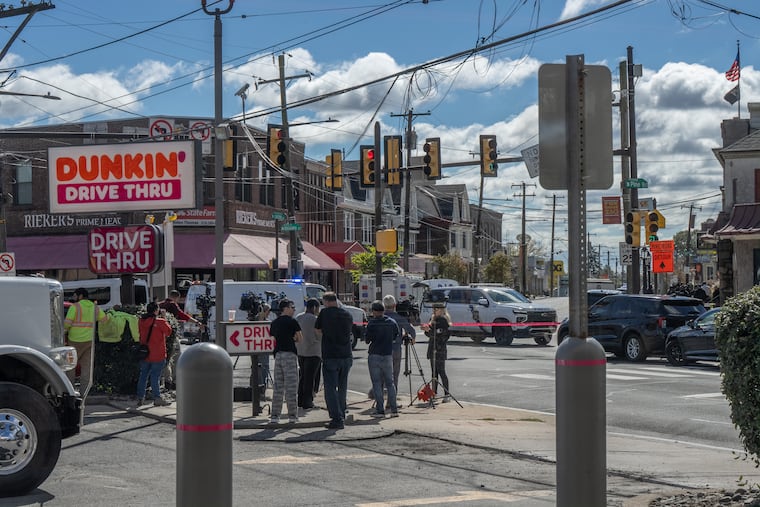
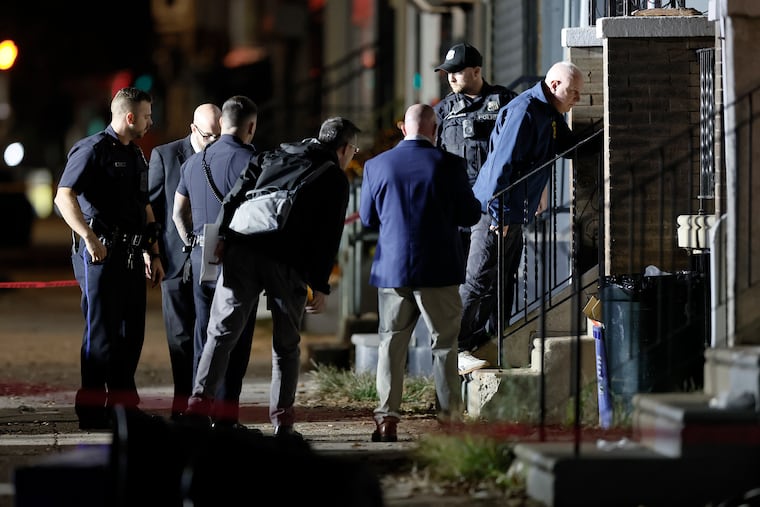
Most recently, on Thursday night, a Philadelphia Fire Department ambulance struck and killed a pedestrian in Kensington.
Another setback for safe street advocates
The City Hall bike lane wasn’t the only setback for cycling and pedestrian advocates at Monday’s hearing.
At the first meeting of Council’s fall session, Mayor Cherelle L. Parker had legislation introduced that she hoped would settle the legality of loading zones proposed for Spruce and Pine Streets — part of the larger saga of the still contested bike lanes on those arterial roads — and head off future legal challenges.
At the crux of the matter is City Council’s role in creating new streets regulations. To create new bike lanes, loading zones, parking districts, sidewalk cafés, or a variety of other roadway features, City Council must introduce legislation. (There was even a failed bill that would have required legislation to install new planters or benches on sidewalks.)
In practice, like zoning and city land sales, that means the larger Council body defers to individual district members on new streets regulations for their districts.
There is an exception though. In 1982, City Council allowed the Streets Department the power to establish new parking regulations in Center City and University City without legislative approval.
But somehow the ordinance was never officially incorporated into city law, which means city bureaucrats have promulgated thousands of regulations over the last 43 years that might not stand up in court.
This gaping loophole is why, earlier this year, Common Pleas Court Judge Sierra Thomas Street ordered the city to stop installing loading zones that took parking spaces on Spruce and Pine.
Parker’s September bill was meant to retroactively legalize decades of Streets Department-issued parking regulations downtown — including the Spruce and Pine loading zones.
It has the support of the bicycle coalition and other safe streets advocates.
“We … think that the City should have the authority to add loading zones on public streets where it makes sense without needing to pass individual ordinances per project,” the coalition’s Nicole Brunet wrote in an analysis of Monday’s hearing.
But at Monday’s Streets Committee hearing, the administration suffered a setback when Council President Kenyatta Johnson, who represents part of Center City, amended Parker’s bill so that it would only affect Spruce and Pine.
That would mean the immediate legal challenge to those loading zones is dealt with, but that thousands of other loading zones and other parking regulations created since 1982 are legally vulnerable. And Council members’ power over streets regulations would be reestablished.
“With the support of my Council colleagues, I introduced an amendment to narrow Bill #250718 to focus on the Spruce and Pine loading zones,” Johnson said in an email statement.
“My colleagues felt it was important to move forward on that narrower issue while continuing to review the broader questions about past Streets Department regulations,” Johnson said. “District Council members should have a major input in any City of Philadelphia decisions that impact their districts.”
The Parker administration says it is still studying the amendment.