Here’s why your Regional Rail train has been late, even before SEPTA’s service cuts began
SEPTA says Regional Rail service problems are beginning to decline as safety inspections wrap up.
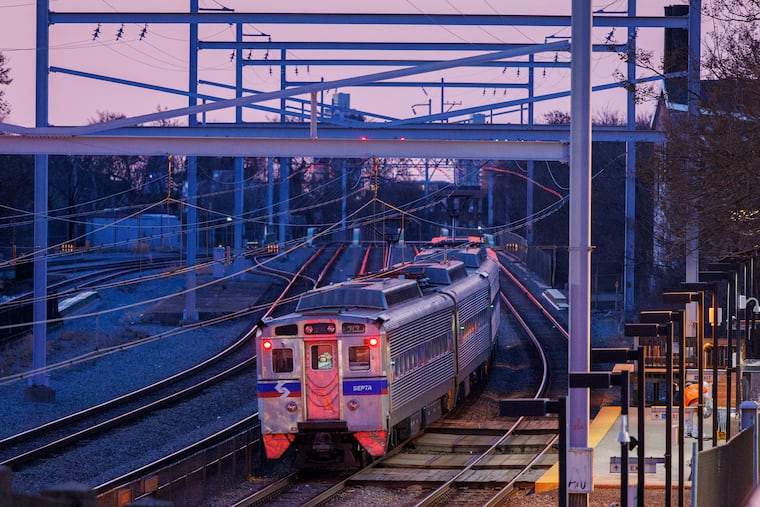
Service interruptions have plagued SEPTA’s Regional Rail network for about two weeks, with delays, canceled trips, sometimes shorter trains, and frustrated passengers.
Despite the timing, officials say the problems are not related to the transit agency’s budget issues and 20% reduction in service.
Instead, a steady stream of 50-year-old railcars have been pulled offline for enhanced safety checks following two fires earlier this year, said Frank Brandis, SEPTA’s assistant general manager for operations.
“We realize it’s inconveniencing the customer, but in order to understand what’s happening on the train, we need the data,” Brandis said in an interview.
Inspectors are focusing on a warning light that at low speed can falsely indicate a car’s dynamic braking system is out, he said.
The inspections are almost finished and cars are being rotated back into service, officials said.
The dynamic braking system is used to supplement the regular air-pressure brakes to gradually slow a train until it comes to a smoother, gentle stop. Brandis likened the system to antilock brake technology in cars.
A Wilmington/Newark line train caught fire Feb. 6 south of Crum Lynne Station in Ridley Park, Delaware County. All 325 passengers aboard were evacuated safely, but the fire caused $10 million worth of damage.
In its preliminary report in March, the National Transportation Safety Board said an engineer had reported earlier in the trip that the train was sluggish and that a fault light was lit.
An investigation is ongoing. SEPTA is conducting the safety checks in coordination with NTSB and the Federal Railroad Administration.
“It can be a time-consuming process,” Brandis said. “To do each one [car] requires a mechanical person and an electrician, and then a road test.”
SEPTA is working through all 225 Silverliner IV railcars, which were delivered between 1973 and 1976 during the administrations of Presidents Richard M. Nixon and Gerald R. Ford.
“It’s due to SEPTA having the oldest rail fleet in the nation,” said Mary Ann Tierney, chief of SEPTA’s control center.
Additionally, the Chestnut Hill East line has been shut down since June to rehabilitate five bridges along the line. SEPTA announced Wednesday that the line will remain closed through Sept. 7 due to construction delays.