SEPTA is postponing hybrid bus purchases and accessibility projects to keep the lights on
Replacement of Market-Frankford Line and trolley cars, already underway, will not be put on hold, SEPTA says.
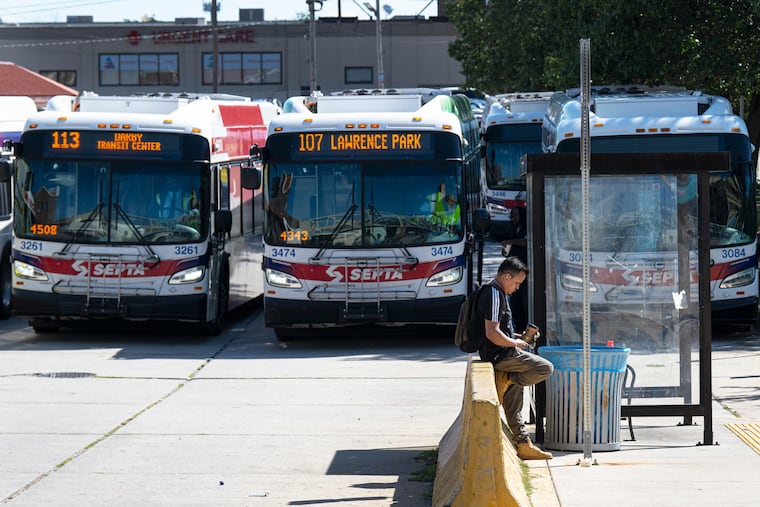
SEPTA plans to postpone the purchase of new buses, a project to make the Bristol Regional Rail station accessible to people with disabilities, and expansion of the Frazer train facility in Malvern in order to access $394 million in emergency state aid to help run the system.
The shift was required after the Pennsylvania Department of Transportation gave permission for SEPTA to transfer funds allocated for infrastructure projects to cover the transit agency’s operating deficits for two years.
SEPTA officials said none of the changes would compromise safety by stopping crucial repairs — a PennDot requirement for allowing the shift of money to operational needs.
The transit agency also did not want to disrupt projects with shovels already in the ground and wanted to maintain plans to replace Market-Frankford Line and trolley cars, which are underway, along with modernization of the trolley system so it more closely resembles light-rail, with permanent and accessible stops.
Here is what isn’t happening:
Hybrid bus purchases delayed: Pushing the purchase of 247 new hybrid diesel-electric buses by three years will free up $256 million. SEPTA was to sign contracts to buy them this year. Now, the new buses will be bought in 2028 and arrive in 2030-31. “We have a relatively young bus fleet,” said Brian McFadden, director of capital budgets, grants, and compliance. SEPTA’s buses are, on average, seven to eight years old, he said.
Bristol upgrades bumped: Pushing off the upgrade of Bristol Station on the Trenton Line will save $46.3 million. The project is designed to bring the stop into compliance with the Americans with Disabilities Act. Providing access to transit for people with mobility issues has been a persistent need for years on SEPTA, which has many old stations and platforms.
Frazer expansion nixed: SEPTA had planned to spend $38.7 million on the final phase of an expansion of the Frazer railroad complex in Malvern. Officials determined it was a “nice-to-have but not a must-have” at this time, McFadden said.
Electric bus purchases delayed: Postponing the purchase of hydrogen and electric-powered buses for SEPTA’s zero-emission pilot project will net $41.6 million.
Bus retrofitting stalled: An $11.3 million plan to retrofit existing hybrid buses to run exclusively on electric power is also being postponed.
The deferred initiatives are on top of 44 planned infrastructure projects that SEPTA already had mothballed because of a $3 billion gap between the costs of the work and available funding.
More than 20 Americans with Disabilities Act projects costing about $556 million and scheduled over the next 12 years were deferred.
The work was scheduled for Regional Rail stations, transportation centers, a station on the Norristown High Speed Line, and several stops on the Broad Street Line.
The state budget is more than three months overdue, and there is no apparent movement to revisit transit after months of negotiations on the issue failed to yield a deal. Earlier this year, SEPTA canceled 32 bus lines and significantly curtailed other service as part of a “doomsday scenario” the agency said was caused by lack of new state funding.
Lawsuits were filed, riders were inconvenienced, and the cuts were reversed when Gov. Josh Shapiro decided that Senate Republicans would not budge on more transit funding and found the money swap as a temporary fix.
“We’re no longer going to meet our goal for a transition to a zero-emission bus fleet,” said Erik Johanson, chief financial officer for SEPTA. After deferring the earlier initiatives, “there was not a whole lot else to postpone.”