The first weekday of transit cuts could’ve been worse. ‘Next week will be telling,’ says SEPTA
The first full weekday of reduced service was inconvenient for many riders, but it didn’t result in the crush-level crowds SEPTA had predicted.
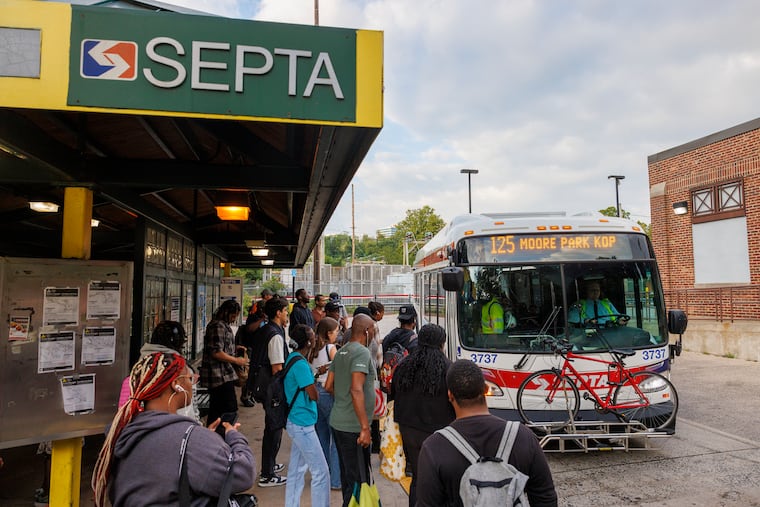
A Philadelphia teacher waited almost 90 minutes for a bus and was more than an hour late to work.
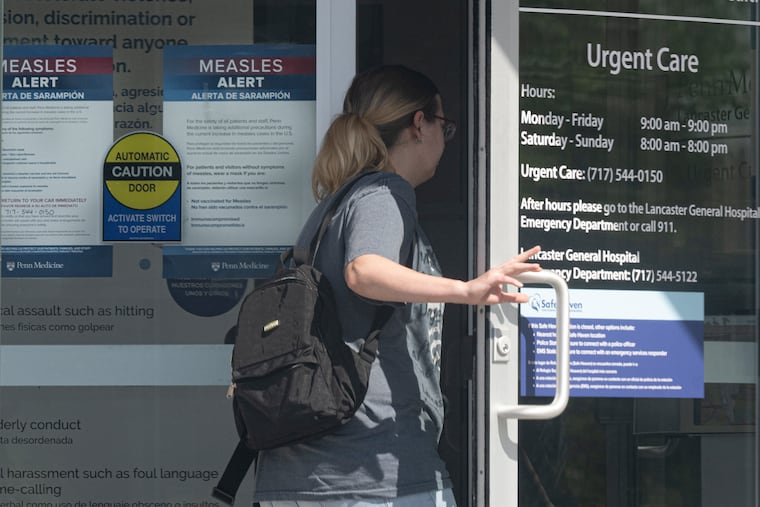
A single mother who takes two buses to get to work at a cleaning company in Conshohocken tried to control her anxiety as she waited at the Wissahickon Transportation Center.
And a teenager had to walk 40 minutes on her first day of school because her usual bus route was eliminated.
They were among the hundreds of thousands of people in Southeastern Pennsylvania who rely on public transit and had to adjust to deep cuts in SEPTA’s service that began Sunday amid a state budget stalemate in Harrisburg.
The first full weekday of reduced service was inconvenient for many riders, but it didn’t result in the crush-level crowds SEPTA had predicted.
In addition, traffic congestion Monday morning “was not significantly worse than what we would expect during any summer,” said Mike Carroll, Philadelphia’s deputy managing director of the Office of Transportation and Infrastructure Systems.
Things might get worse before they get better, however, as more schools open in the coming weeks and people return from vacation after Labor Day. Regional Rail service cutbacks are set to begin Sept. 2, and the Eagles open their season at home against the Cowboys two days later with a Thursday night game.
“Next week will be telling, a better indicator,” said Mary Ann Tierney, an emergency-management professional who is chief of SEPTA’s Control Center. “A lot of factors have not fully played out yet.”
‘A dangerous game’
SEPTA has cut service by 20%, eliminating 32 bus lines and shortening 16 other routes. Buses, trolleys, and subways are offering fewer trips, increasing wait times and the likelihood of crowded buses and skipped stops.
Next week, Regional Rail riders will face fewer midday trains across all lines alongside a fare increase of 21.5%, raising the base one-way rate to $2.90.
As transit riders in the Philadelphia region grappled with tougher commutes on Monday, state elected leaders showed little sign of urgency to fund mass transit. Senate and House Republicans hosted fundraisers Monday at a clay pigeon shoot and a golf tournament. A spokesperson for the Senate Republican Campaign Committee noted that Gov. Josh Shapiro, a Democrat, held his own fundraisers last month.
Senate Majority Leader Joe Pittman (R., Indiana) said in a social media post that budget negotiations continue, and Shapiro said lawmakers have made progress. “I think we are close,” the governor told reporters on Monday afternoon.
A potential wild card emerged late Sunday as Philadelphia attorney George Bochetto said he would sue SEPTA on behalf of a group of riders in an effort to halt service cuts, on the grounds that the reductions disproportionately harm disadvantaged communities.
City officials noted that the Philadelphia region is an economic engine, generating about 40% of the state’s tax revenue.
“No matter how long this goes, it is going to have a negative fiscal impact on the city of Philadelphia and our region when we can’t get to and from essential places and spaces,” Mayor Cherelle L. Parker said at a City Hall news conference.
Business leaders said prolonged cuts to transit would make Philadelphia’s economy less competitive.
“From a business standpoint, to be serious about competing in this international marketplace there’s absolutely nothing good about this at all,” said Robert Zuritsky, president of Parkway Corporation, a major parking company in Philadelphia. “This is a really dangerous game.”
A divided legislature
Like other public transit systems, SEPTA has been grappling with reduced ridership since the pandemic, among other challenges.
SEPTA has a $213 million hole in its operating budget and projects a continuing yearly shortfall of at least that amount until Pennsylvania enacts a stable, long-range source of new state funding for mass transit.
That has not happened as the divided legislature — a Democratic House and a Republican-led Senate — has failed to agree on a transit-funding plan, or even a full-year state budget. It is almost two months late.
Senate Republicans earlier this month passed a plan they said would provide a two-year bridge for SEPTA by shifting money from a fund reserved for mass transit capital projects so SEPTA and other systems could pay operating expenses.
House Democrats — who passed their own funding plan that would increase transit’s share of the sales tax — voted not to consider the GOP Senate’s proposal. SEPTA said it didn’t want to use money for needed infrastructure projects on day-to-day expenses, with no sign the capital funds would be replenished.
But Shapiro on Monday told reporters that tapping the fund, known as the Public Transportation Trust Fund, could be part of a broader budget deal.
Absent a swift resolution, the president of a union that represents 5,000 SEPTA employees warned hundreds of his members could face layoffs. Transport Workers Union Local 234 President Brian Pollitt Monday blasted Pennsylvania Senate Republicans as “derelict in their duty” for failing to fund transit.
‘There is no alternative’
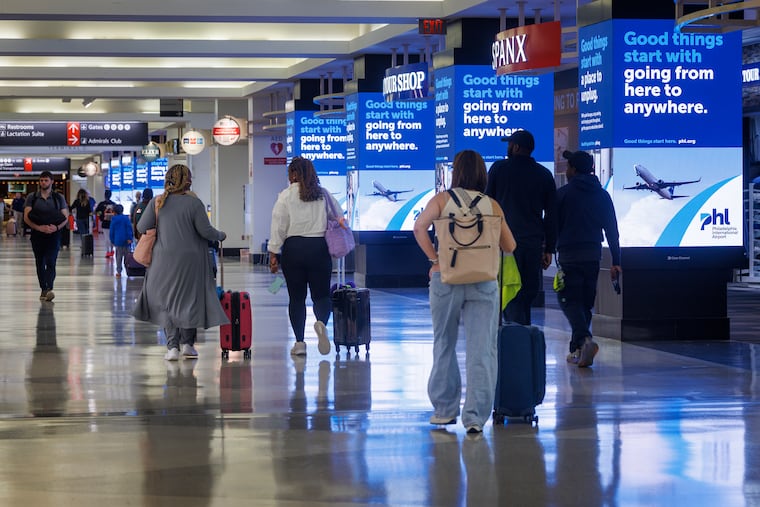
Amid the political dysfunction, SEPTA’s 700,000 daily riders — or however many were still taking transit amid the cuts — spent their Monday commutes trying to navigate the agency’s new austerity schedule.
Janiya Sutton, of West Philly, said she now wakes up at 5:30 a.m. to make it to work at the Barnes & Noble bookstore in Broomall. She used to take the Market-Frankford Line from 52nd Street and transfer to the 120 bus, which was eliminated.
Now, Sutton must board the 107 at the 69th Street Transportation Center, which she said would double her commute to two hours. The change has already forced her to cut hours at work since she can no longer get there in time to open, despite getting up earlier.
“I’m tired. I want more sleep, and to be able to make more money,” Sutton said.
Alayah Brown, a teaching assistant at a Delaware County elementary school, had to walk to 69th Street because most of the bus routes in her West Philly neighborhood have been eliminated.
While Brown was stuck at a red light across the street from the station, she watched the Route 110 bus pull away at 8:15 a.m. Rather than wait another 30 minutes for the next bus — and risk showing up late on her first day — she decided to hail a ride-share.
“I’m very mad,” Brown said. “I just paid $50 for an Uber and I’ll still be almost late.”
Other riders said they couldn’t afford that option.
Ana Ventura, the single mother, takes the Route 125 bus and another route to get to her job in the suburbs. With the new schedule and longer wait times, one delay derails her entire commute.
“I can’t afford to Uber, there is no alternative,” Ventura said. “And, I can’t afford to lose my job, because if I don’t work, who is going to pay the rent and feed my girls?”
Emma Barrie, a first-grade teacher, was supposed to be at work by 9 a.m., but her usual Route 61 bus — among those whose route was shortened — was missing in action.
She said her boss understood the situation. “But it’s messing with my hours, my pay, my rent,” Barrie said. “It’s very frustrating.”
After the teacher waited almost 90 minutes at the Wissahickon Transportation Center, the bus finally arrived around 10 a.m.
Students had to adjust, too, as the cuts coincided with the first day of school for the Philadelphia School District.
After the final bell Monday, students meandered outside of Abraham Lincoln High School and lingered by a deserted Rowland Avenue bus stop. More than 2,000 students there depend on SEPTA to get to class, sports, and other activities. But one of the most popular routes, 88, was eliminated, confusing and frustrating teens.
Without the convenience of the 88, senior Camilla Gomez must walk 40 minutes to Lincoln High in the mornings. After school, she walks roughly 15 minutes to Frankford Avenue and boards the 66 to get to work. She says she would take an Uber or Lyft, but she can’t afford the added expense.
Even as the impact of the cuts was just setting in, some riders were already looking ahead to January, when SEPTA has said it will eliminate five Regional Rail lines and more bus routes, as well as end all rail service at 9 p.m.
Mumtaz Dungee, 23, who is on the cusp of graduating from an electrical trade school program in two weeks, is already turning down work that might be difficult to get to. “My main concern,” Dungee said, “is I won’t be able to get a job.”
Staff writers Jake Blumgart, Ximena Conde, Gillian McGoldrick, Maggie Prosser, and Nick Vadala contributed to this article.