Gov. Shapiro ‘was instrumental’ in preventing SEPTA strike
The union and the transit agency will resume talks on Monday.
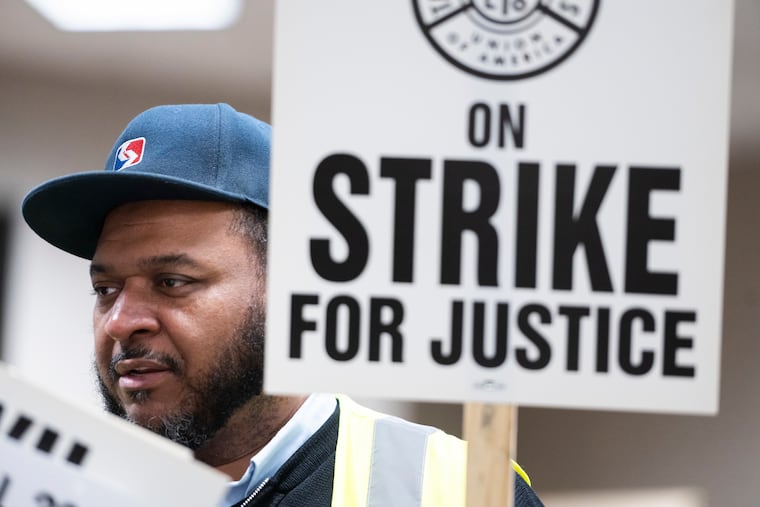
Transport Workers Union Local 234 and SEPTA agreed Sunday night to continue contract talks in the morning, avoiding for now a strike that could have ground to a halt much of Philadelphia.
Beginning in late afternoon, members of Gov. Josh Shapiro’s staff met with union leaders and SEPTA senior managers at the governor’s Philadelphia office. The goal was to unstick talks that had faltered, seeing if compromise was possible.
The union’s push for an increase in pensions and SEPTA’s proposal for union members to pay a greater share of the cost of their healthcare coverage emerged over the last week as the biggest obstacles to an agreement, according to both union and transit authority sources.
“Gov. Shapiro’s office brought the parties together and they made progress,” SEPTA spokesperson Andrew Busch said. “It was significant.”
In a statement, the union said “significant progress” was made.
“Gov. Shapiro was instrumental in preventing a strike that could have started as soon as Monday morning. We’re grateful for his close involvement,” said TWU Local 234 President Will Vera.
Sticking points
On Friday, Vera declared he was out of patience at what the union saw as SEPTA’s intransigence and threatened to lead members in a walkout.
A work stoppage would have brought chaos to a mass transit system that carries a weekday average of 790,000 riders.
TWU Local 234 represents 5,000 bus, subway, elevated train and trolley operators, as well as mechanics, cashiers, maintenance people and custodians, primarily in the city.
Their one-year labor contract expired Nov. 7, but members stayed at their posts. On Nov. 16, they authorized Local 234’s leaders to call a strike if needed. The vote was unanimous.
SEPTA and the union were not far apart on salary and both wanted a two-year deal after a series of one-year pacts during a time of financial crisis for the transit agency, sources said.
Management wanted to hike what union members pay for health coverage and increase co-pays for doctor and hospital visits.
The union pushed for an enhancement to the formula that determines retirees’ monthly pensions, based on years of service. It was last increased in 2016.
SEPTA officials calculated that TWU’s proposed changes would have created an annual unfunded liability of about $6 million for an undetermined length of time. The union says the pension plan books showed a bump was affordable.
Because TWU Local 234 is the largest SEPTA union, its contracts are used as a template for the other locals working for the transit system, which could boost costs.
Regional Rail was a concern to SEPTA because commuter railroad workers, like others, receive a federal pension that has tended to be less generous. Those unions would have wanted a SEPTA sweetener to their retirement benefits too.
TWU Local 234 also wanted changes to work rules involving sick time benefits and the length of time it takes new members to qualify for dental and vision benefits — currently 15 months.
The local also represents several hundred suburban workers, primarily operators, in SEPTA’s Frontier district, which runs 24 bus routes in Montgomery County, Lower Bucks County, and part of Chester County.
The Victory district has a similar number of employees, who are represented by SMART Local 1594. They run Delaware County’s two trolley lines, the Norristown High Speed Line, and 20 bus routes in the suburbs.
Unions for both the Frontier and Victory districts could choose to strike alongside TWU Local 234. If that happened, Regional Rail, already plagued by delays and cancellations due to federally-mandated repairs on train cars, would be the only public transit running.
Strike-prone reputation
SEPTA unions have walked off the job at least 12 times since 1975, earning the authority a reputation as the most strike-prone big transit agency in the United States.
TWU last struck in 2016. It lasted for six days and ended the day before the general election. Democrat Hillary Clinton’s presidential campaign was worried about voter turnout, and the city sought an injunction to end the strike. That proved unnecessary.
Regional Rail would operate during a TWU strike. Locomotive engineers and conductors on the commuter service are represented by different unions than transit employees, and are working under current contracts.