Mayor Parker plans to renew SEPTA’s Zero Fare program. Here’s how it benefits riders, in their own words.
Zero fare started as a two-year city experiment using pandemic aid. It could continue for a fourth year under Mayor Cherelle L. Parker's proposed budget.
Zero Fare, the city program that gives free SEPTA passes to thousands of low-income Philadelphians, will remain for another year.
Mayor Cherelle L. Parker on Thursday proposed including $25 million for Zero Fare in her $7 billion budget proposal for the 2026-27 fiscal year.
Transit advocates and political and labor leaders sounded the alarm last week, saying they had not heard from the administration and were concerned the program would not be included in the budget — or would be scaled back.
Zero Fare, which serves people with annual incomes at or below $23,940 for an individual or $49,500 for a family of four — 150% of the federal poverty standard — would end June 30 without an extension of funding.
It is normal for mayors, or any government chief executives, to be tight-lipped about their plans, but the program has faced uncertainty before.
Last year, Parker’s proposed budget would have eliminated funding for Zero Fare, launched in 2023 as a two-year pilot program. Money was included after public protest, including a rare commentary from former Mayor Jim Kenney, as City Council and the administration negotiated over spending.
That extended the program for a third year at a cost of about $20 million.
Consider this: SEPTA’s base fare is $2.90, so it would cost a worker making the Pennsylvania minimum wage of $7.25 an hour at least 48 minutes of pay each day to get to and from work. (Some eligible people make more than the minimum.)
The Inquirer talked to several Zero Fare users about their experiences and thoughts on the future of the program. Here’s what they had to say:
Zero Fare provides ease
Gloria “Smooches” Cartagena, a 55-year-old community organizer from Kensington
Regular rides: The El and bus Routes 66, 89, 5, 66, 23, 3, and sometimes 47 or 59.
“The economics are getting rough,” Cartagena said. “Food prices are going up. Rent is going up. How are you going to be striving and keep moving forward if everything’s going up except your pay?”
Cartagena is in her second year with Zero Fare, using it for work as an organizer with the Kensington Corridor Trust and to shop and visit family and friends.
“That card, it’s like a piece of ‘at ease.’ My anxiety is not up because I don’t have to be worried about where am I going to get the money,” she said.
And that helps her feed and entertain her grandchildren or put a little savings away.
‘I use the card every day’
Regina Johnson, a 51-year-old records administrator at a law firm from Germantown
Rides: Trenton Line on Regional Rail to connect with NJ Transit to New York; the Warminster and Lansdale/Doylestown Lines at Wayne Junction Station for work commutes; and bus Routes 23, 65, 124, 125, and 9.
“I use the card every day,” said Johnson, who works five days a week in the office. She also uses SEPTA often for events and shopping. “It has helped me out so much over the years. I never had to worry if I had enough loaded onto my card.”
She got a postcard from the program in 2023 saying that she should be receiving more information. Then in early 2024, the Zero Fare card arrived. “I thought, ‘I don’t know if it is real or not.’ But I started using it, and it very much was.”
Johnson was hoping the program would live on, and not just for her own sake. “I feel it’s a good help for people who are struggling and for people in-between,” she said.
‘I can get anywhere’
LaVerne Boateng, a 63-year-old retired city worker from North Philadelphia
Rides: Broad Street Line and bus Route 23
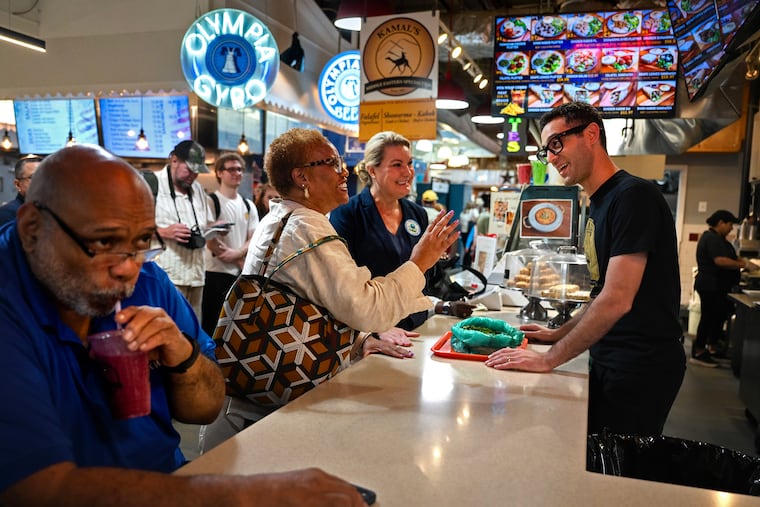
”I can get anywhere I need in the city of Philadelphia from Broad and Erie, and I love that,“ Boateng said.
She is disabled and was forced to retire in 2012 because she severely fractured her ankle in a bad fall on the job. “I couldn’t walk.”
“I take SEPTA at least three or four times a week, getting to my doctor’s appointments” at Pennsylvania Hospital and Jefferson Health, Boateng said. She shops at the Reading Terminal Market.
If she had to pay out of pocket, Boateng figures that she would spend $25 to $30 weekly, which she cannot afford on a tight budget.
The all-access SEPTA pass gives her peace of mind: “You really don’t have to worry. It’s there.” And that is especially true because she is a couple of years away from qualifying for a free senior citizens transit card.