City funding is unclear for Zero Fare program giving SEPTA passes to low-income Philadelphians
Mayor Cherelle L. Parker will unveil her budget March 12 as she addresses City Council.
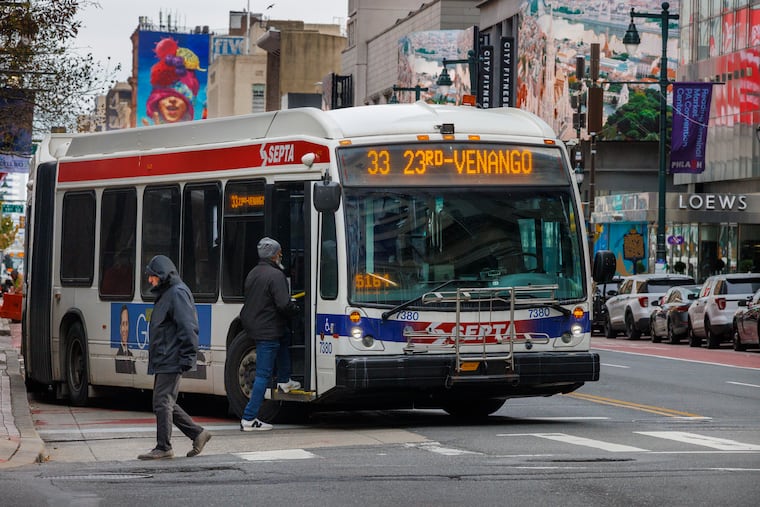
Just days before the release of Mayor Cherelle L. Parker’s city budget, it is unclear whether it will include money to continue Zero Fare, a program that gives free transit passes to low-income Philadelphians.
Transit advocates and political leaders say they have not heard from the administration on the issue and are concerned it may be cut or have its funding reduced.
A rally is scheduled for 10 a.m. Friday on the north apron of City Hall to push for Zero Fare’s survival — and for city government to continue participating in SEPTA’s Key Advantage, which provides free transit passes for municipal workers.
Parker is scheduled to deliver her annual budget address next Thursday to a session of City Council.
A spokesperson for the administration declined to comment.
“We don’t care who gets the credit,” said Stephen Bronskill, coalition manager for Transit Forward Philadelphia, a nonprofit that advocates for public transportation that is organizing the event. “We want to see that this program gets funded … so people can get where they need to go.”
City Council members, state lawmakers, activists for transit funding and service, and users of the Zero Fare passes are expected to speak Friday.
Zero Fare, which serves about 60,000 eligible people with incomes at or below 150% of the federal poverty standard, would end June 30 unless the fiscal 2026-27 budget funds it.
Officials also must decide whether to fund Key Advantage benefits for city workers, though SEPTA’s program provides subsidized passes free to the employees of nonprofit organizations and private businesses.
Deja vu?
Both programs have faced city budget uncertainty in the past.
Last year, Parker’s budget would have eliminated funding for Zero Fare, launched in 2023 as a two-year pilot program. Money was included after public backlash, including a rare commentary from former Mayor Jim Kenney, as City Council was considering the budget.
City officials said they had begun meeting with SEPTA to find a funding solution to continue both programs before the uproar. The administration also continued Key Advantage last year.
“From our standpoint, they’ve both worked well, and we’d like to see them continue,” SEPTA spokesperson Andrew Busch said Thursday.
A path forward
Zero Fare began as a pilot, started by Kenney using $30 million of federal COVID relief money to get it off the ground. The program was nationally recognized because it proactively sent transit fare cards to Philadelphians eligible for the benefit.
Automatic enrollment eliminated the red tape “time tax” for people who wanted to use the benefit, making it unusual on the local level, according to public policy analysts.
.
Councilmember Nicolas O’Rourke, who helped lead the effort to restore Zero Fare funding last year, has said he plans to push his proposed City Charter amendment to mandate 0.5% of the city budget each year be dedicated to the initiative.
The amendment would generate about $34 million in the 2026-27 budget for Zero Fare, O’Rourke estimated last year. Enshrining it in the charter, which functions as a kind of municipal constitution, would put the program on solid ground, he said.
“It can’t be yanked away at a moment’s notice when somebody wants to shift something around in the budget,” O’Rourke said last November at a community meeting on the proposal.
This story has been updated to remove an outdated figure for the number of participants in Zero Fare.