Jersey Shore beaches suffered ‘major’ sand losses and dune damage in the latest storm
The New Jersey beaches have had a rough two months from storms and onshore winds.
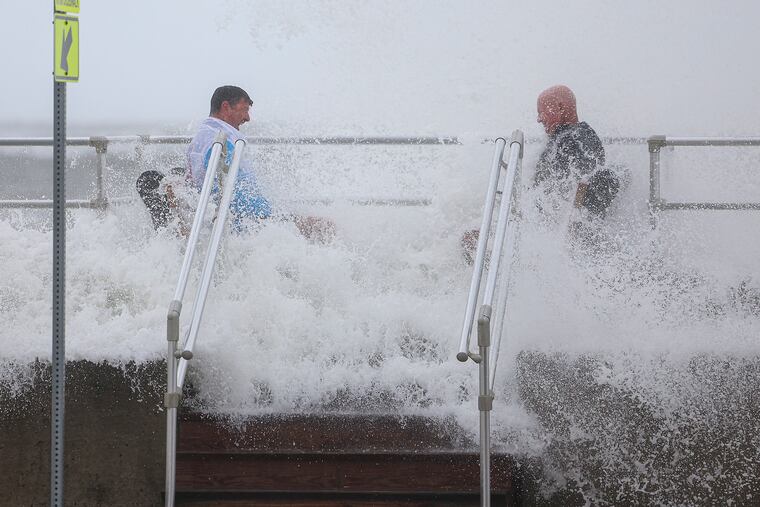
In the run-up to what traditionally is the prime nor’easter season, this may be exactly what the Jersey barrier-island beaches didn’t need.
Coming after an ocean-plunging offshore hurricane and onshore wind assaults, this week’s nor’easter has erased more sand and seriously compromised dune systems, the New Jersey Department of Environmental Protection reported Thursday.
“Moderate to major erosion” was reported on Long Beach Island and from Strathmere to Cape May, and “moderate to minor” erosion from Brigantine through Ocean City, the department said in a preliminary report.
“The beaches have really taken a beating,” said Mount Holly National Weather Service meteorologist Eric Hoeflich. “It was a rough couple of days at the Shore.”
Actually, it’s been a rough two months, starting with the effects of Hurricane Erin in August.
The effects of Erin and the onshore winds
Although Erin stayed well offshore, the winds and waves it generated caused at least minor erosion on 85% of all Jersey beaches, according to the department’s analysis.
That included “moderate” sand losses in Avalon, Ocean City, Strathmere, and North Wildwood.
Contributing to the sand losses resulting from the coastal storm early this week was the fact that the beaches already had endured consecutive days of onshore winds on four occasions since Aug. 18.
That didn’t allow “much time for natural recovery of the beaches,” said Kimberly McKenna, interim chief of the Stockton University Coastal Research Center.
The coastal storm effects that could have been worse
The storm’s effects could have been worse, said Jim Eberwine, a former weather service meteorologist and now Absecon’s emergency manager.
He said potent winds about 2,500 feet in the atmosphere arrived at the Shore about six hours after the first high tide last Sunday. That initial round of flooding would have been worse had the timing of the winds and high tide coincided.
All things considered, said Joe Mancini, mayor of Long Beach Township, “We were lucky.”
What’s ahead for the Shore
Fortunately, “We’re not expecting onshore winds in the next week or so,” Hoeflich said.
Last fall and winter, not a single nor’easter — so named for the onshore winds from the northeast that they produce — pounded the beaches.
Climatology argued against that kind of luck continuing.
“You’re getting into a stormier time of year,” said Dave Dombek, senior meteorologist with AccuWeather Inc.
Nor’easter conditions ripen as the invading colder air interacts with the reluctantly retreating warm air to ignite storms, he said.
The nor’easter numbers vary radically from year to year, but he said he would expect at least “a couple” to impact the shore before winter ends.
For now, however, no storms or even onshore winds are expected for the next several days.
Of note, no new federal beachfill projects are in the works, the government shutdown notwithstanding.
According to Howard Marlowe, one of the nation’s most influential coastal lobbyists, this is the first fiscal year this century in which no money has been appropriated for shore protection projects.