Imelda brings rip currents to the Shore, and spectacular sunsets to Philadelphia
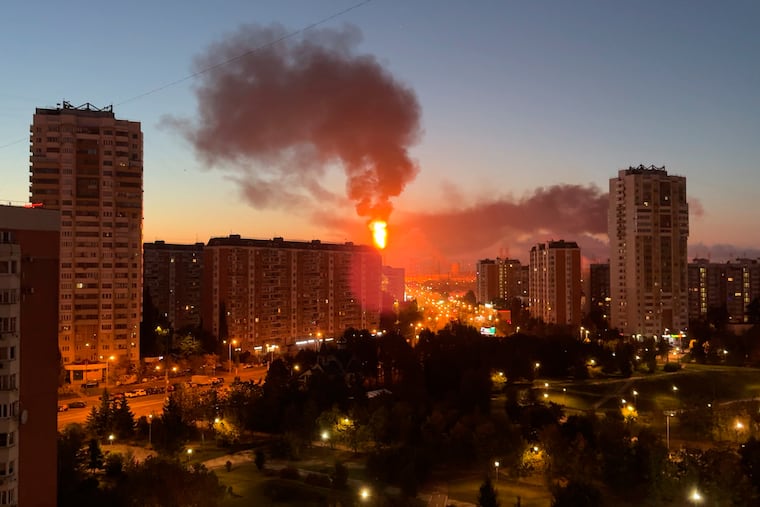
Imelda's cirrus clouds added vivid colors to Monday's and Tuesday's sunsets over the Philly region.
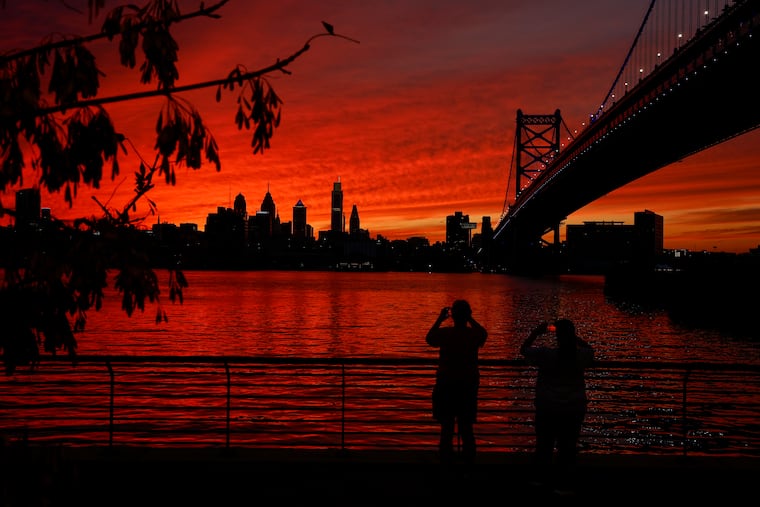
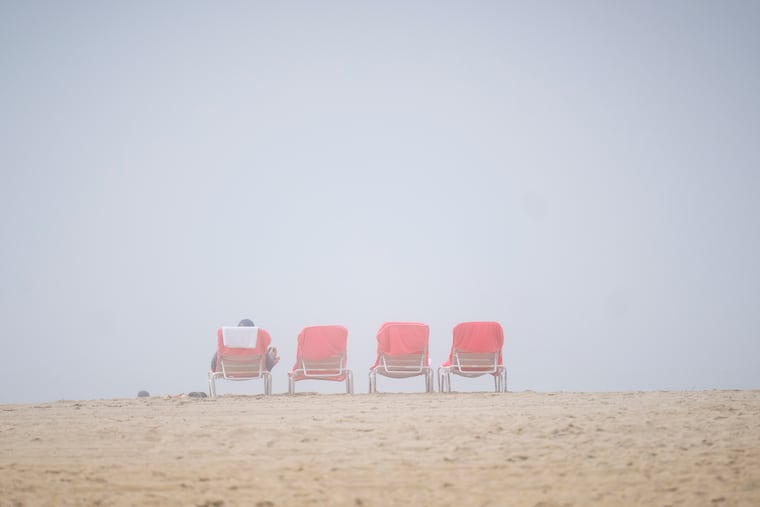
Hurricane Imelda is hundreds of miles away, but it is having impacts on the New Jersey and Delaware beaches — and spectacular effects on the skies over Philadelphia.
The region was treated to a celestial visual display to rival the aurora at sunset Monday, with the sky aflame for a good 20 minutes after the solar disk vanished beneath the horizon, and a Tuesday encore may outdo it.
The shield of icy cirrus clouds in the high atmosphere, part of Imelda’s massive circulation, added measures of drama to the sky show, meteorologists said.
And “tonight might be even more vivid,” said Ray Martin, a lead meteorologist at the National Weather Service Office in Mount Holly.
The high clouds over the Philly region are expected to persist through sunset time Tuesday as Tropical Storm Imelda, centered off the Florida coast, migrates out to sea.
The National Hurricane Center forecasts that in effect it will be towed away from the U.S. East Coast in part due to the circulation of Hurricane Humberto, several hundred miles to the northeast of Imelda.
The storms’ close interaction “is definitely a rare occurrence,” said Robbie Berg, the hurricane center’s warning coordination meteorologist. However, he added, “Hurricanes commonly influence steering winds in the atmosphere that can have downstream impacts on another hurricane’s track.”
Whatever else they are doing, they are churning the Atlantic, creating dangerous rip currents all along the East Coast.
On the mainland, however, the only noticeable impact from Imelda will be visual.
Why storms can make for spectacular sunsets
Sunset light is the result of complex processes involving the frequencies of light, but here are the SparkNotes.
At sunrise and sunset, the sunlight is far more oblique than it is at noon, thus it has to take a longer path through the atmosphere.
That longer path has the effect of “scattering” the blue light that dominates the day, explains meteorologist Stephen Corfidi in an essay posted on NOAA’s Storm Prediction Center site.
That clears the way for the reddish colors on the other end of the spectrum to have their moments.
“The light that reaches an observer at the surface early or late in the day is noticeably reddened,” he wrote.
In the case of Monday, the Imelda-related cirrus clouds, which are pure ice, played a significant role in the drama, said the weather service’s Martin, further intensifying the color the observer sees on the ground.
What time is sunset Tuesday in Philly?
The sun sets over Philadelphia at 6:44 p.m.
If you see the glow, stay with it. It’s likely to intensify and glow on and on.