Why some severe storms come with no warning in Philly
Meteorologists are better at seeing conditions favorable to storms, but as for where and when they'll pop ...

Never in the history of meteorology have so many been so warned so often about severe weather.
Yet so many of those cardiac-challenging smartphone alerts and fireball images on laptops and TV screens appear to evaporate without incident.
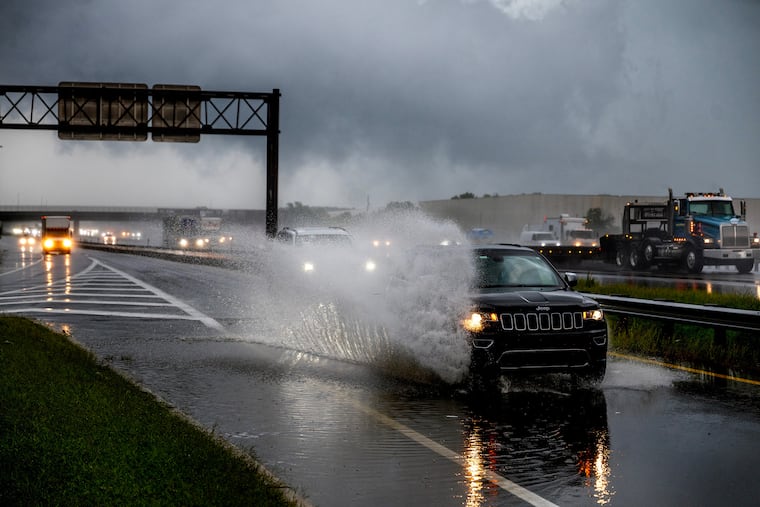
In other cases, flooding downpours and damaging winds show up hours later than forecasts had suggested.
And atmospheric mayhem has been known to occur with little or no notice.
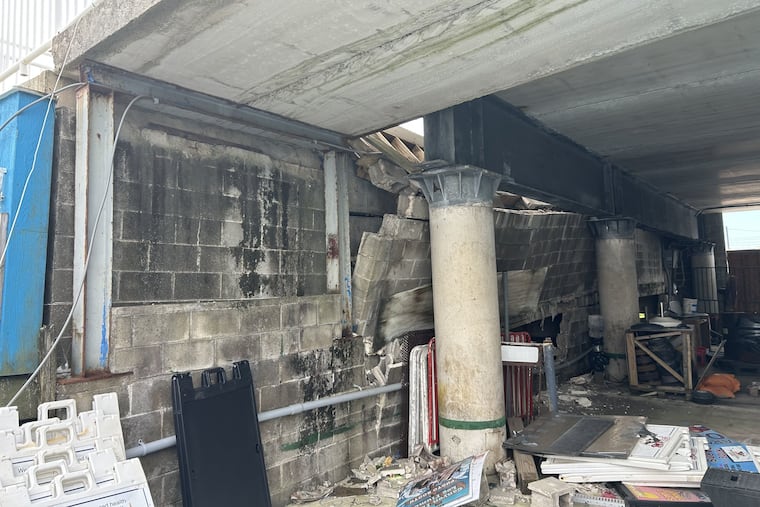
A case in point: On Aug. 17, a night when no “flood watch” had been issued, nearly 5 inches of rain fell at a location on Woodlane Road in Westampton Township, Burlington County. That happened to be the location of the local National Weather Service office.
No doubt speaking for people throughout the region, a reader asked Curious Philly, The Inquirer’s forum for questions about the city and region: “What is with the weather and storms this summer? I receive storm alerts and flood warning at 8 a.m., but nothing materializes on the hourly report or radar until much later in the day, often with very little warning.”
» ASK US: Have something you’re wondering about the Philly region? Submit your Curious Philly question here.
First off, meteorologists would like you to know that’s a great question. Severe-storm forecasting is getting better, but your skepticism is understandable.
Unfortunately, forecasts still are lacking on the two details of most relevance to people — precisely when and where the thunderstorms that set off flooding and/or destructive winds are going to happen.
What’s the problem?
The short answer is, the science has limits, and so do the humans.
Thunderstorms are small, and that’s a big deal
The when-and-where challenges are made formidable by the scale of thunderstorms.
“The greatest impacts from these storms are highly localized,” said Rich Thompson, chief of forecast operations at the NOAA National Weather Service Storm Prediction Center, in Norman, Okla.
This is a stumper even for those powerful forecasting computers, said Adam Clark, research scientist at the National Severe Storms Laboratory. Thunderstorms “occur on small scales not represented well by models,” he said.
Unlike the organized cyclones of later fall and winter that can have effects over tens of thousands of square miles, the typical summer thunderstorm cell may be no more than 10 miles wide and 10 miles long, said Dave Dombek, senior meteorologist with AccuWeather Inc.
As was evidenced during the summer, they can wring out copious amounts of rain in one area, while areas nearby get nothing but a stray breeze.
What happened in Chester County the second week in July was a classic illustration. In a two-day period, the southern part of the county received up to five inches of rain, according to the weather service’s Middle Atlantic River Forecast Center. Yet only about two-tenths of an inch fell in the county’s northern areas.
Thunderstorms are ignited by rising currents that propel warm, moist air skyward, where it condenses and falls back to Earth as heavy rain. Logically, said Dombek, “You can’t have rising air everywhere. There’d be no air left on the ground.”
Forecasts often will call for “isolated amounts” of three and four inches. That could well mean widespread amounts of nothing.
Timing the arrival of storms is a challenge
Like so many of us, in summer the atmosphere exhibits a certain lassitude. That also speaks to the downpours. With upper-air steering currents showing little ambition, thunderstorms can get stuck over one area.
Temperature contrasts drive the movements of fronts and storms, and in summer those contrasts weaken as solar energy is spread more evenly across the Northern Hemisphere.
Storms frequently are set off by approaching fronts, some of them quite weak and ponderously moving.
Timing the arrivals of fronts can be akin to guessing when a stalled train down the line is going to show up at your station.
Even without a front, sometimes a thunderstorm will develop almost randomly late in the day, which is a prime time for strong storms that mine the summer heat.
What would it take to make forecasts better?
“To make nearly perfect thunderstorm forecasts, we would need to know almost everything about the atmosphere, everywhere at the same time,” said Thompson.
Observation systems, including more detailed information from satellites and numerical computer models, have improved substantially, he added.
Meteorologists have made progress in identifying environments favorable for storms, but pinpointing the where and when is a different matter.
“We just don’t sample the atmosphere very well,” said Robert Trapp, an atmospheric scientist at the University of Illinois Urbana-Champaign and severe-storm expert.
He said it would be wise to increase the nation’s weather balloon network, which gathers data in the storm factories of the upper atmosphere. The weather service has only 92 balloon sites across the nation.
Clark said the storm laboratory is looking at “other observing platforms that can be automated.”
Said Robert Shedd, chief hydrologist at the river forecast center, “We’ve come a long ways in the last 20 years, but still have a long way to go.”