Philly has been seeing huge temperature swings within 24 hours. Here’s what’s going on.
Last week’s temperature drop was one of the most dramatic on record.
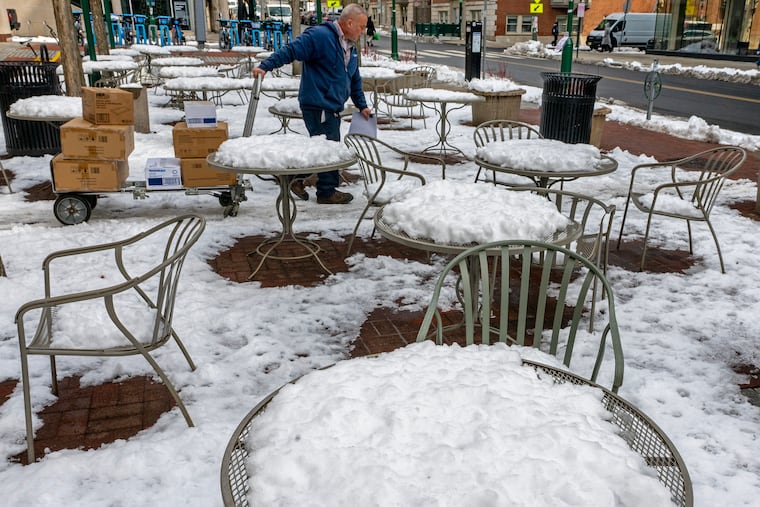
Like so many humans, perhaps the atmosphere is having issues adjusting to the time change. At the very least, it’s having trouble keeping track of the seasons.
After making a run at 70 degrees on a stormy Monday, on Tuesday it will be welcome back to hats and gloves in Philly.
Temperatures were forecast to fall to freezing by daybreak, which would be a drop of 35 to 40 degrees in less than 24 hours. In some years, that would rank among the biggest annual day-to-day temperature drops.
But this comes less than a week after the official readings plummeted from 83 degrees, normal for mid-June, to 35 in 24 hours, one of the largest day-to-day temperature swings in Philly’s climate record.
In official record-keeping dating to 1874 — covering more than 55,000 days — the Wednesday-to-Thursday shift would rank in the top 20 for day-to-day temperature tumbles, according to an Inquirer analysis.
“It’s really remarkable,” said Eric Balaban, pulmonary and critical care fellow at the Temple Lung Center.
He and other experts say that aside from what it may do to the morale of spring’s ardent fans, the thermal roller-coaster and the accompanying winds likely are having effects on health, particularly for people with respiratory cardiovascular conditions.
And we probably should expect to see the dramatic swings to continue for a while, said Matt Benz, senior meteorologist with AccuWeather Inc.
“I’d be surprised if we didn’t, given the pattern we’ve being going through,” Benz said.
Why the temperature has been so jumpy lately in Philly
Philadelphia and other areas in the mid-latitudes are prone to become battlegrounds this time of year between the stubborn winter and the impatient spring.
March is notorious for temperature swings as cold air masses from the north encounter encroaching warmth and storms tend to form along the borders of the skirmishes.
One reason the contrasts have been especially vigorous this year is the obvious. “After this hard winter, that’s to be expected,” said Ray Martin, a lead meteorologist at the National Weather Service. We haven’t had many of those lately.
But that 48-degree drop last week belongs in an elite category. It ranked No. 18 among day-to-day temperature falls, based on the available records. The all-timer was the 57-degree drop from March 28 to 29 in 1921, with several 50-degree drops appearing in the record.
Whenever they occur, the radical shifts can have health consequences, according to medical experts and a variety of studies.
The possible health effects of rapid temperature changes
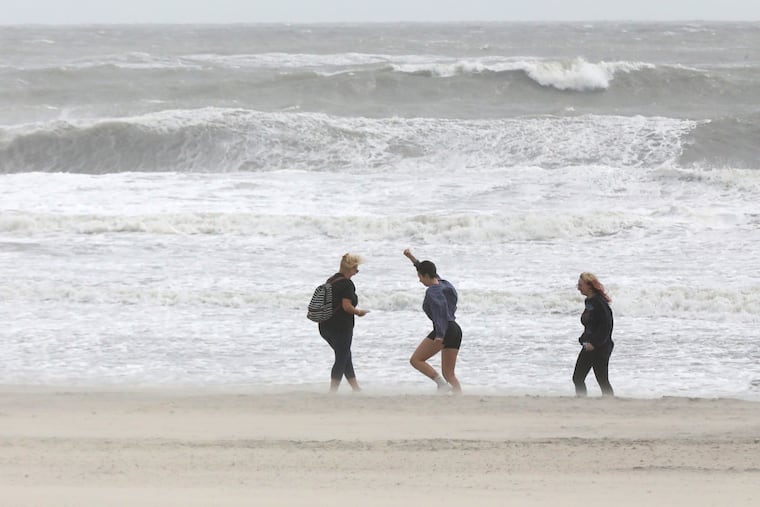
The temperature changes typically are set off by potent fronts, such as the one that crashed through the region on Monday, and they generate powerful winds.
By stirring particulate matter and transporting early tree pollens, the winds present a risk to those with respiratory conditions and allergies, said Manav N. Segal, with the Chestnut Hill Allergy & Asthma practice.
“We are seeing an increase in call volume already because of patients’ spring allergy symptoms,” he said Monday. And conditions this week are just a prequel: The allergy season will pick up steam once the weather turns more consistently warmer and the allergy season intensifies, he said.
Said Balaban, “People who have preexsiting conditions are simply at higher risk.”
Rapid changes in temperature and levels of atmospheric moisture with frontal passages can irritate the airways and increase airway inflammation, said Joann Martin, nurse with Guardian Nurses Healthcare Advocates in Flourtown, Montgomery County. Studies have shown associations between temperature variability and increased asthma-related hospital visits.
Changes in temperature, humidity, and barometric pressure — a measure of the weight of the air that falls as fronts approach and rises after they pass — are “recognized triggers for migraine and severe headaches.”
In addition, “Sudden temperature shifts can affect blood pressure, vascular tone, and cardiac workload,” Martin said, increasing the changes for heart attacks and strokes.
For most people, however, after a long winter, the temperature drops are a source of frustration over the delay of a much-anticipated spring.
More temperature swings are likely in coming weeks in the Philly region
For now, at least, it appears that the region’s cherry blossoms should be safe, even though temperatures Tuesday morning were expected to come close to freezing in Philly and may fall into the upper 20s Wednesday and Thursday mornings.
Daytime highs won’t be much higher than 40 Tuesday and Wednesday, before a modest warmup begins.
It likely would take a serious late-March or early-April freeze to damage the blossoms, said Sandi Polyakov, head gardener for the Japan America Society of Greater Philadelphia. He expects a bloom peak in early April.
However, the temperature seesaw probably isn’t over, said AccuWeather’s Benz.
“There’s still a lot of cold air left over in Canada,” he said, ”and a lot of warmth coming up from the Gulf."
He noted that Monday’s storm was dropping a healthy 20 to 30 inches of snow in the western Great Lakes.
“Until we get out of that type of stuff,” he said, “the cold air doesn’t have to go very far to get here.”