See it, hear it, feel it: All the Philly art we loved this week
By Rosa Cartagena, Elizabeth Wellington, Peter Dobrin, Morgan Ritter
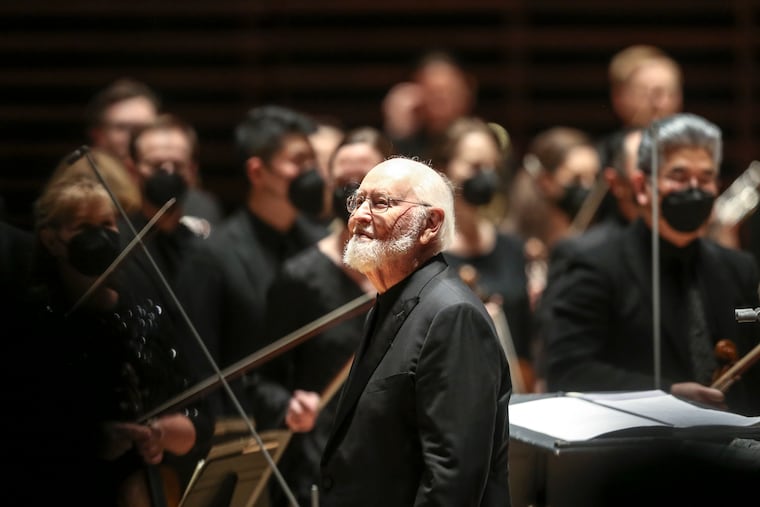
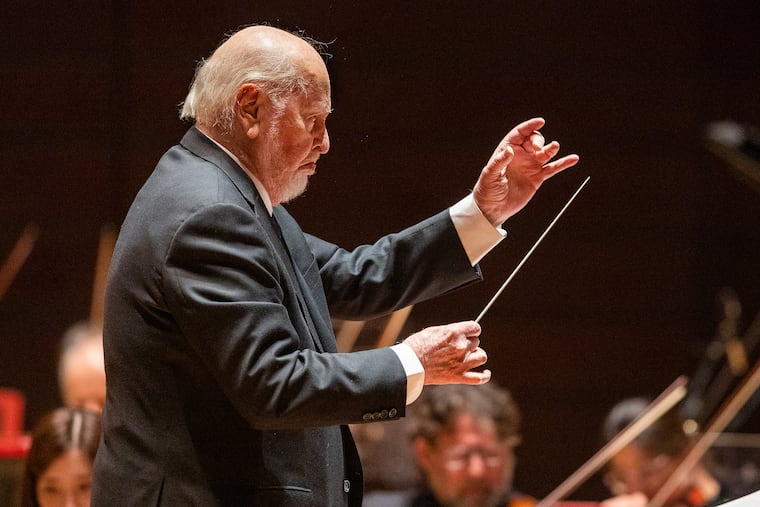
Searching for meaning with the 94-year-old John Williams in “Disclosure Day”
here’s plenty of wonder and foreboding in John Williams’ score to Disclosure Day. Anyone hoping for Williams the bellicose, or Williams the painter of twinkling stars that make us look to the Beyond, will find him here.
But what’s fascinating about the orchestral-vocal soundscape of Williams’ and Steven Spielberg’s 30th collaboration is its subtlety. The composer always was more nuanced than he’s generally given credit for being, and here is something unusually introspective.
Williams, 94, has been praised for his understatement in the score (released June 12). The soundtrack titles are listed in lowercase letters with ellipses and names like so many perfumes: “unseen …”, “believe …”, “empathy …”
But as Spielberg has said:
“Disclosure Day is probably the most restrained score he has ever written for one of our collaborations — at least until it is not.”
As always, Williams — whose film and concert hall music have become a staple at the Philadelphia Orchestra — makes you feel things you can’t put into words. What is a memory if not ineffable, as the music in a so-titled track shows? The narrative progression of “caught…” from poignant oboe and bassoon, to mysterious celesta, to chilling strings and a heart-pounding race, make the track a piece in itself. It’s as good as any concert overture.
There’s no big signature melody or sweeping gesture à la E.T. anywhere in this music. What it does offer is something perhaps better suited to the times: a score that gives listeners the space to search for meaning in a world of ambiguity.
“Disclosure Day” is playing in theaters across the country. John Williams’ soundtrack is available on all streaming services.
— Peter Dobrin
A burst of color on I-76
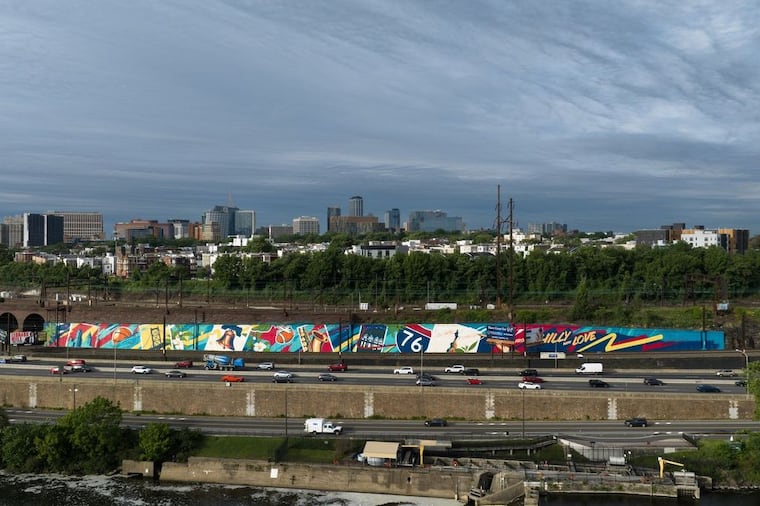
I think most everyone can agree that our highways could use a touch more color. A new mural overlooking the Schuylkill Expressway now provides 16,000 square feet of it.
One Philly, a United City, With Love stands over part of I-76, paying homage to the city ahead of the country’s 250th anniversary. It was commissioned by the City of Philadelphia as part of “Gateways to Philadelphia,” an anti-graffiti and highway beautification initiative headed by Mayor Cherelle L. Parker’s Office of Clean and Green Initiatives, the Pennsylvania Horticultural Society, and Mural Arts Philadelphia.
The mural took by artist Carlos Lopez Rosa, a Philly resident, two months to paint. There are depictions of the Benjamin Franklin Bridge, an eagle’s talons holding a football (Go Birds!), the Liberty Bell, an I-76 road sign, and the William Penn City Hall statue. There are arts-focused elements, too, like a blaring saxophone that reflects the city’s vibrant music scene.
Highways can often feel lifeless, simply a means of getting from point A to B. But if you’re ever traveling along the I-76, be sure to glance up and be reminded of the vividness of Philly.
“One Philly, a United City, With Love” mural can be seen on I-76 at Spring Garden Street.
— Morgan Ritter
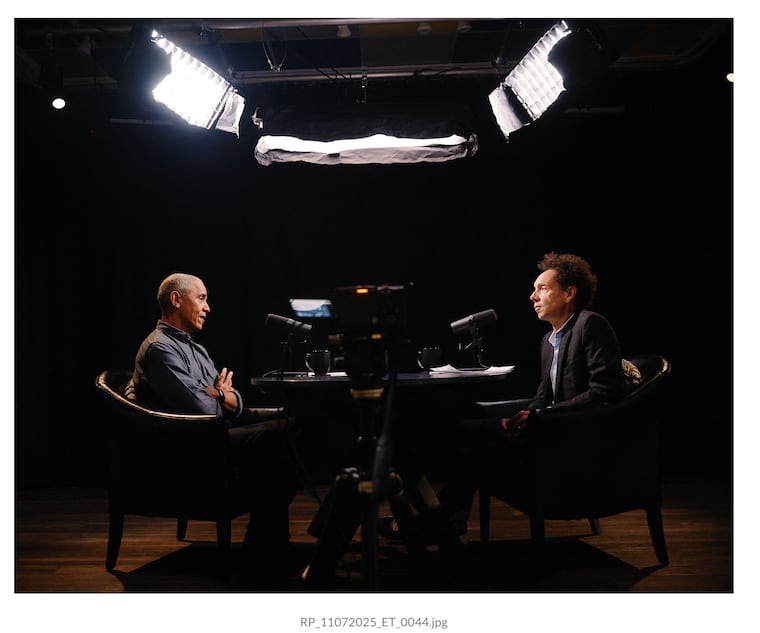
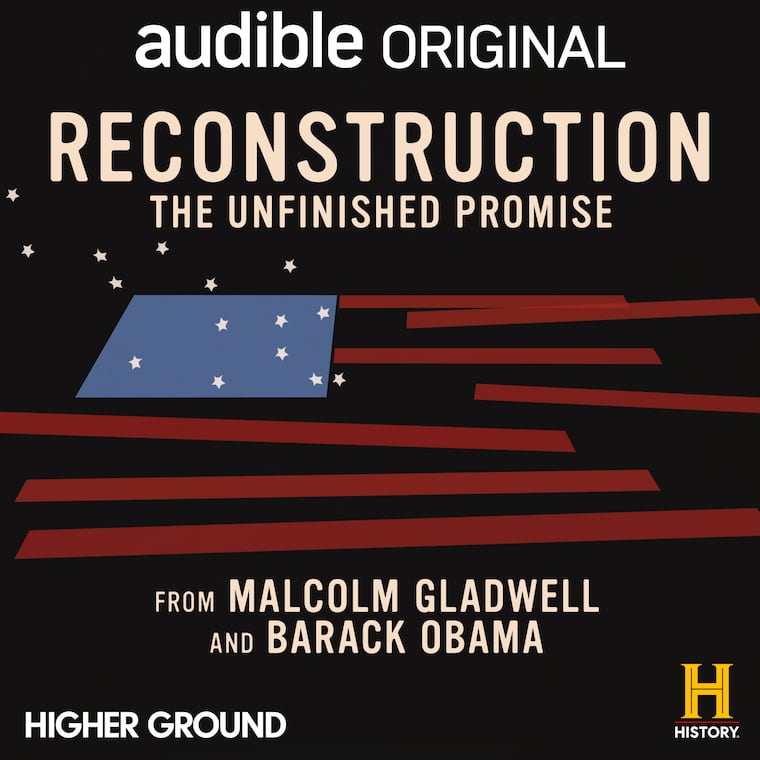
America’s Reconstruction story with a little dose of Philly history, narrated by Malcolm Gladwell and Barack Obama
As I listened to the History Channel’s eight-part podcast Reconstruction: The Unfinished Promise hosted by Malcolm Gladwell and featuring special commentary by former President Barack Obama, I was amazed to learn of the political progress African Americans made in the 12 years after the Civil War.
The founding of Alabama State University by nine formally enslaved men, the rise of the Black politicians like Florida Sen. Emanuel Fortune, the oratorical genius of Frederick Douglass, even the unfortunate demise of the Freedman’s Savings and Trust Company are fascinating pieces of American history rarely taught in school.
I found myself most interested in the firsthand accounts of Addie Brown, a Black woman born free in Philadelphia in the 1840s, who found herself in Connecticut during Reconstruction working as a domestic. There, she formed a friendship and romantic relationship with Rebecca Primus, the daughter of the Black family for whom she worked.
The podcast draws from archives, letters, diaries, court records, eyewitness testimonies, and the work of some of America’s most accomplished scholars and storytellers, including Jelani Cobb, Kellie Carter Jackson, and Ashley C. Ford
Archival letters, according to historians, provide details about how women’s careers were limited by their sex, how they were forced into marriages, and followed social mores that simply did not serve them.
Salamishah Tillet, Pulitzer Prize-winning critic for the New York Times, distinguished professor of Africana Studies and Creative Writing at Rutgers University-Newark, and University of Pennsylvania graduate and former professor, also makes a brief appearance.
Tillet explains how the 1915 film Birth of a Nation was used to defend Jim Crow, the laws based on racial segregation put in place to undo the progress formerly enslaved people made during Reconstruction.
Both Gladwell and Obama repeatedly make the same point: The end of Reconstruction is proof that North won the war, but the South won the peace. Meaning, in order to appease Southern Dixiecrats, America was forced to abandon its attempts of creating a truly multiracial society.
“The Reconstruction Era was a brief but pivotal and turbulent chapter in our nation’s history,” Obama said in a news release. “One that is often overlooked even though its consequences are still felt today.”
In light of today’s political climate in which politicians are again trying to undo progress made by our country’s most marginalized, Reconstruction: The Unfinished Promise must be listened to, studied, and shared.
“Reconstruction: The Unfinished Promise” is available on Audible. It was produced in collaboration with Barack and Michelle Obama’s Higher Ground, Malcolm Gladwell’s Pushkin Industries, and Audible.
— Elizabeth Wellington
Remembering Dinah at Stenton Museum
On a humid day, just hours before a downpour, five Black women in brightly colored colonial-era gowns took the stage on the grounds of Stenton Museum in Germantown. That afternoon, they were all called Dinah as each actor represented the historical figure at different ages throughout her lifetime.
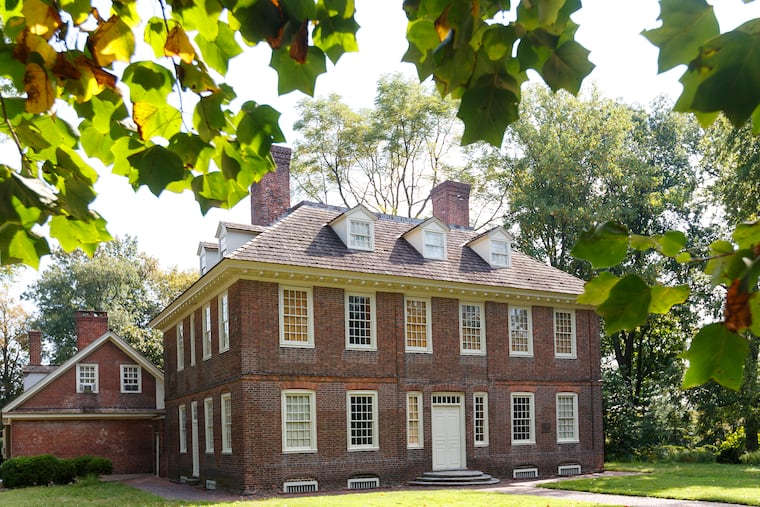
In the winter of 1777, an enslaved woman named Dinah saved the Stenton mansion from British soldiers who planned to burn it down. History has only remembered her with one name. In recent years, Black artists have continued to examine her story.
In this play by Philadelphia poet Trapeta B. Mayson (who codirected alongside fellow poet Yolanda Wisher), Dinah was revived in a lyrical portrayal that presented a fuller picture of the brave woman who rescued her enslavers’ home during wartime, demanded freedom, and received emancipation.
On the night of the show, with a neighboring home blasting dance music that occasionally distracted the audience, the ensemble delivered an ambitious and compelling performance full of profound emotion.
It was powerful to see their interpretation of Dinah as the actors walked on the same ground she did some 250 years ago. Mayson has said it’s just the first chapter of this project — part of ArtPhilly’s ongoing What Now festival — and I look forward to seeing future iterations as she continues to develop it.
Though it was just a one-day performance, Stenton Museum and its surrounding gardens are open to the public.
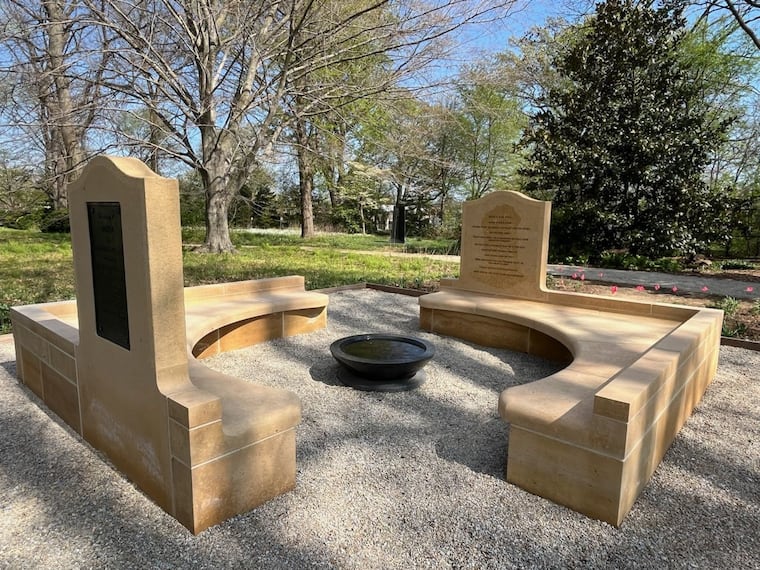
Permanently on view is the memorial to Dinah, from Philadelphia sculptor Karyn Olivier, with a stone tablet listing questions she wished she could ask: What was your wildest dream? How did freedom feel? Did you ever wish you had let it burn?
The Stenton Museum is at 4601 N. 18th St., stenton.org
— Rosa Cartagena


