

Visiting a shrine to the Wyeths in Brandywine, reading a rare manual at the Library Company, and other art to admire this weekend
By Peter Dobrin, Dan DeLuca, Morgan Ritter, Elizabeth Wellington
A shrine to the Wyeths opens at Brandywine
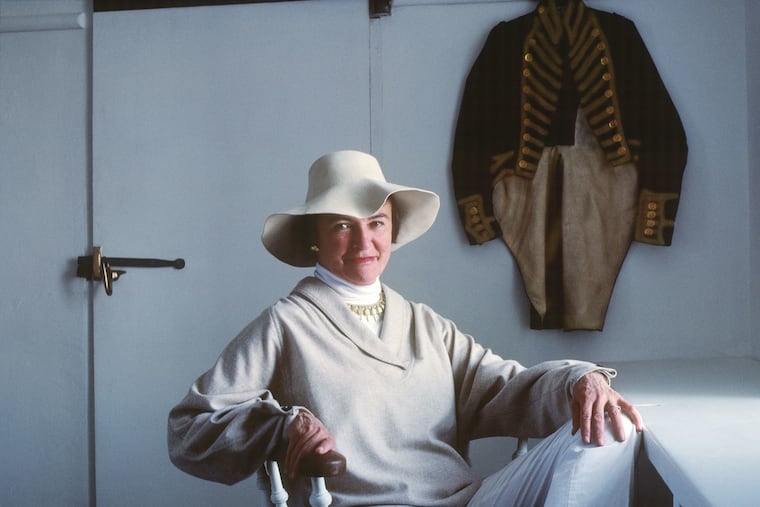
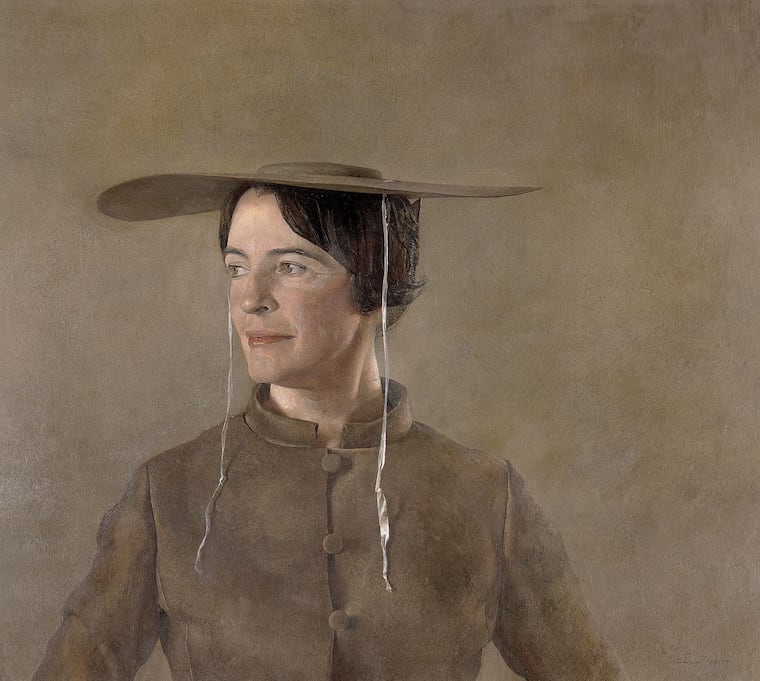
here’s plenty of and about Betsy Wyeth’s potent aesthetic in “By Design: The Worlds of Betsy James Wyeth,” currently on view at the Brandywine Museum of Art. In her adaptive reuse of early American buildings in Maine and the Brandywine — in everything she touched, really — Wyeth’s design sense is specific and immediately recognizable: a cool, austere echo of Shaker and other American vernacular styles.
The show’s star is Brinton’s Mill, the Chadds Ford complex of 18th-century (and later) structures that, with Betsy’s extensive renovations, became the distinctive place where she and her husband, the artist Andrew Wyeth, lived and worked. The shrine is now open to visitors for the first time.
But to take the full measure of Betsy Wyeth, you will want to read the show catalog of the same name (Rizzoli Electa, $65). Here, in a series of essays and reminiscences, Wyeth emerges as a shrewd businesswoman and impresaria — mastermind of a “generally understood, unified Andrew Wyeth brand,” as Wyeth curator and administrator William L. Coleman puts it in the opening essay.
As you’d expect, the book is filled with illustrations: Andrew Wyeth paintings, striking photos of the craggy Brandywine and Maine landscapes, and structures that make up the familial Wyeth visual language, as well as images of Betsy, always formidable.
Perhaps the sharpest image, though, comes in written form, from author David Michaelis on the partnership between Betsy and Andrew.
We already knew that she handled just about everything that needed doing in order to free her husband to paint. But what Michaelis beautifully details is how deeply involved she was in the art itself — giving titles to his work and exerting influence over the color, composition, and subject matter.
In many ways, Betsy spent her life creating the aesthetic for which Andrew is known.
She urged him to simplify, to take things out of paintings he wanted to include.
“You’re going to ruin it,” he would protest.
Then, Michaelis wrote, he would go off and do exactly as she said.
“By Design: The Worlds of Betsy James Wyeth” is on view at the Brandywine Museum of Art, 1 Hoffman’s Mill Road in Chadds Ford, through Jan. 10. Related exhibitions are running at the Farnsworth Art Museum in Rockland, Maine, through Dec. 31; and at Colby College Museum of Art in Waterville, Maine, through Nov. 2. brandywine.org/museum
— Peter Dobrin
A portal to Black girlhood in a Library Company artifact
Nearly every Friday night when I was a child, my mother washed my hair, conditioned it, sectioned it into four parts, and let it dry overnight.
The next morning, we’d take our places next to the kitchen stove and turn the channel to Soul Train on our small black-and-white TV. Mommy oiled my scalp again then, with a fiery iron comb that had the tiniest teeth, she straightened each section of my hair; making my tresses sizzle. Sometimes the comb would kiss my ear. When she was done, I had shiny shoulder-length hair with a flip on the bottom.
I don’t remember when she first told me about Sarah Breedlove, also known as Madam C.J. Walker. But by the time I was 10, I knew, without a shadow of a doubt, that because of her, Black women everywhere knew how to press hair. Her haircare business made her the first Black woman millionaire during the early 1900s at the dawn of the Harlem Renaissance.
Walker trained hundreds, possibly thousands, of Black women on how to use the hot comb in a technique she called the Walker Method. Black salons practicing the method became staples in Black neighborhoods and raised many Black women entrepreneurs.
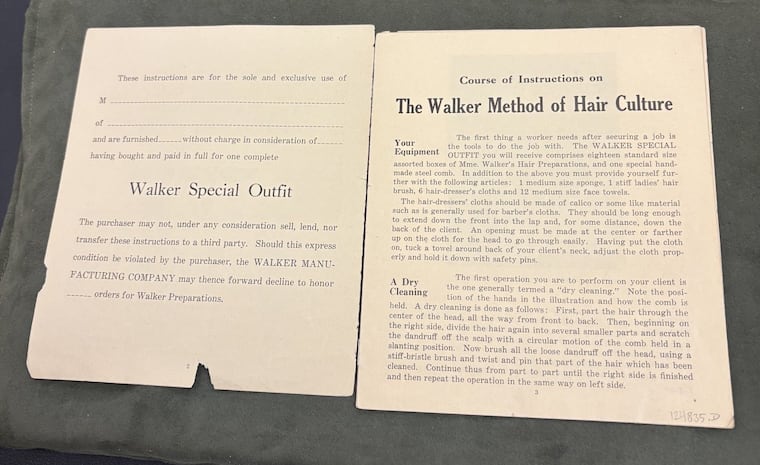
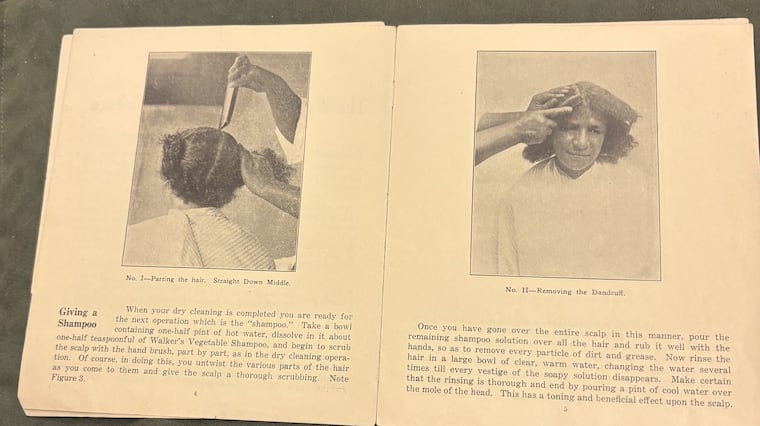
The Library Company of Philadelphia recently purchased one of the original pamphlets describing the Walker Method, step-by-step, and what was included in the Walker Special Outfit, the all-inclusive entrepreneurial kit. That included a stiff hair brush, face towels, Walker’s specially formulated conditioning concoction, a smock — that Walker refers to as a hairdresser’s cloth — and, of course, a handmade steel comb.
After a thorough shampoo and conditioning, the hairdressing is applied and each section of the hair is methodically straightened.
Just reading these instructions brought me back to my girlhood, before chemical relaxers, weaves, and extensions became the norm.
Wynn Eakins, the Library Company of Philadelphia’s African Americana subject specialist, acquired the pamphlet earlier this year, paying a few thousand dollars for it.
Like her, I believe it was worth every penny.
Getting my hair pressed every week wasn’t just my introduction to a beauty regimen, it was how I bonded with my mother and other Black women.
Funny thing is, I took for granted that Black women always knew how to do press hair. For better or worse, this skill is in our DNA. The Walker Method pamphlet reminded me of a time when pressing hair was new technology and it’s a reminder that every American experience has a history that’s worth saving and remembering.
The Library Company of Philadelphia is located at 1314 Locust St., librarycompany.org
— Elizabeth Wellington
A Bicentennial logo makes a nostalgic comeback during the Semiquincentennial
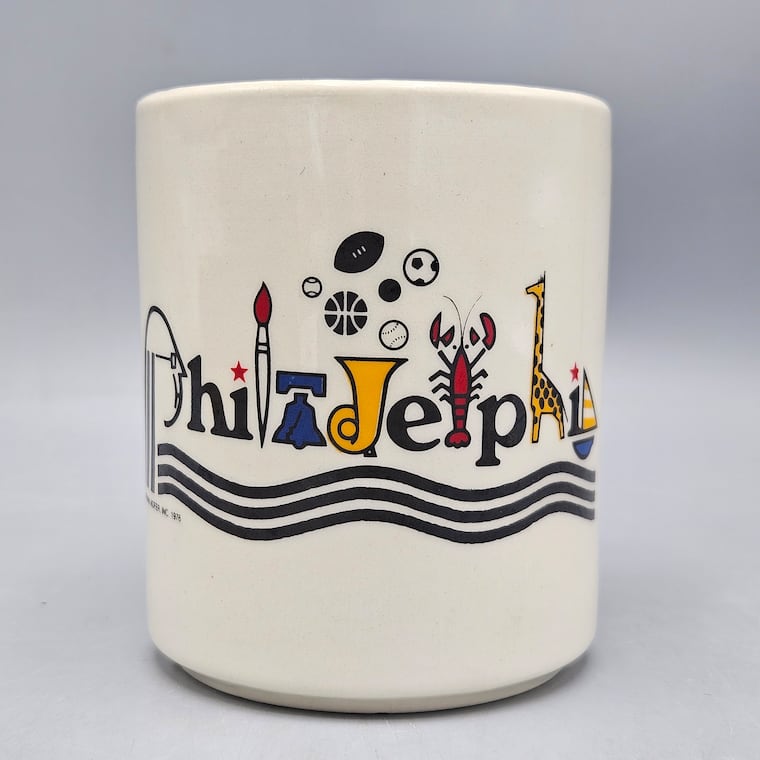
How much has Philly changed from the Bicentennial to the Semiquincentennial? Not much, by the looks of the 1976 Bicentennial logo.
Created by Philadelphia graphic designer and watercolor painter Frank Nofer, the logo features several iconic symbols of Philadelphia standing in for the letters in the city’s name. After copyrighting, Nofer’s logo was printed on seemingly infinite pieces of merchandise, from T-shirts to mugs to ashtrays.
There are historic references, like Benjamin Franklin and the Liberty Bell. The logo also features a paintbrush and tuba to represent the city’s arts scene, sports balls for our athletic passion, a giraffe for the zoo, and a sailboat for the rivers on either side of Philly.
There is one outdated reference: a lobster as the second “l,” a reference to the now-closed seafood restaurant Bookbinder’s. The Old City spot, which shut down in 2009, was world famous for its oysters and lobster. Though it may not be relevant to 2026 Philadelphia, that little lobster is sure to spark nostalgia for anyone who lived in the area before the 2010s.
Now, 50 years later, merchandise featuring the logo is no longer sold anew. But vintage pieces have been popping up on eBay (which is where I saw it). Per the comments on a Facebook post from someone who purchased a Nofer “Philadelphia” T-shirt on eBay, several people have held onto their merchandise, praising the design.
The logo feels timeless, while also maintaining the funky nature of the 1970s. If you have a piece from 50 years ago, I say hold onto it — whether to admire it, or to make a pretty penny from it online.
— Morgan Ritter
A vintage Ben Vaughn brings back the romance of “the South Jersey pines”
Back in the 1990s, Camden County rocker Ben Vaughn specialized in producing veteran artists whose greatness the music-loving public needed to be reminded of, like rockabilly eccentric Charlie Feathers and soul music songwriter Arthur Alexander.
Vaughn, the radio host of the syndicated The Many Moods of Ben Vaughn, which broadcasts from “parts unknown” and airs locally on WXPN-FM (88.5), tells tales of his encounter with such legends on his Straight From the Hat podcast.
Now, Vaughn is getting the elder statesman treatment himself. Back in 2019, Providence, R.I., rock band Deer Tick did a cover version of Vaughn’s 1990 song “Too Sensitive for This World,” featuring John Hiatt whistling in the background.
The band’s fandom has resulted in a friendship and playing shows together, and now a forthcoming Ben Vaughn album called Magnetic East: The Deer Tick Sessions due out Oct. 30 on Yep Roc Records.
This week, “Imitation Wood Grain,” the first track from the album was released.
“Inspired by a visit to the thrift store, it’s probably [the] most nostalgic song I’ve ever written,” Vaughn wrote in a Facebook post. It’s also vintage Vaughn; a clever, well-crafted ironic-yet-not-ironic song that meshes with Deer Tick’s own bemused sensibility (and features Vanessa Carlton on backing vocals).
Kitschy details in the lyrics — the sight of an old clock radio or a fake wood-paneled hotel hallway — do the Proustian job of bringing back memories of the romance of cruising through “the South Jersey pines” in the good old days, “when you were mine.”
Listen below.
— Dan DeLuca


