How a 1931 Langston Hughes monologue became a befitting operatic America 250 celebration
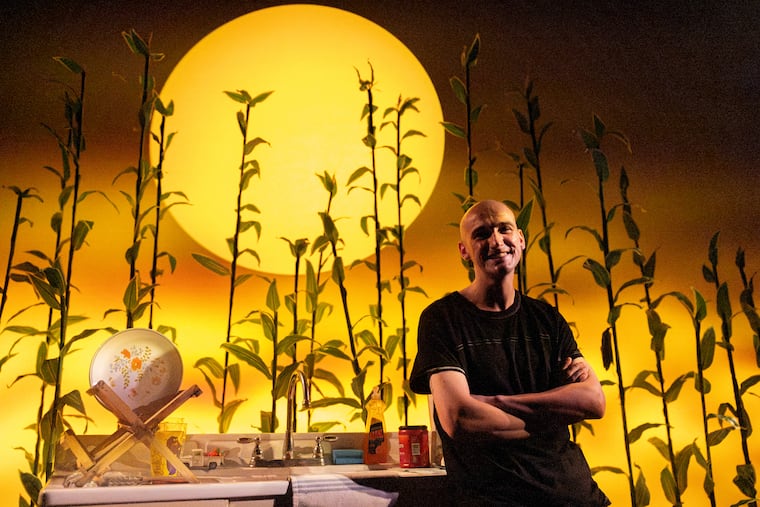
Davóne Tines’ "The Black Clown" debuted in 2018, but its tour was shut down by the COVID-19 pandemic. Philadelphia is the first stop on its revival tour.
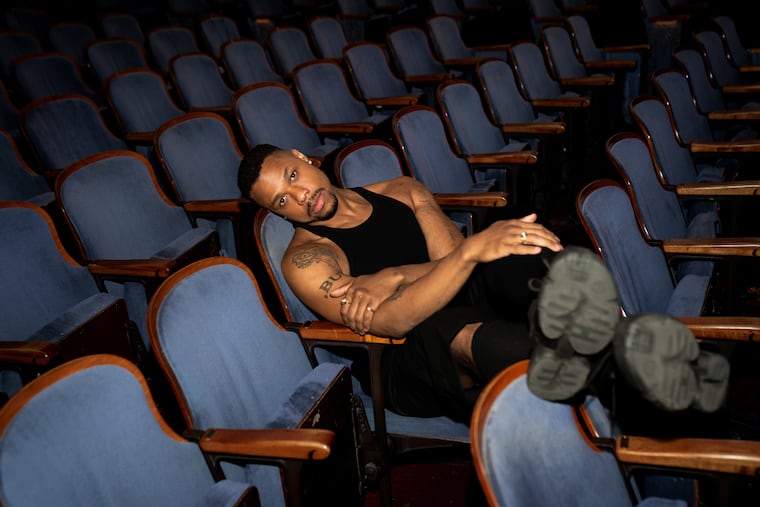
The magic of creator, lead actor, and bass-baritone Davóne Tines’ operatic adaption of Langston Hughes’ 1931 dramatic monologue “The Black Clown” lies in its everythingness.
Hughes’ poem — written on the heels of World War I, amid the Great Depression and during the height of Jim Crow — consolidates 300 years of the Black American experience into 18 emotional stanzas.
Tines’ opera, The Black Clown, is faithful to Hughes’ fiery, vulnerable work, capturing the pain of a people who endured backbreaking work at the hands of a people whose only interest in them was profit. Brimming with emotion, it expresses the exuberance of Emancipation, the hope of Reconstruction, and the crushing cruelty of segregation. Its gospel, jazz, choral music, and ragtime declare hope, possibility, delight, and elation.
Each sentiment reinforces Hughes’ unwavering belief that Black people are survivors. Period.
Yet in the midst of the production’s toe-tapping and sanctifying Black joy is a searing truth as evident today as it was nearly a century ago: Black America’s pain is white America’s entertainment, clear from the first line in Hughes’ first stanza:
You laugh
Because I’m poor and black and funny.
Not the same as you.
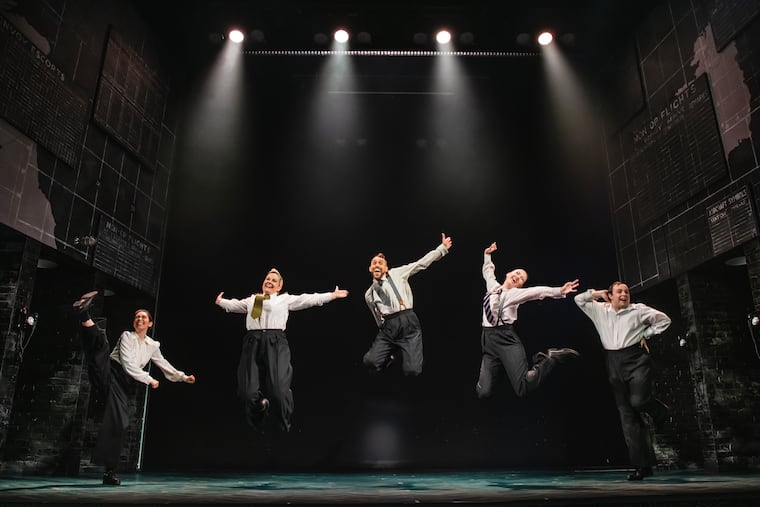
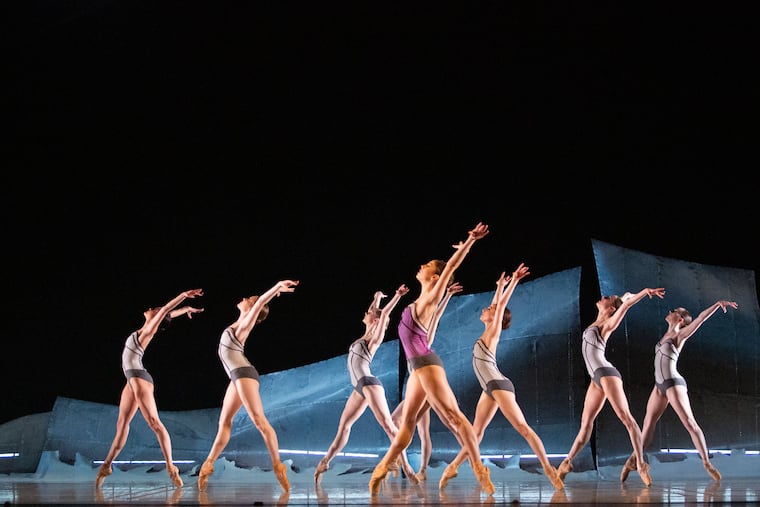
That theme is the focus of Tines’ 70-minute recitation of Hughes’ words with melodic emphasis on certain lines and intentional repetition of others. The verses are accompanied by song and modern dance from a 12-member ensemble.
“I find that when I make work about dealing with trauma and oppression, that work is evergreen,” Tines told The Inquirer on a video call earlier this week. His goatee is manicured. His voice is mellow. And like The Black Clown, he’s giving all the moods: melancholy, merry, and matter-of-fact.
“You think you will make something that will meet a moment and then you can move away from it, that there will be progress forward,” Tines said. “And then about three years go by and it’s time to reinvigorate it.”
A revival of Tines’, composer Michael Schachter’s, and director Zack Winokur’s The Black Clown — which debuted in 2018 — has a four-day Opera Philadelphia run ending Sunday.
The Black Clown toured the country at off-Broadway and theater festivals for nearly two years before its momentum was stopped by COVID-19.
“You can’t call Broadway back and say, ‘Remember us’ and they have Frozen 2 coming,” Tines said with a light chuckle. “You have to get in line. It takes a moment.”
His close ties with Opera Philadelphia’s general director and president, Anthony Roth Costanzo, is why Philly is the first stop this time around. As America prepares to fete its 250th birthday, it’s a perfect time to reflect on the totality of American history while expanding opera’s audience, Costanzo said.
“When I started thinking about centering this year’s celebration, I remembered the song, ’300 Years’ and I asked myself, ‘Whose perspectives are we thinking the history of America through?’” Costanzo said.
He was referring to Hughes’ five-line stanza about the Black American antebellum plantation experience.
Three hundred years
In the cotton and the cane,
Plowing and reaping
With no gain
Empty-handed as I began.
“It occurred to me it’s very easy for us to see the story through the perspective of the Founding Fathers,” Costanzo said. “But the Black experience matters. And The Black Clown is a beautiful and meaningful way to show that. It’s also some the best theater I’ve ever experienced.”
Tines is not the typical opera singer.
He grew up in northern Virginia, 50 miles outside of Washington, singing in his grandparents’ Baptist church. In fifth grade, he won a contest for his recitation of Emma Lazarus’ 1883 poem “The New Colossus.”
“It was the first time I realized I had a performer’s edge in me,” Tines said. “We were able to pick a book and I picked Langston Hughes’ Dream Keeper and Other Poems."
That book of poetry broadened Tines’ understanding of possibility. The lesson has stayed with him.
Tines was part of a nondenominational choir that performed every Sunday at the Basilica of the National Shrine of the Immaculate Conception in D.C. The solemnity of the Catholic hymns still ricochet from his textured voice.
He studied music and sociology at Harvard, where, during his senior year, he performed in Stravinsky’s The Rake’s Progress. Opera became his preferred genre to perform.
In 2013, Tines graduated from the Juilliard School with a masters in music. Renowned theater director Peter Sellars cast him in the chamber opera Only the Sound Remains the following year. Tines sang the role of an enslaved man in Matthew Aucoin’s Civil War-era opera Crossing in 2015.
He helped develop and originated the lead in New York Times’ journalist Charles Blow’s 2019 coming out opera, Fire Shut Up in My Bones. The score, written by Terence Blanchard, made Blanchard the first Black person to compose an opera staged at New York’s Metropolitan Opera, which was during the opera company’s 2021-2022 season.
Tines, who has been nominated for two Grammy Awards, has also appeared as Paul Robeson in West Philadelphia’s Peoplehood event.
“I got dressed in his bedroom,” Tines said with a touch of glee. Robeson, an early 20th-century Philadelphia-born bass-baritone remains one of Tines’ biggest inspirations. In 2024, Tines and his band the Truth, released Robeson, a studio album that explored Robeson’s musical legacy.
He even has Paul Robeson’s name tattooed on his arm.
When Schachter, Tines’ longtime business partner, suggested the two explore turning “The Black Clown” into a production back in 2011, Tines liked the idea of being its lead performer and cocreator.
“I became empowered to perform stories that I was connected to,” he said.
He was also attracted to Hughes’ clever juxtaposition of seriousness and humor, especially in the subtitle for “The Black Clown.” Hughes describes the work as a “monologue to be spoken by a pure-blooded Negro in a white suit and hat of a clown, to the music of piano, or an orchestra.”
Hughes knows Black Americans’ “bloodline is interrupted, interceded, and infiltrated,” Tines said. “There is no real conception of a pure-blooded Negro, especially in the context of Harlem where [mostly] everyone has gone through someone’s plantation, or rape factory.”
Then emerges Hughes’ Black Clown persona, one who appears unserious on the surface, but in reality has an incredible depth of humanity. The Black Clown trades in “unseriousness” to make himself palatable to white people, forced to hide his intellect to survive.
“A person who is a clown is not real,” Tines said, aware of how certain segments of the population continue to view African Americans as clownish and how such early 20th-century views are bleeding into modern politics. Just look at the recent gutting of the Voting Rights Act of 1965.
“So, why should I give you social services? Why should I care about your justice? Why should I give an inkling of what your artistic output is? You are wholesale not serious and not worth engaging as a full being,” Tines said rhetorically.
Tines production does not change even one of Hughes’ words.
The deep feelings felt come from Tines’ emphasis on and repetition of lines like “Freedom,” in a verse about the Emancipation Proclamation, or “Spit in my face” about the evils of Jim Crow. With the singing of the words “Suffer and struggle. Work, Pray, and Fight,” Tines is standing behind Hughes’ unarguable assertion that equality isn’t an inalienable right for Black Americans, but must be fought for.
For Tines, the show is a cathartic journey full of exhilarating peeks and valleys.
He’s had to learn “how far he can go,” so he doesn’t break down, especially during the song “Motherless Chile” one of the show’s lowest points that, he says, feels like a death in every performance.
When Hughes wrote “The Black Clown,” America was 33 years from the passage of the Civil Rights Act. Still, the Harlem Renaissance poet’s Black Clown finds agency. At the end of the poem and the opera, the Black Clown stops denying his humanity in deference to white America, sarcastically referred to as the “civilized race.” He pronounces himself a man.
(Hughes died in 1967, three years after the Civil Rights Act was passed.)
“He tries to be palatable until he just can’t anymore,” Tines said. “He has to take [the clown suit] off for himself psychologically. Only he can take it off and he can only do that by engaging honestly with history.”
“The Black Clown” will premiere in Philadelphia May 14-17 at the Miller Theater, 250 S. Broad St.. For more information, go to operaphila.org.