
Dolly Parton songs and Diego Rivera paintings are among our favorite art picks this week
By Dan DeLuca, Rosa Cartagena, Bedatri D. Choudhury, Elizabeth Wellington
A favorite Dolly Parton, Doc Watson musical memory
olly Parton’s death this week spurred innumerable tributes celebrating her kindness and generosity of spirit from seemingly everyone who ever knew, worked with, or even had a chance encounter with the beloved country singer.
And along with the heartfelt testimonials to a truly one-of-one cultural figure also came the outpouring of video clips that flood social media when a cherished performer dies. The digital grieving ritual reminds us why we fell in love with our heroes in the first place and maybe shows us something to make us treasure them even more.
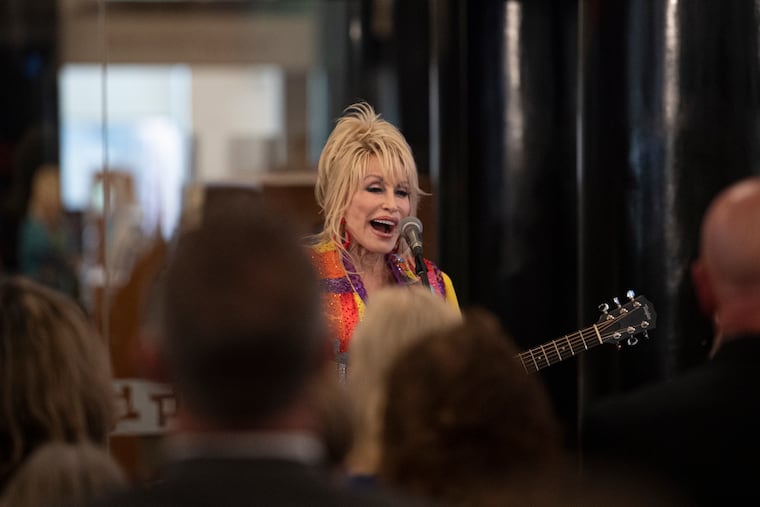
Lots of cool clips have been circulating, all easily findable if they haven’t already shown up in your feed. Among them is a 2019 snippet from backstage at the Newport Folk Festival that’s barely over a minute long, with Parton dressed in an embroidered cowboy suit, leading the Highwomen in a version of her song “Eagle When She Flies.”
Still more impressive is a 1999 performance from The Late Show with David Letterman with Trio, the threesome of Parton, Emmylou Harris, and Linda Ronstadt. They cover Neil Young’s “After the Gold Rush” beautifully, with Parton front and center and Harris and Ronstadt supporting her in perfect harmony.
Other charmers includes an adorable duet with Los Lobos’ David Hidalgo on Texas country singer Freddy Fender’s “Before the Next Teardrop Falls,” which Hidalgo posted with a note remembering how Parton could tell how nervous he was and put him at ease telling him, “You’re shy and I’m not.”
There are two clips of performing for a clearly smitten Johnny Carson on The Tonight Show in the 1970s, each playful and clever, but also displaying what a fine finger picking guitarist she was.
And her excellent taste is also apparent in a 1988 episode from her ABC variety show Dolly in which she headed to the Crescent City for Dolly Down in New Orleans and teamed with Allen Toussaint, Irma Thomas, and Dr. John for a delightful take on Lee Dorsey’s “Workin’ In a Coal Mine.”
(Dolly also yielded the Patti LaBelle duet on “Short’nin’ Bread” my colleague Elizabeth Wellington wrote about this week.)
My favorite of the bunch, however, is of Parton paired with the late guitarist Doc Watson in rehearsals and on stage in 2001 at MerleFest, the North Carolina traditional music festival named after Watson’s son, Merle, who died in 1985.
Parton and Watson work up a tender “The Last Thing on My Mind,” the Tom Paxton song she and Porter Wagoner recorded as their first single in 1967. She shadows Watson vocally, perfectly complementing him with her angelic voice. The furtive camera grants us the privilege to witness a private moment between a pair of legends working together for the first and only time, both now sadly gone.
— Dan DeLuca
A treasure trove of a coffee-table book celebrating Black art collectors
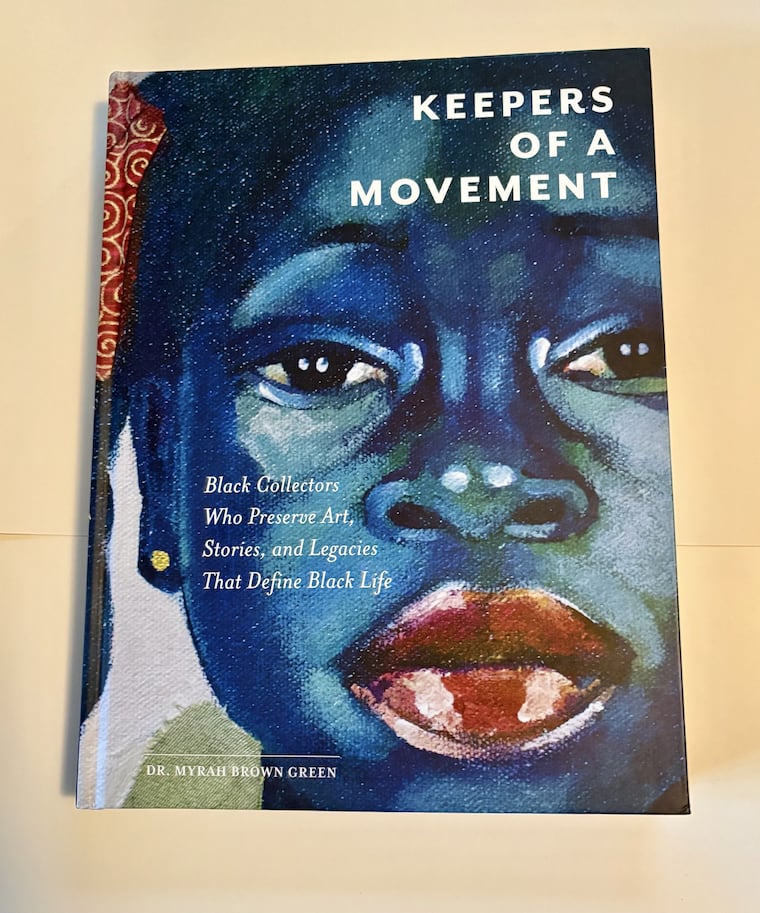
Last Saturday afternoon, I attended a book signing at Germantown’s Ubuntu Fine Art for the coffee-table book Keepers of a Movement: Black Collectors Who Preserve Art, Stories, and Legacies That Define Black Life (Schiffer Publishing, $50).
The 272-page text written by art historian, archivist, and curator Myrah Brown Green features the collections of Philadelphia-based art connoisseurs including Donnell Walker, founder of Fine Art for All Roots, a Lansdowne-based community arts organization; Vashti DuBois, founder of Germantown’s Colored Girls Museum; and the late Danny Simmons, owner of North Philadelphia’s Rush Gallery.
(Simmons’ widow, Keia D. Carter Simmons, associate director of Temple Contemporary Art Gallery, penned the foreword.)
Portraits by Philadelphia artists Tara “Misty Sol” Pearson, Nile Livingston, and Chantelle Phillips are also featured. A sculpture by North Philadelphia potter and ceramicist Roberto Lugo is pictured, too.
The glossy volume is a beautiful work of art overflowing with pieces that are timeless, unique, and oozing with history. Images of rare prints from African American masters including Elizabeth Catlett’s 1957 portrait Nina, part of 94-year-old Brooklyn-based sculptor Otto Neals’ collection, are in the book. As is a Romare Bearden 1980 watercolor Man Seated with Red Rooster from the collection of the late Brooklyn-based attorney Patricia Scipio-Brim.
Six paintings from actress CCH Pounder’s massive collection are photographed in Keepers.
Even more important than the art of the masters are the works from lesser-known artists. Often without recognition, they too document the lives, history, and experience of Black Americans and all who consider themselves part of the diaspora.
Simmons’ collection of comic books, toys, and superhero figurines is the kind of art I grew up with but didn’t consider art until recently. New York-based jewelry designer Donna Chambers’ collection of 19th-century Black cameos by unknown artists are a window into my obsession of the untold stories of the lives of my ancestors. Ohio-based quilter and historian Carolyn Mazloomi’s social justice textiles expanded my idea of art with a purpose.
“This book is the appropriate response to the current conditions that are removing Black art and Black history,” DuBois told audiences at the end of the show. “Black collectors have always done this work. We will continue to do this work as keepers of the movement.”
Amen. Alleluia.
“Keepers of a Movement: Black Collectors Who Preserve Art, Stories, and Legacies That Define Black Life” is available for purchase at the Colored Girls Museum located at 4613 Newhall St. in Germantown.
— Elizabeth Wellington
A ceiling like no other
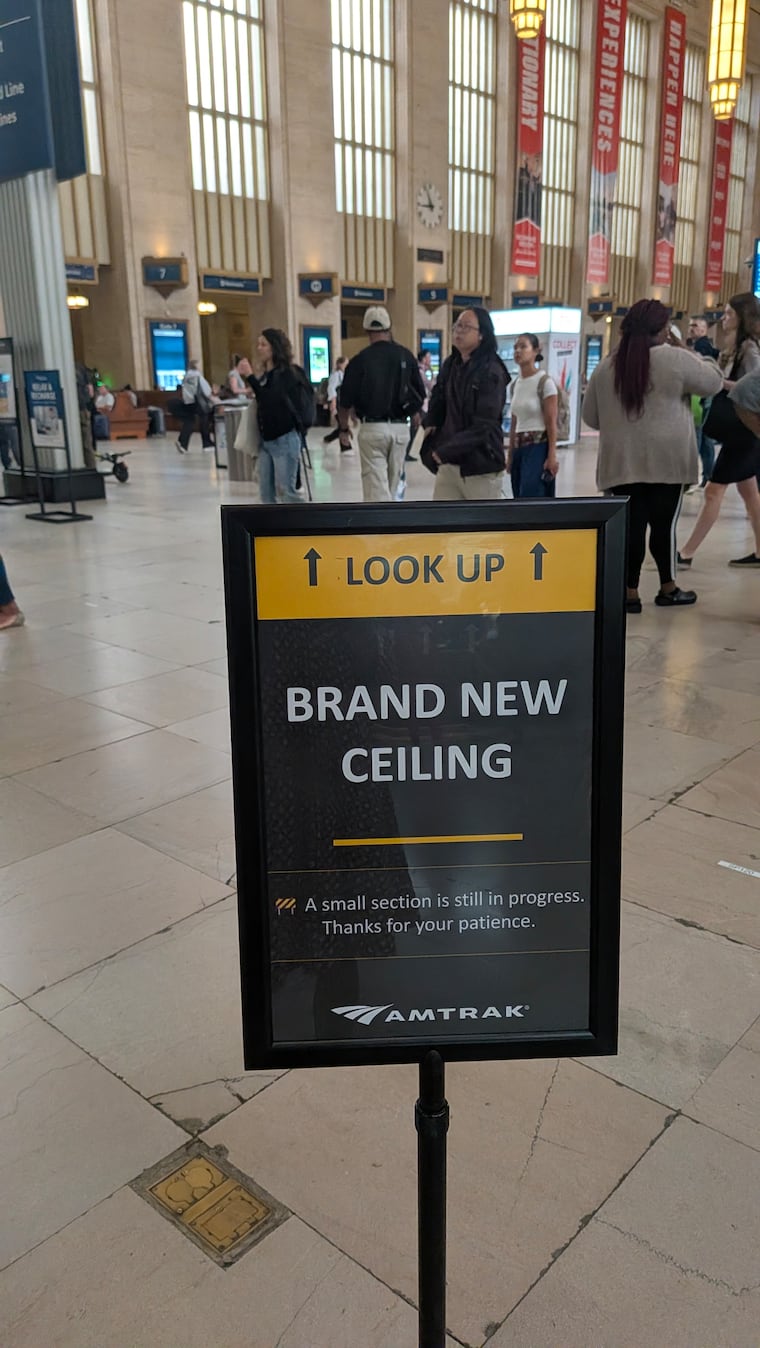
Like many other people going in and out of Philadelphia, I had gotten used to the scaffolding at 30th Street Station until this week a little sign from Amtrak urged me to look up. The scaffolding pipes were gone and a newly restored ceiling gleamed. Innumerable perfect squares with more perfect squares nested within. The sienna (the exact shade is called Tuscan Red, a reader pointed out), gold, and cream colors look different as the light streams in from the 50-foot-tall windows and plays with the patterns and solid blocks of color along the length and breadth of the 93-foot-high coffered ceiling.
The indented panels are clean, the ornate art deco chandeliers are glowing, and the pendant lights are on. Philadelphia union workers have painted, fixed, and restored the station’s ceiling and it’s breathtaking in its art deco glory. A grand entry into a grand city.
The station, which opened in 1933, was designed by the Chicago-based firm Graham, Anderson, Probst, and White. It was part of the City Beautiful movement where, in the late 19th- and early-20th-centuries, governments took to designing grand and beautiful public spaces.
As part of a recent $550 million restoration, there’s talk of a food court and other things that’ll crowd into the main concourse of this awe-inspiring building that is on the National Register of Historic Places. A small corner of the ceiling above the Dunkin’ kiosk remains unrenovated. Just outside, a world of steel, glass, and concrete awaits along with a news cycle of reflecting pools and algae.
But for the minutes we can spare, as we rush in and out of our commutes, the grandeur of the ceiling and the building do their very best to make us forget that outside world and immerse us in a bygone time when wrecking balls didn’t charge through the White House but governments believed in investing in grand, beautiful spaces accessible to all.
— Bedatri D. Choudhury
A meeting of worlds with Diego Rivera and Gabriel García Márquez
There’s a pair of stunning Diego Rivera paintings at the Art Museum from 1931 — depicting scenes of harsh, back-breaking, intensive labor in Mexico — that I can’t stop thinking about.
The bright bluish-green stalks in Sugar Cane tower above the workers who hunch over, some attacking the crop with curved knives while others hoist overweight bundles onto their backs for transport. In the background, a white foreman reclines on a hammock above two sleeping dogs while another overseer is on horseback with his whip at the ready. The exploitation cuts across age groups, too, as a little Indigenous girl is pictured, helping her mother harvest papaya.
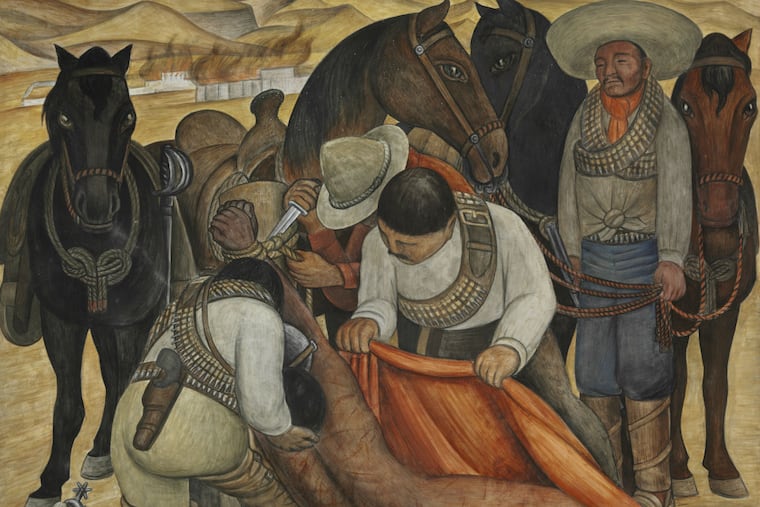
The violence of Sugar Cane is quieter than that of its companion, on view across the narrow hallway, called Liberation of the Peon.
Both illustrate the devastatingly difficult reality for farmworkers forced to labor under inhumane and cruel conditions. In Liberation, four revolutionary soldiers come to the aid of a worker who was stripped naked, tied up, and ruthlessly whipped. The men gently hold the victim, placing a vividly orange sheet around his bloody body and supporting his head as they cut the ropes on his wrists. Waiting patiently behind them are gorgeous horses; they are the only figures staring out from the fresco, their tender, wide eyes captivating the viewer with probing gazes that feel fittingly accusatory.
These artworks feel directly in conversation with the exquisite-yet-underrated show One Hundred Years of Solitude, the Netflix adaptation of Colombian author Gabriel García Márquez’s 1967 masterpiece of the same name that just released its series finale this week. It’s a beautifully shot, profoundly magical, and deeply tragic story following multiple generations of the Buendia family.
García Márquez used his incredible writing to condemn exploitative labor practices in Colombia as one major storyline took aim at United Fruit Company, an American corporation that monopolized land and resources across Latin America to violent excess (today it’s called Chiquita). One Hundred Years follows the expansion of banana plantations with horrifically abusive working conditions — concluding in the shooting of thousands of striking workers and their families, based on the Banana Massacre of 1928 — and mirrors the kind of greed-fueled brutality that Rivera captured in his paintings.
“Sugar Cane” and “Liberation of the Peon” are on view at the Philadelphia Museum of Art; “One Hundred Years of Solitude” is streaming on Netflix.
— Rosa Cartagena


