The nation’s first medical school took shape in the nation’s birthplace, Philadelphia
What started with two doctors wanting to provide quality medical knowledge has now led to Philadelphia being home to numerous medical innovations, including the first maternity ward.
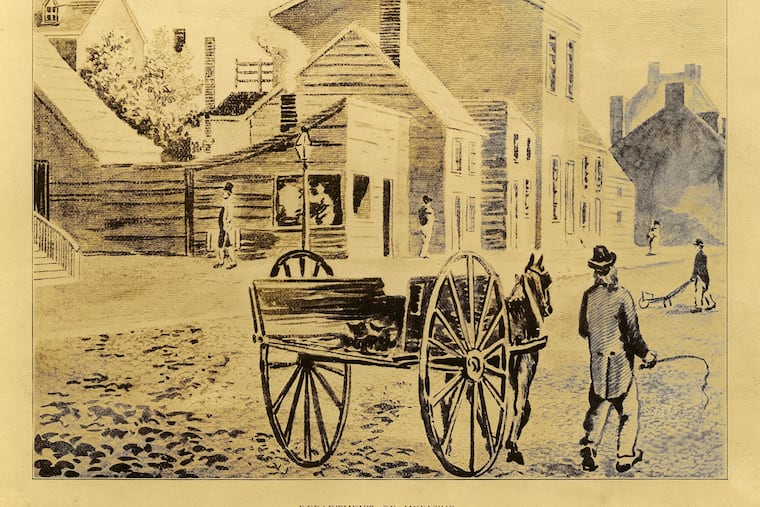
Pennsylvania Hospital — the nation’s first hospital — opened in Philadelphia in 1751, yet there were no medical schools here.
“There was no accreditation or credentials that were required,” explained Jonathan Epstein, dean of the Raymond and Ruth Perelman School of Medicine and executive vice president of the University of Pennsylvania for the Health System. “You could just hang out your shingle and call yourself a doctor. Training was poor and extremely varied.”
There were, however, a few elite doctors who trained in Edinburgh, Scotland, then the world’s epicenter for medical training. Two of these men were Philadelphia doctors John Morgan and William Shippen.
In 1765, Morgan and Shippen, eager for physicians in the colonies to have the same training as their European counterparts, became the earliest professors of what would become America’s first medical school at the College of Philadelphia.
This Saturday, the Philadelphia Historic District will honor our city as home of America’s first institution that offered formal training and a medical degree, leading the way for Philadelphia to become the birthplace of American medicine.
The celebration, to be held at the University of Pennsylvania’s Clifton Center for Medical Breakthroughs, is among the Historic District’s weekly “Firstivals,” marking events happening in Philadelphia before anywhere else in America and often the world. Firstivals are at the heart of the city’s celebration of the nation’s Semiquincentennial.
Doctors trained at Surgeon’s Hall on the College of Philadelphia’s medical campus treated soldiers in the Revolutionary War — both Morgan and Shippen were physicians in George Washington’s Army.
In 1791, the Pennsylvania legislature passed an act uniting the College of Philadelphia with the University of the State of Pennsylvania, forming the University of Pennsylvania.
The University of Pennsylvania built its first hospital in 1874. Shortly after, the medical school moved to its first building on the West Philadelphia campus.
“With the hospital and the medical school, we had a teaching hospital,” Epstein said. “Philadelphia is home to America’s first hospital, its first medical school, and the country’s first academic health center.”
» READ MORE: A 19th-century Philadelphia patent lawyer did, in fact, start the fire
Because of this, Philadelphia is home to numerous medical innovations.
Among them:
In 1803, Penn established the first maternity — then called the lying-in — department — at a time when most women gave birth at home.
The earliest known X-ray images were unknowingly taken by Penn physics professor Arthur Goodspeed in 1890. Those plates represent some of the world’s earliest experiments with this kind of imaging. Shortly after, X-rays were officially discovered in Germany in 1895.
Penn pathologist Peter Nowell and David Hungerford of the Fox Chase Cancer Center discovered what became known as the Philadelphia chromosome in 1960, determining, for the first time, that cancer is a genetic disease.
Just last year, doctors at Penn and Children’s Hospital of Philadelphia saved a baby’s life using CRSPR gene-editing therapy to correct a fatal birth defect that stopped the baby from processing protein.
The medical school is currently researching how to incorporate AI into its school training.
Today, more than 800 students are enrolled at Penn’s Perelman School of Medicine. The school enrolls more than 200 M.D. and Ph.D. students.
“It is the best of times, and it’s the worst of times,” Epstein said, when asked about the Trump administration’s deep cuts to medical research.
“There are great advances still taking place, but there are unnecessary restraints being put on the pace of discovery that unfortunately slow us down. Still, we remain focused on treating patients and curing disease.”
This week’s Firstival is Saturday, March 28, 11 a.m.-1 p.m. at the Clifton Center for Medical Breakthroughs, (Mezzanine at the top of the escalators), 1 Convention Avenue. The Inquirer will highlight a “first” from the Philadelphia Historic District’s 52 Weeks of Firsts program every week. A “52 Weeks of Firsts” podcast, produced by All That’s Good Productions, drops every Tuesday.