A 19th-century Philadelphia patent lawyer did, in fact, start the fire
Meet Joshua Pusey, the father of the matchbook, who sued another Pa. man Charles Bowman, the father of the matchbook as we know it.
In the late 1800s, industry barons made deals smoking cigars and puffing on pipes. But unless the smokers were sitting by fires, getting a light was a slow, arduous process.
Even safety matches — stored in wooden boxes with a phosphorus strip to light fires with — were a clumsy way to light lamps and rolled cigarettes. One errant wind and the effort it took to get the tiny fire going was blown away.
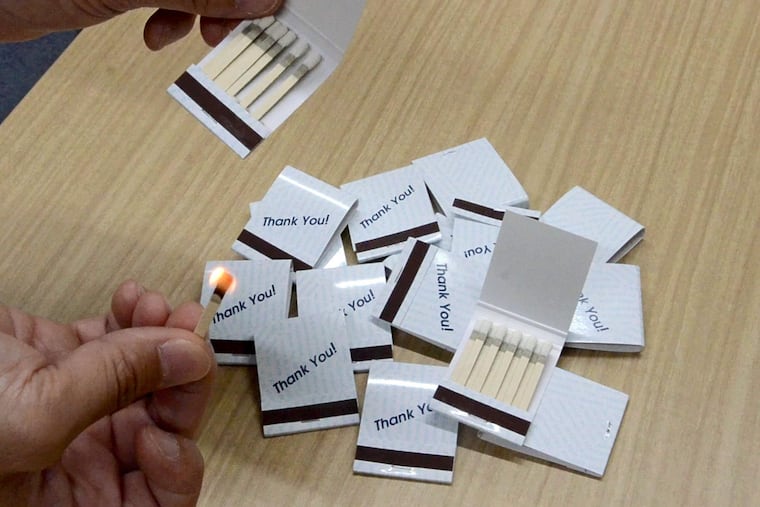
In 1892, cigar smoker and Philadelphia patent lawyer Joshua Pusey found a solution. He attached a strip of 50 matches to lightweight foldable cardboard that’d keep the matches in place. He put the phosphorus strip inside the cardboard book.
On Sept. 27, 1892, Pusey received a United States patent for his flexible matchbook.
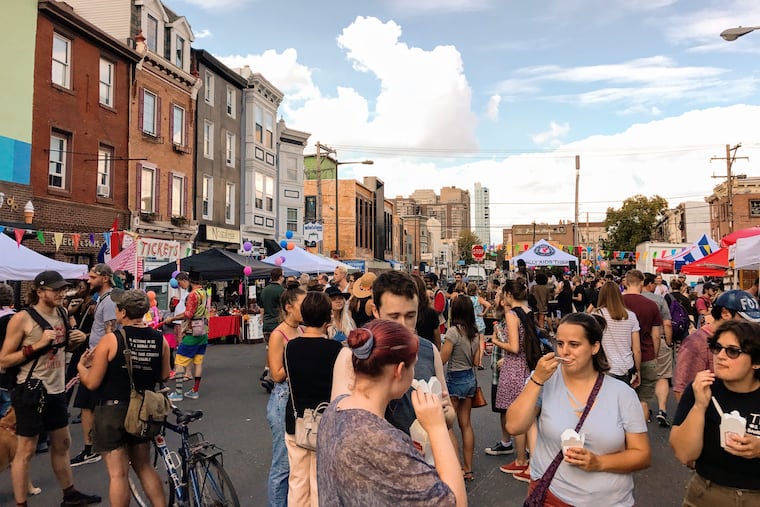
This Saturday that fiery invention will be celebrated at the Science History Institute Museum & Library as part of the Philadelphia Historic District’s weekly “Firstival” day parties. Firstivals mark events that happened in Philadelphia before anywhere else in America and often the world. They are at the heart of the city’s celebration of the nation’s Semiquincentennial.
Pusey’s matchbooks fit in the pocket of men’s suits and, for better or worse, made it much easier for Americans to smoke on the go, said Jesse Smith, vice president of interpretation and education and the director of the Science History Institute.
“It’s a humble technology that seems pretty simple,” said Smith, who is in the midst of curating “Flash! Bang! Boom! A History of Fireworks” at the Institute. It opens April 10 and runs through the end of 2026 as a tribute to America’s 250th birthday.
» READ MORE: Woman’s Medical College of Pennsylvania gave us pelvic exams, nursing schools, and Philadelphia’s first Black MD
The matchbook changed how ordinary people light up everything including fireworks, Smith said.
“You can understand how matchbooks work; they were not inscrutable like the electronics in your car, but they represented a new quality of life: convenience, portability, the desire for things that were lightweight and ease.”
Pusey’s design, however, had one major flaw. The phosphorus strip inside the fold meant that one careless strike could set all of the red-tipped matches ablaze.
Charles Bowman, a newspaperman from Lebanon, Pa., solved that problem. He placed the striking strip outside the matchbook and added the instruction: Close before striking.
In the spirit of the mass production era, he launched the American Safety Head Match Company.
When Pusey heard of the rival matchbook in 1893, he sued Bowman for violating his patent. He lost his bid to be the world’s sole matchbook maker in 1894, and Bowman was able to continue using his design.
Both Bowman and Pusey sold their patents to Ohio-based Diamond Match Company later in the 1890s. Philadelphia-born Diamond Match Company salesman Henry C. Traute is credited with reducing the number of matchsticks in a book from 50 to 20and turning the covers of matchbooks into portable ads. His first customer was Pabst Beer Company in 1896.
The pocket-size ads caught on with opera companies, cinemas, restaurants, chewing gum companies, and even early soda brands, namely Coca-Cola. The mini ads remained popular through the 1970s.
These days, lighters have replaced the tiny fire starters. But there are no shortage of matchbook collectors — phillumenists — who keep Philly’s own Pusey’s legacy burning hot.
This week’s Firstival is Saturday, March 21, 11 a.m.-1 p.m. at the Science History Institute, 315 Chestnut St. The Inquirer will highlight a “first” from the Philadelphia Historic District’s 52 Weeks of Firsts program every week. A “52 Weeks of Firsts” podcast, produced by All That’s Good Productions, drops every Tuesday.