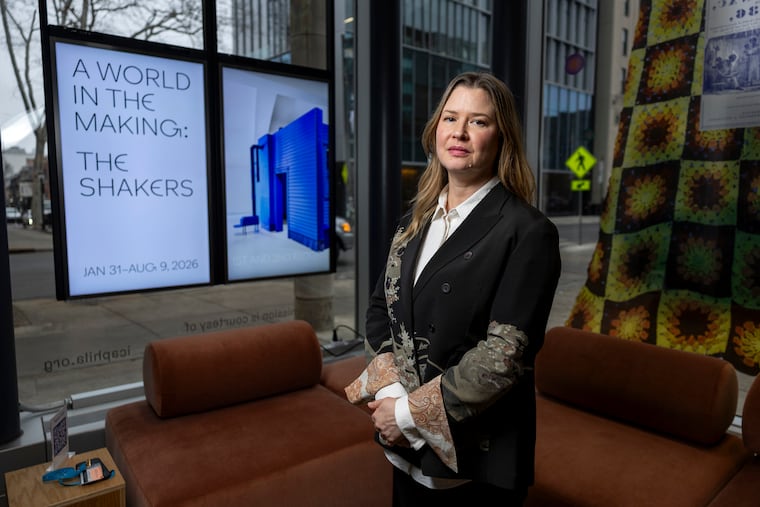
The ICA is not a traditional museum, and its director wants things to ‘get a little weirder again’
UPenn's Institute of Contemporary Art was founded in 1963 and has always been defined by its artistic edge. More than half a century later, what does its future look like?
In the late 1980s, the Institute of Contemporary Art organized “The Perfect Moment,” a retrospective of works by photographer Robert Mapplethorpe. The exhibition included sexually explicit and homoerotic images, and while it caused a slight stir in Philadelphia, the show went on to other cities, where it drew more than a little attention.
Jesse Helms — the anti-gay, anti-Civil Rights Republican senator from North Carolina — led a charge to cut funding to the National Endowment for the Arts, which had given a grant toward the show.
“If someone wants to write ugly, nasty things on the men’s room wall, the taxpayers do not provide the crayons,” Helms told the New York Times.
The ICA suddenly found itself Exhibit A in a national controversy about government censorship and the role of art. Washington’s Corcoran Gallery of Art canceled the show’s appearance there, and obscenity charges were brought against another stop, Cincinnati’s Contemporary Arts Center, and its leader (ultimately acquitted by a jury).
Ugly as the episode was, it cemented the ICA’s reputation as a place where artists and curators could take risks. Given the current resurgence of issues around government funding and government censorship, the question recurs: Should the ICA of today be meeting the current political and cultural questions in its galleries?
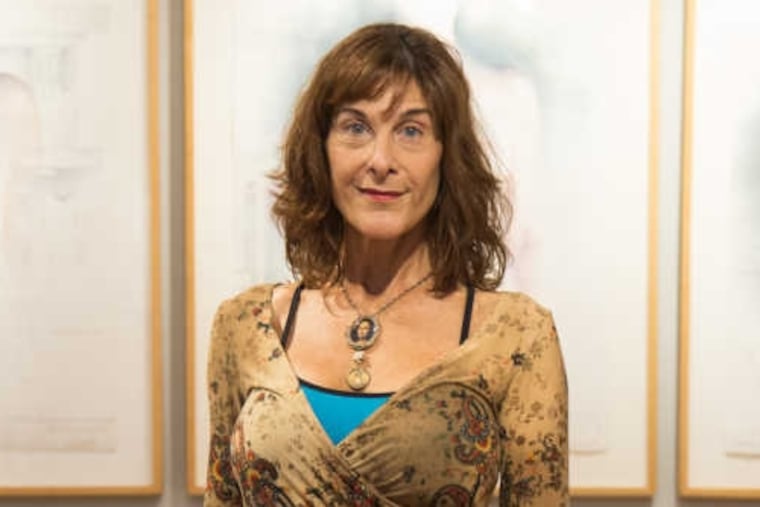
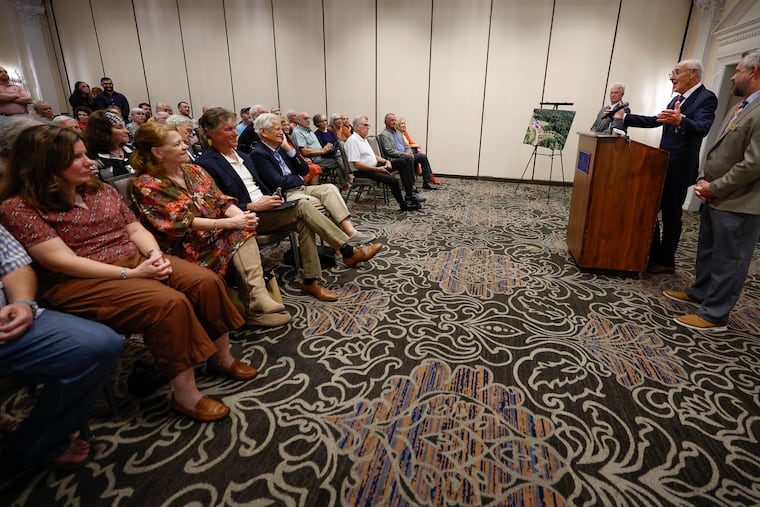
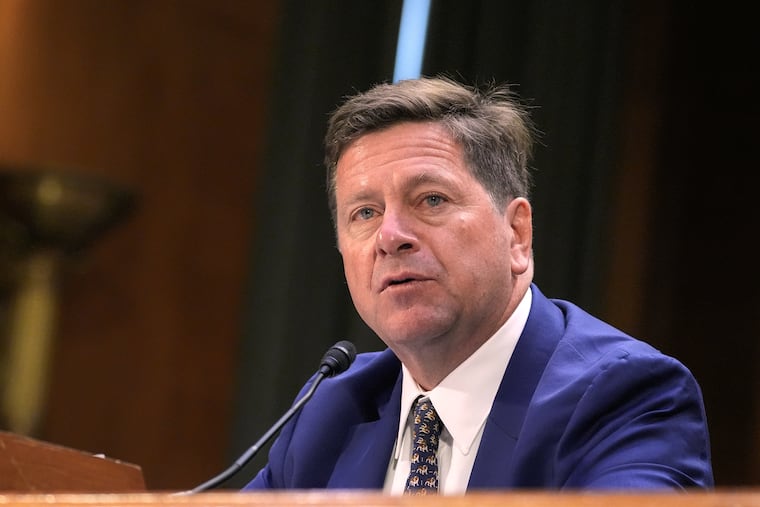
“It’s a hard question because I think, ‘Yes, for sure.’ But also, ‘To what end?’ is always a question, and ‘How and with what outcome in mind?’” said ICA director Johanna Burton.
If Burton is searching for nuance, it’s understandable. For one thing, the ICA stands at a vulnerable intersection. It is both an institution with artistic edge very much in its DNA, and as part of the University of Pennsylvania, which, like many other institutions, has already found itself in the crosshairs of the Trump administration.
For another, Burton, 54, is new — she took over Oct. 1 — and is only just past the listening stage and beginning to plot out her first moves.
About the ICA’s role as a place for shaking things up, she says: “What made it revolutionary, or made it radical, or made it relevant are not the same things that will do any of that today.”
Burton says that some ICA shows comment on the current state of affairs stealthily — like the exhibition currently on display, “A World in the Making: The Shakers.”
“I think even the Shaker show is an attempt to think through alternative modes of democratic society. There’s probably nothing that we show that doesn’t in some way bear upon the present, but it might not always do so directly.”
Burton did engage directly with relevance in her previous post. She was director of the Museum of Contemporary Arts in Los Angeles for four years, and, just after leaving, the museum opened “Monuments,” co-organized and copresented with visual arts space the Brick. The show juxtaposed decommissioned Confederate statues with work by contemporary artists like Kara Walker, Davóne Tines, Martin Puryear, and Andres Serrano.
“Several of the show’s cleverest inclusions draw power from the contrast between Confederate propaganda’s relentless visibility and the cultivated amnesia that surrounds so much even very recent Black history,” wrote the New Yorker of the show, which was conceived before Burton’s arrival and was not curated by her, but she helped make it happen.
The ICA is different from most other museums. It has no permanent collection, but, rather, presents a rolling schedule of programs and temporary exhibitions. It is small, with just three galleries, and sees only about 20,000 visitors each year — fewer than 100 per day.
But, Burton notes, the ICA and a small group of like-minded institutes in the U.S. play a “special role in the ecosystem, with a sweet spot of supporting and highlighting new ideas and experimental processes by artists before they appear on the popular radar or, sometimes, long after they should have been detected.”
Its chief curator is Hallie Ringle, and what’s on view there is decided by her in collaboration with Burton and members of the curatorial and engagement teams. Penn remains “very much in consultation,” said Burton. As far as her own artistic imprint goes, “I will probably curate a show here, but I don’t find that to be a necessity.”
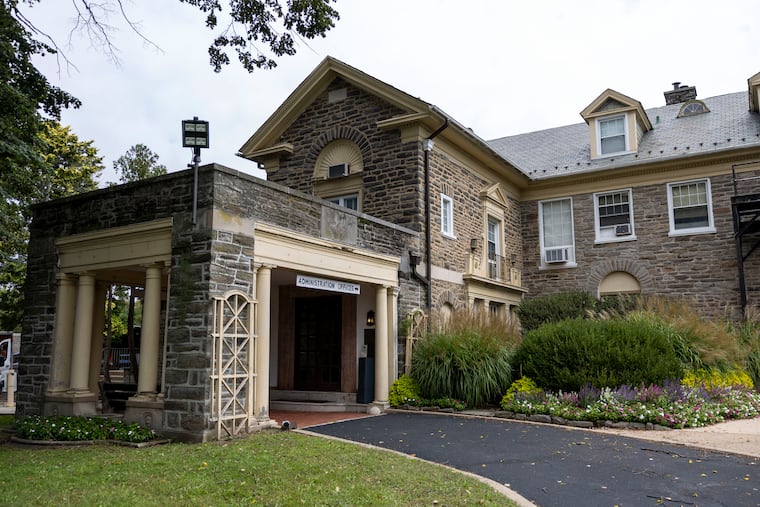
That might be because the majority of her job — “92% of my time,” she jokes — is tending not directly to art, but to the things that support it. One question mark is the future of the building, which the ICA — founded in 1963 — built and moved into in 1991.
It’s a good time to “take a look” at the building, said Burton. Does that mean staying in the building and renovating?
Burton, perhaps uncontroversially, says that sometimes it’s more important what happens in a building than what kind of a building it is. That’s certainly true looking back at much of the ICA’s history, before it even had its own stand-alone building.
Andy Warhol’s first museum show was there in 1965. David Smith, Christo, and Clyfford Still had a presence at the ICA in the 1960s, and in the 1970s, it hosted shows by Agnes Martin and Cy Twombly. Laurie Anderson was here, as was, in the mid-1980s, photographer Cindy Sherman.
Its success in impressing viewers as cutting edge has varied over the years.
Inquirer art critic Edward J. Sozanski, writing in 1998, said that since the Mapplethorpe affair, “the organization appears to have lost some of its zest and ability to recognize current issues.”
In 2009, the New York Times’ Roberta Smith visited, declaring in a review that “on a surprisingly regular basis, the tiny Institute of Contemporary Art at the University of Pennsylvania here mounts exhibitions that make the contemporary-art adventures of many larger museums look blinkered, timid, and hidebound.”
The ICA, however, is not a “traditional museum,” said Burton, but more of an institute whose job is “unearthing new ideas and testing them.”
That means putting artists in positions to make shows or projects that aren’t predetermined, she said.
“So I’m not just saying, ‘Hey X-artist, I love your paintings. Will you hang them on our walls?’ But instead, ‘I’ve watched your practice’ or ‘I’ve been in dialogue with you, and I can see that you’re thinking about something that you want to try.’ And where else can you do that than a place like this?”
Being part of Penn opens up possibilities, she said.
If, say, an artist is interested in climate change, “We can pair you with scientists and climate change experts, and maybe poets who are thinking about these things, too. And then there are of course the students, and for me that’s a huge opportunity.”
For Burton, the ICA needs to be a space for experimentation, and that means being comfortable with the risk of failure.
“Maybe that’s the revolutionary part — demanding that there is space where it doesn’t have to instantly be liked by everybody, and maybe that’s what we fight for. Things should get a little weirder again.”
“A World in the Making: The Shakers” runs at the ICA, 118 S. 36th St., through Aug. 9. Admission to the ICA is free. icaphila.org, 215-898-5911.