Do you buy a poinsettia to celebrate the holiday season? There is a very Philly history to that.
Many such exotic plants made their American debut at the Philadelphia Flower Show, an attraction that dates back to 1829.
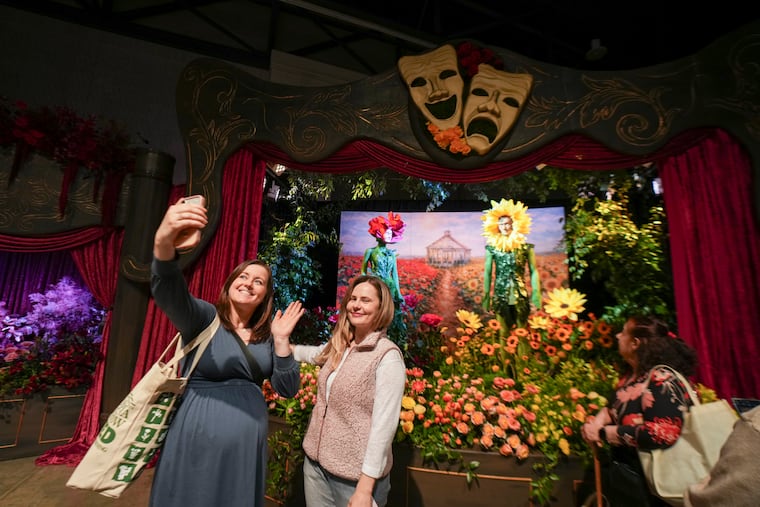
On Nov. 24, 1827, a group of gentleman who wanted to carry on the tradition of 18th-century area botanists John Bartram and James Logan held the first meeting of the Pennsylvania Horticultural Society.
Like Bartram and Logan, these men were eager to showcase Philadelphia’s fertile ground for native plants and exotic imports. So, they would often bring along plants to their meetings.
And it wasn’t just the men at these meetings. According to a history of the Pennsylvania Horticultural Society, published in 1927, members brought “more than 40 specimens of plants and flowers, 15 varieties of pears and apples, American grape wine, cauliflower, and broccoli,” to a Nov. 3, 1828, meeting.
Less than a year later, the inaugural Horticultural Society members decided to take their admiration of plants and flowers to the city at large.
On June 6, 1829, the Horticultural Society held its first semiannual exhibition of fruits, flowers, and plants at the Masonic Hall on the 700 block of Chestnut Street. That was America’s first public flower show.
The first flower show will be marked Saturday at the Philadelphia Downtown Marriott, just steps from the Pennsylvania Convention Center where the 197th Philadelphia Flower Show’s final weekend will be underway.
The celebration is one of this year’s weekly Firstivals. Each Saturday in 2026, the Philadelphia Historic District is throwing a day party marking events that happened in Philadelphia before anywhere else in America and often the world as part of America’s 250th birthday.
Philadelphia’s first Flower Show, said Janet Evans, librarian for the Pennsylvania Horticultural Society, was a one-day affair.
On display were the bigleaf Magnolia, geraniums, carnations, lilies, and pomegranate, Evans said. It was also the first time the poinsettia — now a symbol of the holiday season — was exhibited in North America.
“So many plants we take for granted in our gardens today were introduced to the Philadelphia public at the Flower Show,” she said, adding that at later exhibitions, more exotic plants from birds of paradise to dahlias made appearances.
The show was held in June until the 1830s when it was moved to September to mark the fall harvest. The present-day multiday spring flower shows started in the mid-1920s, to debut Easter blooms.
» READ MORE: How Germantown became the building block of the abolitionist movement
The Flower Show was held in venues in West Philly before making the Convention Center its permanent home in 1996. (Although it was held in FDR Park in 2021 and 2022 during the pandemic.)
There were no shows during World War I (1917-1918) and World War II (1943-1946) because resources were being diverted to war efforts. During those years, Evans said, the Horticultural Society organized Victory Garden Harvest Shows, set up to encourage people to grow vegetable gardens at home and their communities to compensate for wartime shortages.
There were similar shows during the Great Depression, Evans said. “People flocked to those shows,” she added.
Today the Philadelphia Flower Show is a major city attraction. Last year, more than 235,000 people attended, said Lauren Scully, public relations and communications manager for the Pennsylvania Horticultural Society.
This year’s Flower Show, “Rooted: Origins of American Gardening‚” celebrates America’s 250th birthday, honoring the people, places, and traditions that have shaped gardening.
“It all started from men whose whole idea was to get together, admire, and share their love of plants,” Evans said.
This week’s Firstival is Saturday, March 7, 11 a.m.-1 p.m., Philadelphia Marriott Downtown, 1201 Market St. The Inquirer will highlight a “first” from the Philadelphia Historic District’s 52 Weeks of Firsts program every week. A “52 Weeks of Firsts” podcast, produced by All That’s Good Productions, drops every Tuesday.