How Germantown became the building block of the abolitionist movement
A petition drawn up in the house of an early Quaker settler was the first step in the direction of allyship between Quakers and Black people.
In 1683, the Concord arrived in Old City from Krefeld, an artisan community in Germany, with 33 people aboard, many of whom practiced the Mennonite and Quaker faiths.
America’s newest arrivals took the windy, wooded trail uptown, settling along the Lenape Great Road, what today is called Germantown Avenue, the Northwest’s main thoroughfare.
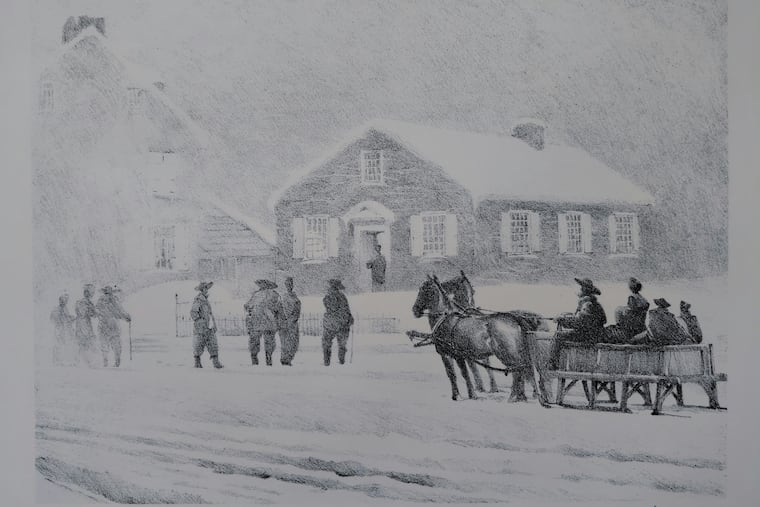
Mennonites are Anabaptists, Christians who are baptized as adults. And although Quakers aren’t, the two groups worshipped together in the home of settler Thönes Kunders at 5109 Germantown Avenue. Their shared belief in Christian pacificism and non-violence united them.
Here they drafted a petition that would become the public protest against slavery in British Colonial North America. Germantown’s history is rooted in this incident.
This historic protest will be remembered at Saturday’s firstival at the Historic Germantown Mennonite Meetinghouse. Each weekend in 2026, the Philadelphia Historic District is throwing a party in honor of America’s 250th birthday. The bashes mark events that happened in Philadelphia before anywhere else in America and often the world.
Early Germantown settlers were familiar with European slavery. However, America’s version of chattel slavery, with its backbreaking labor, cruelty, and separation of families, went against Quaker and Mennonite religious beliefs, said Craig Stutman, a history professor at Delaware Valley University in Doylestown.
Historians believe this inspired Quaker friends and Mennonites — Garret Henderich, brothers Abraham and Dirck op den Graeff, and Germantown’s founder Francis Daniel Pastorious — to draft a petition‚ stating good Quakers must had to reject the brutal human trafficking. On April 18, 1688, the men signed the protest in Kunder’s home.
Pastorious, Hendricks, and the op den Graeff brothers took their petition to local Quaker meetings in Dublin, today’s Abington Friends; the Philadelphia Quarterly Meeting; and the annual meeting in Burlington, NJ. They wanted the Quaker hierarchy to acknowledge slavery was an evil practice that needed to stop.
Their pleas were swept under the rug because even in these early American Quaker circles, enslaved people were the backbone of the economy.
“Even people like Pennsylvania’s founder William Penn owned slaves and didn’t want to touch the political lightening rod,” Stutman said.
» READ MORE: Yes, there are older Chinatown gates in the country. But Philadelphia’s is the real deal.
The rejection of the protest petition didn’t stop the fight.
In 1758, Quakers George Keith, Benjamin Lay, and Anthony Benezet, convinced Quakers to enact a law saying slaveholders could not be members of the Society of Friends.
Seventeen years later, America’s first antislavery meeting was held at the Rising Sun Tavern.
“This was a first step in the direction of allyship with free and enslaved Black people who had long been fighting for freedom through slave revolts and cobbling together abolitionist societies,” Stutman said.
“And it was the foundation. So ultimately by the late 18th and early 19th century, Philadelphia would be a place where Black and white people worked together and fought against the institution of slavery, and where the enslaved came for freedom.”
The protest petition was lost in the Quaker archives sometime in the 1700s. It was rediscovered in 1844, when it was used by abolitionists to inspire a new generation of freedom fighters.
It currently resides at the Haverford Library Quaker and Special Collections.
This week’s Firstival is Saturday, Feb. 28, 11 a.m.-1 p.m., Historic Germantown Mennonite Meetinghouse, 6119 Germantown Avenue. The Inquirer will highlight a “first” from the Philadelphia Historic District’s 52 Weeks of Firsts program every week. A “52 Weeks of Firsts” podcast, produced by All That’s Good Productions, drops every Tuesday.