Pulitzer-winning playwright James Ijames will never take his Philly community for granted again
After 'Fat Ham,' the South Philly playwright is looking toward TV and film writing

On a quiet Sunday afternoon last year, playwright and erstwhile struggling actor James Ijames was back at the Wilma Theater. Long before he won a Pulitzer or earned Tony Award nominations, he would sneak into opening night receptions in the theater lobby for the free food and drink.
This time around, he took me to a private side room for our interview. When a staffer mentioned it might not be available due to an event, Ijames gently said, “Oh, I am the event.” It was a talkback panel for Temple alums following the matinee of his crown jewel, Fat Ham. They laugh, and the doors open.
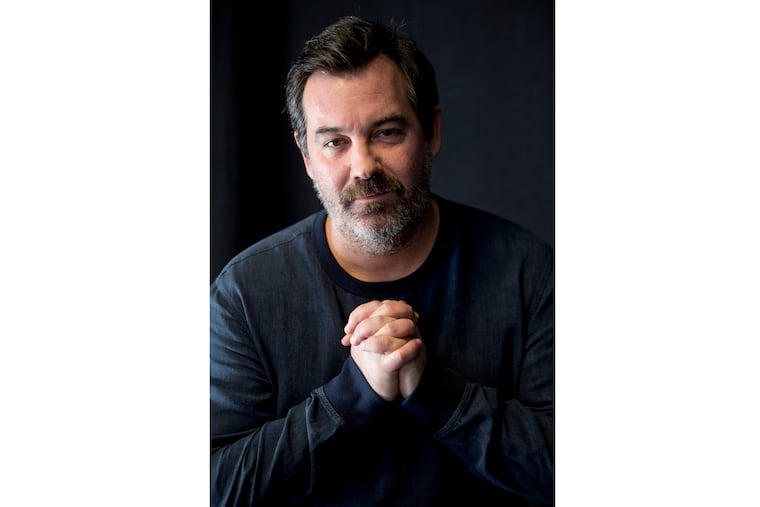
Ijames’ humor and humility can be disarming for those who know him by reputation only — a local gem whose recent success has catapulted him to a national stage. The Villanova professor remains a South Philly mainstay, and after spending most nights out of town last year as Fat Ham landed on Broadway, he became homesick.
“I hadn’t experienced this sensation of missing Philadelphia in a while, so it made me remember to not take this community that I live in for granted,” said Ijames, 42, wearing a denim suit with a golden yellow sweatshirt and matching Nikes. “It’s the people that are the main reason why I stay.”
“His plays have a cast of characters who are all Black and brown, like you need Black and brown actors to play those roles. That’s really significant in Philadelphia, to be able to have a playwright who was writing for us,” says Philly actor Taysha Canales, Ijames’ longtime collaborator and friend. “He gets produced a lot in Philly … but I also believe that his work needs to be shared all around the world.”
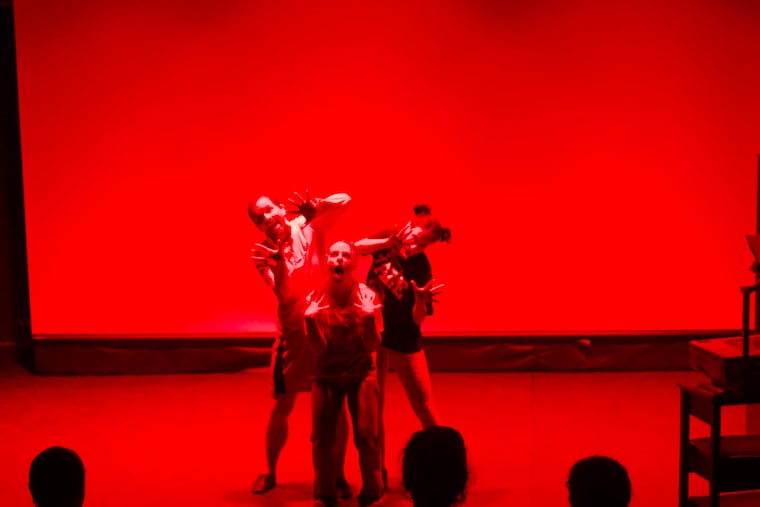
Most of Ijames’ plays have premiered in Philly. In December, Fat Ham broke the Wilma’s record for the highest single-ticket sales of any production in the theater’s history.
Owning the Bard
Though playwriting has been Ijames’ creative outlet since he was a teen in Bessemer City, N.C., he never thought he could make a career of it. As an undergraduate at Morehouse College, he studied choral music until a perceptive professor suggested drama might better suit his skill set. He began taking classes at nearby Spelman College and Clark Atlanta University, where he met Atlanta theater legend Carol Mitchell-Leon; the first play he acted in was Once on This Island, under her direction.
In Atlanta, Ijames also studied Hamlet, the play that would be the jumping-off point for Fat Ham.
“That experience of studying Shakespeare at a historical Black college really freed me from the tyranny of the purse,” he told Temple alums at the Wilma in December. “Professors and directors were taking that text and making it fit into our colloquial rhythms.”
Shakespeare’s style of speech echoed what he heard in church every Sunday, where congregants quoted the King James Bible. At Temple, where Ijames studied for an MFA in acting, he was told there was “something wrong” with the way he performed Shakespeare’s lines. He bristled and pushed back: “I hear people speak this language with great authority, you can’t tell me that this doesn’t belong to me,” he said.
Years later, Fat Ham — which threads Shakespearean language with Southern drawls, contemporary slang, and African American Vernacular English — was his triumphant response to the stuffy industry. “It was a way of reappropriating what was mine,” said Ijames.
Growing up in Philadelphia
Ijames says he became an adult in Philadelphia, where he went to his first gay bar (the now-closed Bump), made a name for himself as an actor, and later met his husband, Joel Witter, a high school educator.
From the National Constitution Center to the Arden Theatre Company to People’s Light, he landed gigs on stages across the region. He was part of Philly’s experimental playwriting collective Orbiter 3, which he says was one of the “top five things I’m most proud of in my life.”
“You can see his footsteps all over Philadelphia,” said Wilma Theater cofounder Blanka Zizka, who made the “no-brainer” decision to hire Ijames as a co-artistic director and one of her successors. It was because of his generosity and curiosity, she said.
They first worked together when Ijames played Belize in the theater’s 2012 production of Angels in America. During the long performances, he wrote a play in the dressing room that eventually became the work that launched his playwriting career: The Most Spectacularly Lamentable Trial of Miz Martha Washington, a hilarious account of the widowed former first lady and the people her family enslaved, on the cusp of freedom and waiting for her to die.
“Playwrights who can write comedy that really works for audiences, that’s a gift,” said Terry Nolen, artistic director at the Arden. “He gets audiences, he knows how to build the laughs. He knows how to find the joy.”
The church of collective effervescence
Ijames’ writing has always deftly balanced comedy and tragedy, especially within family dynamics. In 2023, two of his other plays premiered: Medea/Media, a modern take on the Greek tragedy that he wrote for Bryn Mawr College and Community College of Philadelphia students, and Abandon, about a mother whose dead son haunts her, which ran at Theatre Exile.
He’s particularly drawn to mother-son stories because he says it’s the relationship he knows best. “I’m always thinking about my mom,” he said. “None of the mothers that I’ve written are like my mom. I probably should write her at some point, in a very intentional way.”
Since Broadway, Ijames has been in hibernation mode. He’s researching and writing several commissioned works for the stage — including a forthcoming musical — and also extending his reach into TV writing rooms. He can’t divulge too much, but he’s developing a feature film idea excavating his family’s history, starting with his parents’ brief separation, when his father lived at a motel.
But he will always be motivated to push the boundaries of theater, which he considers an essential art for community gathering.
“The only reason why I haven’t just escaped and gone to TV and film is because theater is spiritual,” he said. “I don’t go to church every Sunday now. In many ways, I find that sort of collective effervescence in the theater.”