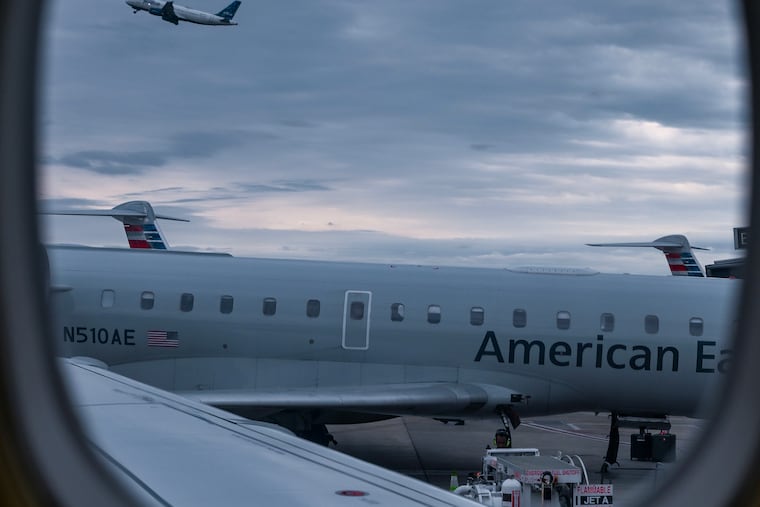
Delta Air Lines customers are paying more after the recent leak and fire at its Delco refinery
Delta’s fuel costs averaged $3.93 a gallon — the highest ever, the company says — in the three months ending June 30. That’s up from $2.25 a gallon a year earlier.
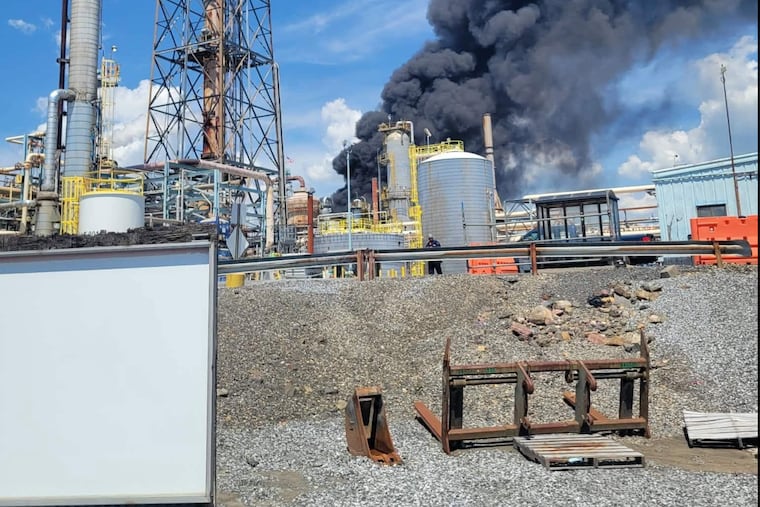
Record jet fuel costs — including a 5 cents-a-gallon boost due to a leak and fire at Delta Air Lines’ Monroe Energy plant in Trainer, Delaware County — have been passed along on to airline customers, and Delta has still been able to boost profits, chief executive Ed Bastian told investors at its quarterly investor call Friday.
At Trainer, “we’re back up to about 75%” of full capacity, but production will remain slow through the third quarter, boosting costs another 5 to 7 cents a gallon, Bastian said.
Delta’s fuel costs averaged $3.93 a gallon — the highest ever, the company says — in the three months ending June 30. That’s up from $2.25 a gallon a year earlier.
World fuel costs spiked after the U.S. and Israel attacked Iran in February, and Iran retaliated against U.S.-allied Arab oil suppliers and shippers, reducing exports from producers from several large oil-producing nations through the Strait of Hormuz.
With demand high and profits rising, U.S refineries have kept production high but reported recent fires and temporary shutdowns this past spring and early summer, in what is usually a maintenance season for refinery operators.
Despite higher revenues and products, Delta shares fell 2% in morning trading to around $87 and closed at $87.39. The stock hit an all-time high of $95 June 30 before Iran and the Trump administration agreed to a truce, which has since been suspended amid new attacks.
Delta, which is based in Atlanta, burned 1.12 billion gallons of fuel in the past quarter, up from 1.11 billion a year earlier. The Monroe Energy facility in Trainer produces more than 8 million gallons of jet fuel and other products a day when operating at peak capacity.
Despite the Trainer slowdown and the Iran conflict’s effect on global tanker traffic, Delta expects its fuel prices have peaked and will fall to around $3.15 a gallon by September, Bastian told investors.
Delta bought the Trainer refinery from ConocoPhillips in 2012 to make the company less vulnerable to sometimes-volatile jet fuel costs.
The complex, which employs 500 United Steelworkers members and managers and hundreds of union tradespeople, is configured to maximize jet fuel for Delta’s East Coast operations and trades other products — gasoline, diesel fuel, heating oil — for jet fuel in other markets.
Delta employs 100,000 worldwide, and Bastian says it continues to hire as it sells new services. Delta sold more “premium” services to passengers than main-cabin service in the second quarter, a reversal from its historical pattern.
“We are still in the early stages” of further segmenting travel into new premium travel classes, Bastian told investors.
Corporate-business travel continues to rise, and customers have been willing to pay higher prices. Delta ticket revenues jumped 13% compared to last year, while passenger-miles were only up 1%.
Transatlantic and domestic U.S. travel has risen, while U.S.-Mexico travel is down over previous years, Delta officials told investors.
International traffic will grow faster than U.S. travel as Delta continues to add new airports, especially in East and Southeast Asia and the Middle East, Bastian predicted. The company will have to cut costs in the U.S. and Europe. Delta’s shift to new Boeing 787s that are built for more premium travelers and more cargo will help.
A big challenge, he added, is finding enough airplanes to meet the demand.