Need help paying your heating bills? LIHEAP applications are now open in Pa., N.J.
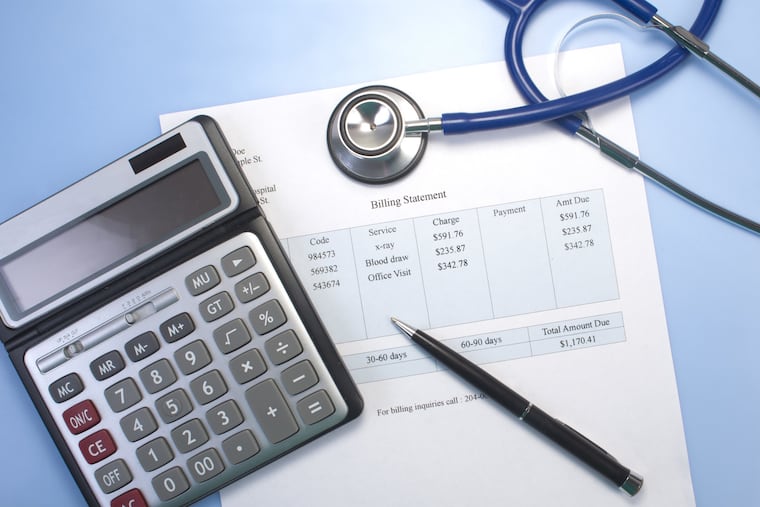
You may be able to get as much as $1,000 off your heating bill this winter.

Pennsylvanians can now apply for up to $1,000 in assistance with their winter heating bills.
Beginning Monday, homeowners and renters in the Keystone State can apply for the Low Income Home Energy Assistance Program, commonly called LIHEAP. New Jerseyans have been able to apply for 2024-2025 heating assistance since last month.
“It is starting to get cold here in Pennsylvania … That means heating bills are going to get more expensive,” Pennsylvania Department of Human Services Secretary Val Arkoosh said Friday during a visit to a Harrisburg YMCA and food pantry. “For many families, home heating bills in the winter can be a tough addition to an already tight budget.”
“No one should ever have to choose between heating their home to keep their family warm or paying for food, or paying for rent or medications, or other essentials like clothing or diapers,” the secretary said. “But unfortunately too many families are faced with these difficult choices.”
The start of Pennsylvania’s LIHEAP season comes as electricity bills are set to rise across the region and many families have felt the strain of high heating bills for the past several winters.
» READ MORE: Electric bills are rising in Pa. and N.J. Governors want the energy grid operator to help cut costs.
Who is eligible for LIHEAP grants?
Pennsylvanians may be eligible for the grants if their annual household income is at or below 150% of the federal poverty limit. Individuals are eligible if they make $22,590 or less, according to the guidelines, while families of four must make $46,800 or less.
But “if you need help with your heating assistance, just apply,” Arkoosh said Friday. “It’s not on you to figure out whether or not you are eligible.”
New Jerseyans may be eligible if their annual household income is at or below 60% of the state median income level, meaning $47,896 or less for individuals and $92,108 or less for families of four.
All limits are on gross, pretax income.
How much money do LIHEAP recipients get?
In Pennsylvania, eligible residents can receive between $200 and $1,000 in LIHEAP cash grants, depending on income, household size, and fuel type. The money is distributed directly to their utility company or fuel provider, and does not need to be repaid. Last season, Pennsylvania households who received LIHEAP cash grants got $394 on average.
In New Jersey, the size of the grant varies, dependent in part on the heating region. LIHEAP-eligible customers of PSE & G — the state’s largest electric and gas provider, which serves much of South Jersey — receive $400 on average toward their heating bills.
Are other LIHEAP grants available?
Some Pennsylvania residents may also be eligible for LIHEAP crisis grants. To qualify for those grants, residents must meet the income requirements and either be at risk of having their heat shut off, be actively experiencing a shutoff, or have less than two weeks’ worth of oil, propane, coal, or wood. Those grants are between $25 and $1,000. Unlike LIHEAP cash grants, residents can apply for more than one crisis grant per LIHEAP season, if they experience more than one emergency, but the total crisis assistance cannot exceed $1,000.
In New Jersey, residents who apply for LIHEAP also automatically apply for the state’s Universal Service Fund, or USF. The program provides monthly credits for low- and moderate-income households that spend more than 2% of their annual income on electric or gas, or more than 4% on electric heat.
New Jerseyans with medical needs can also receive $300 toward cooling costs in the warm months.
For additional utility assistance programs, check with your providers. The assistance phone numbers for Pennsylvania electric, gas, water, and internet companies can be found at puc.pa.gov/about-the-puc/consumer-education/utility-assistance-programs. New Jerseyans can visit nj.gov/bpu/assistance/programs to inquire about additional resources.
When should I apply for LIHEAP?
If you think you may be eligible, apply as soon as possible since the funding is first-come, first-served.
Households must apply for LIHEAP each year, regardless of whether they received assistance in the past.
You don’t need to know your eligibility when you apply. But you can check it in advance at https://liheapch.acf.hhs.gov/eligibility-tool.
How do you apply for LIHEAP?
Pennsylvanians can apply for LIHEAP by going to dhs.pa.gov/COMPASS or by calling 1-866-550-4355. The application period ends April 5.
New Jerseyans can apply online or submit an application to their local community action agency until funds run out, or by June 30. They can find more information by going to energyassistance.nj.gov or by calling 1-800-510-3102.

If you're not eligible for LIHEAP, or want some additional ways to keep bills lower this winter, here are some tried-and-true tips from local energy experts:
- Turn down the temperature. Peco estimates that you can decrease your bill about 2% for every degree you lower that dial. Use sweaters and blankets, even electric ones, to keep warm. Make it a habit to turn down the thermostat even more when you leave the house or when you sleep.
- Seal and upgrade. Caulk around your doors and windows, upgrade your insulation, and lock windows to reduce drafts.
- Close vents in rooms you aren’t using. Also shut doors to parts of homes, including closets, that do not need to be heated.
- Take advantage of the sun. Open blinds or curtains on south-facing windows, which get the most natural light during the day, to heat your home naturally. Close them at night to keep warmth inside.
- Stay on top of servicing: Get your heating system serviced before winter begins to save money, increase its longevity, and decrease the risk of being exposed to carbon monoxide.
- Replace lightbulbs: Make sure you’re using LED bulbs.
- Invest in a smart thermostat: It connects to your phone and allows you to control your home’s temperature from afar. The device can cost $100 to $300, plus installation, but pays off in your monthly bills. Check with your energy company before purchasing to see if it offers rebates.
- Get a home energy assessment: We learned a lot watching assessments on an apartment, a rowhouse, and a single-family home. Some assessments come with a fee.