‘Big Beautiful Bill’ fuels big rise in giving at this $66 billion charity, which chose Conshohocken for its new HQ
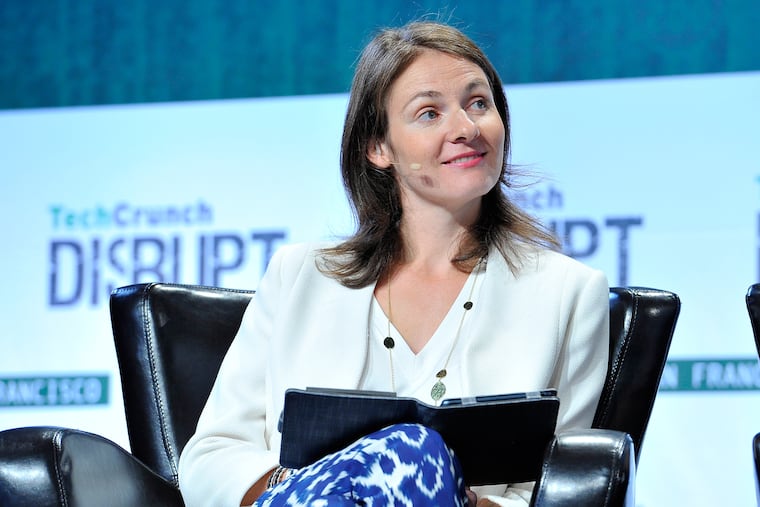
Holly Welch Stubbing built up a community foundation, headed a corporate-disaster-response firm, and now runs the National Philanthropic Trust, a Pennsylvania-based giant in the giving world.
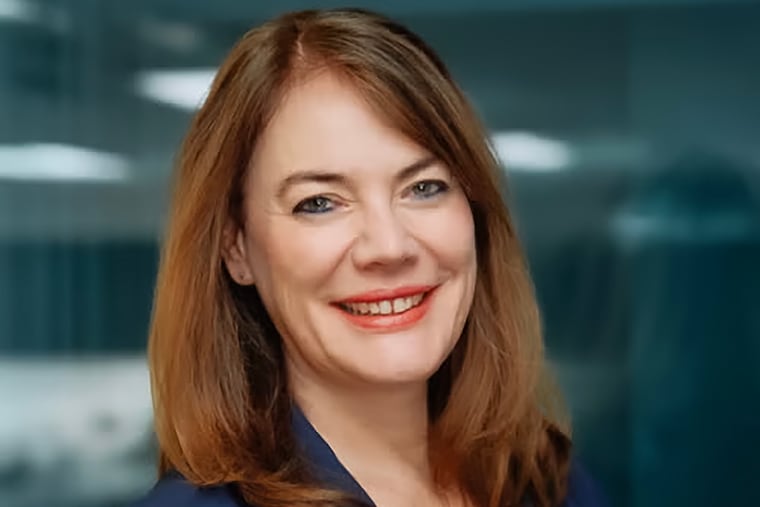
Relentless stock-market gains, plus tax changes in President Donald Trump’s “One Big Beautiful Bill,” have fueled a surge in charitable giving, says Holly Welch Stubbing, CEO of Jenkintown-based National Philanthropic Trust.
NPT, founded in 1996, has $66 billion in assets, making it one of the largest nonprofits raising funds from wealthy donors into “donor-advised funds.” It ranks with the charitable arms of investment giants Fidelity, Charles Schwab, and Vanguard as leaders in this growing way of giving.
Every year, each of these charities gathers billions of tax-deductible dollars from thousands of Americans into donor-advised fund accounts, and uses the money to make grants to the donors’ choice of nonprofits. They automate paperwork and can advise donors about charity choices and gift timing.
Since 2021, NPT has set up donor-advised funds for clients of JPMorgan Chase & Co., the largest U.S. bank, among other customers.
More than 3,700 Americans opened new charitable accounts at NPT in just the last two months of 2025, boosting the total to nearly 25,000.
That’s more than double the nearly 1,700 who opened similar accounts at NPT in the last two months of 2024. Malvern-based Vanguard Charitable, with $33 billion in assets, also reported record giving in 2025, and new accounts doubling in the last two months of the year.
With more accounts, NPT was able to fund a total of 183,000 grants totaling a little over $10 billion last year. They made grants in every state and 67 countries.
The value of NPT’s 2025 giving was up 72% from the year before, when it gave 146,000 grants totaling almost $6 billion.
The gain follows federal tax changes that ended tax deductions for charitable donations of less than half a percent of a person’s income. After this change, investment advisers told their clients, it could be easier to qualify for a tax break by “bunching” contributions into a donor-advised fund. And, amid a booming stock market, many wealthy people had more money to give.
This rapid growth has meant more work, of the most welcome kind, for NPT’s Stubbing.
Stubbing spoke with The Inquirer about managing one of the nation’s largest philanthropies at a time of rapid growth.
This conversation has been edited for clarity and brevity.
Where are donors focusing their new grants?
It’s dramatically up in every category. If we look at the fields of interest by sector — health, environment, animals, arts and culture, human services — all are at 30% or well over 30% increases.
Why are people giving more?
You have donor behavior responding to the new tax law, and the policy environment.
You have the stock market, it’s the best indicator for donor-advised performance.
[With better digital technology], we are lowering barriers to setting up donor-advised funds, including workplace-giving funds.
Donors are also responding to public and global needs — climate events, war, changes in public policy where the government stops supporting programs.
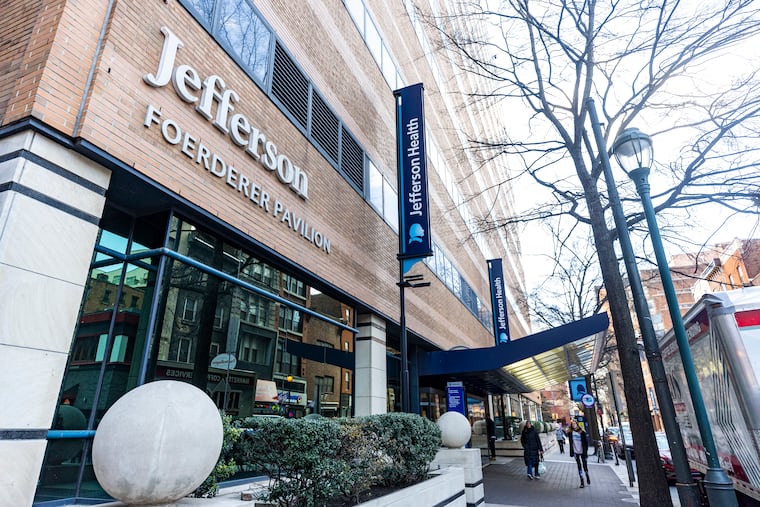
You’re moving the trust and about 170 workers (there are around 70 elsewhere) from Jenkintown to Conshohocken. Why?
We were out of space. We visited six places in Center City. We would love to have been downtown. But we would be taking on additional capital expenses to add technology.
So we looked in Plymouth Meeting, Conshohocken, and King of Prussia. We mapped everyone’s home addresses, we added the commute times and train schedules and complexities. We narrowed it to 2 Ash St. [in Conshohocken], where Jacobs Engineering was.
Pitcairn Trust has also moved to Conshohocken. [This started as the investment company for the Pitcairn family, heirs to the Pittsburgh Plate Glass Co. (now PPG Industries), who also founded NPT.] A lot of nonprofits are moving there.
How is stock-market inflation changing philanthropy?
A lot of donors are donating publicly traded stock and other [assets]. Some are donating property that has a commercial use and valuation.
We have also pioneered receiving private-equity assets. We have to have people who understand those assets and the complexity of liquidating them and converting private instruments [into dollars]. Sometimes they are in lock-up and can’t be sold for years.
You built the Charlotte Community Foundation into one of the largest charities of its kind, backed by the city’s bankers. From that, you spun out a disaster-services group?
[Charlotte-based] Bank of America and Wachovia lost employees on 9/11. Ken [Thompson of Wachovia] and Ken [Lewis of Bank of America] called us and asked us to open a fund for their families, E4E Relief. It was very different being a grantmaker to human beings instead of nonprofits, with the different IRS codes.
Wachovia said they had disasters in 42 states — California wildfires, Florida hurricanes — so could we make a program that runs long term? Sure. When Hurricane Sandy hit the Northeast [in 2013], we had thousands of applications in three days. We processed on paper, which was not ideal. I was working 100 hours a week while pregnant with my son, which was not ideal.
McKinsey agreed to put a 12-person team on strategy and operations for family hardships and natural disasters, so companies could more easily make grants to employees. They spun it off as a business, E4E. I ran it for seven years, and we had 170 corporate relationships, including 55 of the Fortune 500.
How did National Philanthropic Trust get so big?
The story starts with the Pitcairn family. They built the DNA to serve families with complex philosophic needs and issues. Now we are scaling. We hired our CTO, Eric Ziegler, from Vanguard.
When we grow larger, we have to learn how to operate more like a financial institution, with regulatory compliance, risk management, the illiquid assets platform. It’s hard.
What do you offer that’s special, vs. community foundations or investment company charities?
We also have a consulting arm — there are specialized nonprofits like Bridgespan that also do this work, approaching philanthropy with academic-level thinking. We may do a comprehensive white paper on homelessness in Los Angeles, for example, or nutrition in Africa.
When rich people come to you with pet ideas, what do you say?
Collaboration is a hard thing. We find people who have made their money through entrepreneurial thinking really want to apply that thinking in a nonprofit context. It’s in their DNA and who they are. They realize over time that has been tried, and they move into a more collaborative mode.
NPT can scale up the insights associated with what we have learned from many fundings, and share it, both among these stakeholders and externally.
You need technology, anonymized data sets, and information derived from and connected to stakeholders, enriched and well-thought-through.
We have a unique set of data points that aren’t like everything else. Grantmaking data, amounts and types, why people give, when they give, what they give. We see breakthroughs, and we bring people to them.