What’s a billion-dollar loan really worth? For private credit funds, it depends on who’s counting
Private credit funds lend to businesses but aren’t bound by rules that govern banks. They’ve raised trillions, but valuations are opaque.

As pension funds and other investors have cut back new private equity investments after years of poor returns, Wall Street private equity managers such as Apollo Global, Blackstone, and KKR have moved more heavily into corporate lending.
They compete with banks to make loans but aren’t bound by the rules that govern banks. The managers bundle the loans into private credit funds and offer them to investors as an alternative.
“Everyone has shifted to private credit,” which should make investors extra careful, warns Richard Vague, chairman of Pennsylvania’s $80 billion school pension system, PSERS.
Scholars at Yale Law School cite estimates that private credit funds are approaching $2 trillion in assets, up from $300 billion in 2010, and they’re on track to double in the next two years.
As private credit funds have grown, analysts warn that limited information about the loans makes it hard to know what the credit funds are worth or how they would respond to a slowing economy.
For example, Philadelphia-based FS KKR Capital Corp., one of the largest and oldest private credit funds, and two of its rivals have won unwelcome attention for posting very different prices for their investments in the same Silicon Valley private-equity takeover loan.
Such ambiguity doesn’t exist in publicly traded securities such as stocks, where investor assumptions are reflected in the market price at any given time. The conflicting private-credit valuations suggest analysts aren’t certain about how likely the private credit funds are to get their money back or to lose money if loans default.
“Risk is on the move. We’re talking trillions‚" Mark Pinto, head of private credit at Moody’s Investors Service, told clients in a recent report.
Different from banks
While banks have rules for measuring and publicly reporting loan losses and late payments — and private credit managers say they, too, apply strict internal standards — Moody’s analysts in that report called private credit loan reporting “opaque.” They cited private credit risk as a rapidly growing area of concern to financial systems.
The rapid growth is new, but private credit has long history.
FS KKR was set up as a publicly traded business development company and opened to investors in 2009 by Future Standard (formerly Franklin Square), a Philadelphia-based investment firm headed by Michael Forman and cofounded by college-housing baron and Sixers co-owner David J. Adelman.
That fund is marketed by FS, but its investments are managed by staff at FS’s partner, private-equity giant KKR. It invests about $20 billion of FS’s total $86 billion in client assets, FS reported last year.
While FS KKR paid shareholder dividends of 70 cents a share — or most of its profits in recent quarters — shares have lately traded around $15, down from the low $20s last year, a sign that investors are concerned about prospects in a slowing economy.
In a widely reported example that points out the difficulty of measuring the value of the loans in these funds, FS KKR’s share of a loan to finance the 2021 purchase of Medallia, a Silicon Valley-based customer-service software company, was listed on KKR’s books last fall at 91 cents on the dollar, a discount of 9% to its original value, as confirmed in an SEC filing. A discount implies FS KKR has some doubt the borrower will pay its loans on time.
But a rival Apollo Global fund listed the same loan at a 23% discount, as if Apollo saw a significantly higher risk that Medallia wasn’t going to pay.
SEC records show a third private credit fund run by real estate giant and private-credit pioneer Blackstone listed the Medallia loan at an 18% discount.
How can the same loan have three different values?
Detailed public reporting on Medallia’s finances had almost stopped since yet another private-equity and private-credit investor, Chicago-based Thoma Bravo, paid $6.1 billion in 2021 for the company. Thoma Bravo took Medallia private and borrowed from FS KKR, Apollo, Blackstone and others to help fund the deal, Leyla Kunimoto, a former KPMG auditor noted in a post on her credit review platform, Accredited Investor Insight.
That leaves investors trying to glean intelligence from limited information or trusting fund managers with their differing views and valuations.
So what’s the loan really worth?
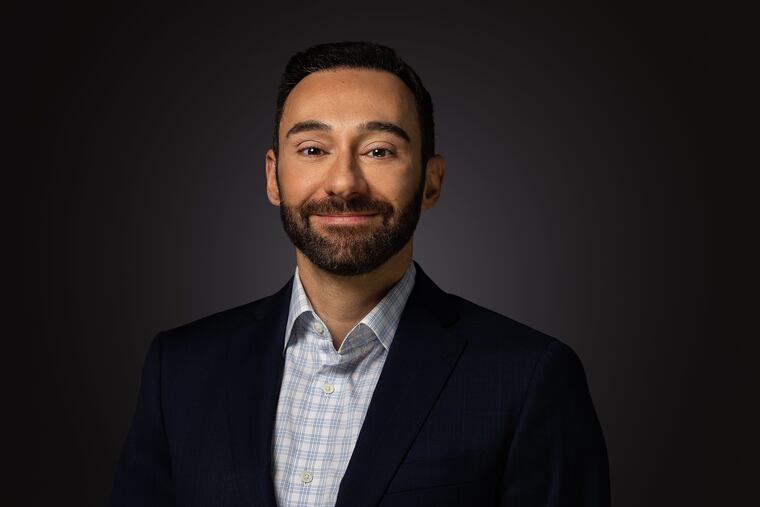
KKR partner Daniel Pietrzak, who is both president and chief investment officer for FS KKR Capital Corp. and head of Global Credit at KKR, said pricing differences “can arise naturally” for loans that aren’t publicly traded.
Factors include “variations in valuation providers, timing, policy nuances and available information,” he added in a statement. So, for example, one of the investors might know something others don’t.
Pietrzak said KKR pays “independent third-party valuation providers as part of a robust and consistent process, which helps ensure valuations fairly represent asset value across our portfolio.”
These specialized loan-value estimators include firms such as Lincoln International LLC in Chicago, Valuation Resource Corp. (VRC) in New York, and an affiliate of the Duff & Phelps advisory group.
The Medallia loan totaled $1.8 billion at 6.5% interest. Many of the other loans in the funds are smaller and are used to finance midsized businesses, potentially spreading the risk if a few borrowers go broke, or compounding it in case of a widespread financial recession.
FS KKR, like some other private-credit funds, “should incorporate higher discount rates for stressed credits,” including lower valuations for loans by companies with other outstanding loans that aren’t getting paid on schedule, said Rob Dubitsky, a former Credit Suisse managing director and Moody’s analyst who now heads The People’s Economist, a financial-analytics start-up.
“These valuation and disclosure issues are not unique” to the FS KKR fund but are reflected in private credit funds’ recent weak share performance and low credit ratings from Moody’s and other agencies, Dubitsky wrote in a recent article.
FS KKR was rated Baa3 by Moody’s last year and BBB- by Fitch. Those are the lowest investment-grade ratings above junk bonds. Lower ratings are for entities analysts expect are more likely to default, which would discourage many investors.
While Moody’s analysts and other observers expect private credit funds to continue their recent rapid growth, investors watch their opportunities closely, and may shift course.
For example, private equity has generally “underperformed” compared to public investments for most of the past five years, PSERS chief investment officer Ben Cotton told trustees at the board’s annual reorganization meeting Jan. 9. So he said he’s thinking it may be time to consider new private equity investments: “We are getting to where we may have opportunities and want to be ready.”