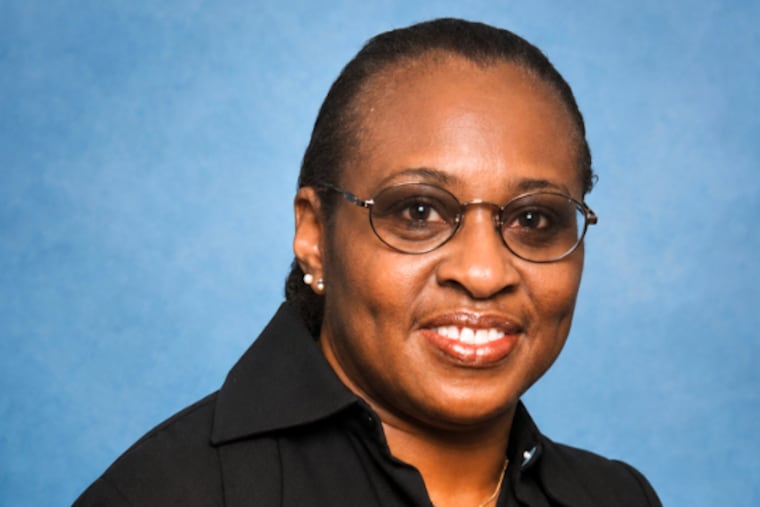
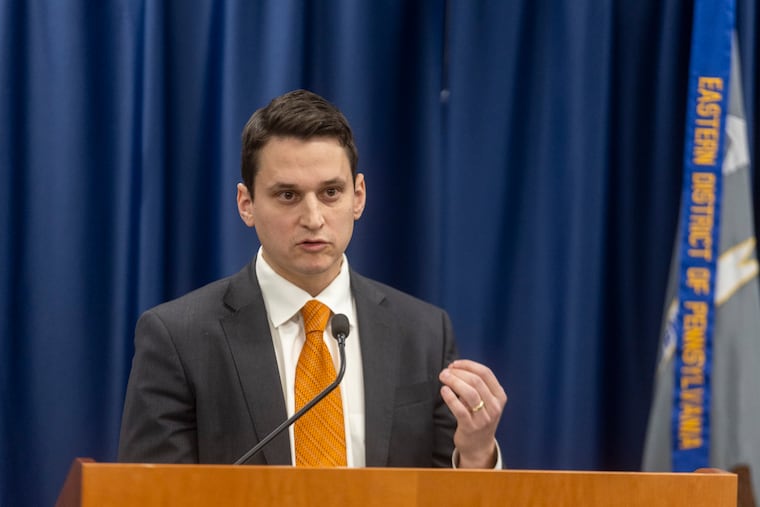
Evan Malone has been landlord, adviser, and investor to Philadelphia’s digital innovators and creators
Makerspace isn’t what it used to be, so NextFab has updated its North American Street works and branched into investing, coworking, and design at a new center near Penn.
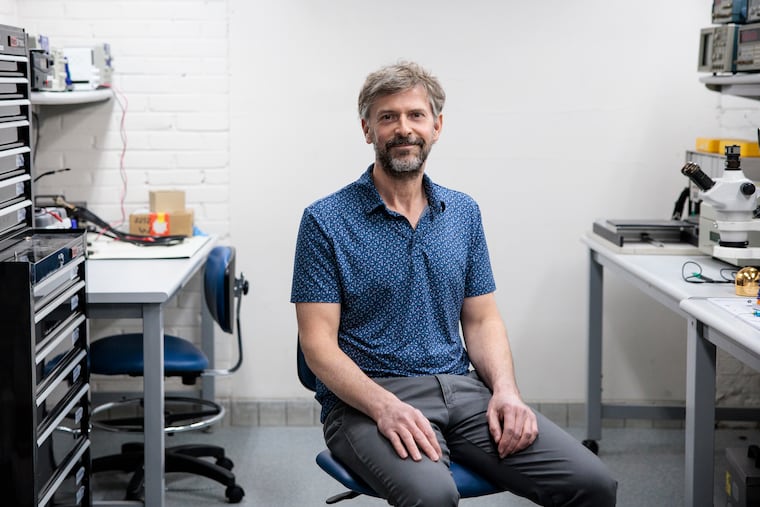
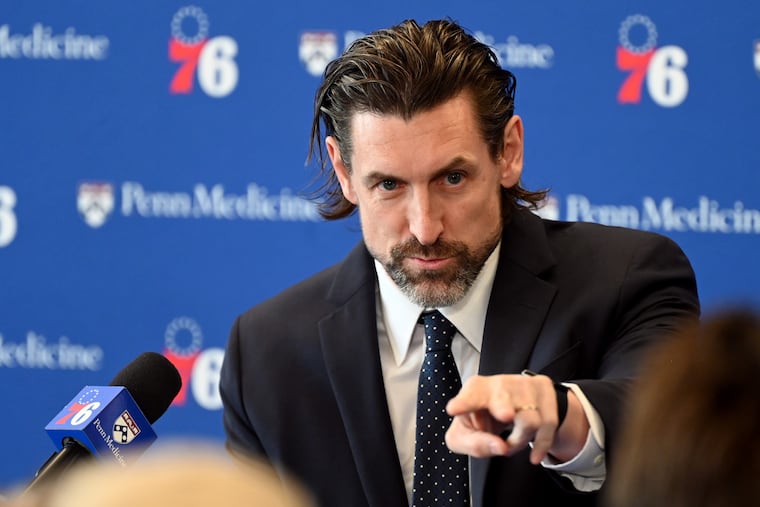
Evan Malone brought his Cornell University engineering Ph.D., masters in robotics, and University of Pennsylvania physics degree back to Philadelphia in 2008 to start the first iteration of NextFab, a pioneer in the “makerspace” movement that sought to democratize new digital tools for a vision of locally based manufacturing.
For-profit NextFab built centers in West, South and North Philly, even a Delaware outpost. It signed up more than 5,000 area inventors, tinkerers, tech prophets, and artisans, who used the centers’ hand and electric tools and digital-controlled machines to build prototypes of their dreams, aided by staff and colleagues.
But the makerspace movement proved transient as 3D printers and other cool tools grew cheap enough for home use.
NextFab has consolidated its makerspaces to a 60,000-square-foot warehouse on North American Street — and it has multiplied, giving birth to investment fund NextFab Ventures and a rising “hard-tech community” in the WPEN building on Walnut Street.
Malone agreed to talk about NextFab and his evolving career as a supporter of start-ups. The interview has been edited for brevity and clarity.
You could have run a high-tech company or a private-equity firm. Why NextFab?
My Ph.D. adviser had a NASA Institute for Advanced Concepts grant to explore 3D printing in space. He let me have that money to explore electromagnetic devices. I was really excited about 3D printing.
I’d go to robotics conferences where all the engineering people told me they wanted to get access to a 3D printer without having to buy a $50,000 Stratasys machine, or melt plastic at home.
We built Fab@Home, a system to build your own 3D printer [from off-the-shelf parts] and experiment with shaping materials from digital instructions.
I used that to do a bunch of mechanical electronics demonstrations — printing organic plastic semiconductors, for example.
I wrapped that up in 2008. It was the Great Recession.
What happened next?
I came back to Philadelphia and did some work with DVIRC, the regional manufacturing group. The [factory owners] told us they didn’t want their own kids to go into manufacturing; it was dirty, dangerous — and shrinking.
But 3D printing had exposed me to more advanced manufacturing. I wanted to see if we could shift the position of manufacturing in the U.S. by adopting these new technologies.
Nobody was taking this on as a business with insurance and staff you would need to commercialize a product. Naively, as an engineer, I decided to.
University City Science Center’s director, Steve Tang, and the people at Breadboard were supportive. We started there, trying to help people launch businesses.
The Science Center got expensive. We found a much larger location in South Philly, where we could run seven days a week. Suddenly we had several hundred new members, and our tight-knit team grew rapidly.
It was a rough patch. I learned if you don’t have good process, you break a lot of things.
What was the larger ‘makerspace movement’?
Coming out of the recession, there were national companies trying to do the same thing. TechShop was the big competitor. It turned out they were raising money for new locations but using it to pay for old locations. They collapsed in 2017.
We had a great collaboration with the start-up lab DreamIt Ventures, which began in Philadelphia. They had people making medical devices, and they needed a place to work. They developed a rapid-accelerator program. We had a really nice pipeline of their clients. And we invested in some of the DreamIt companies. They generated rental income and an investment opportunity. Some of their companies have gone on to be very successful, like Andluca, which makes wireless smart windows.
DreamIt went virtual beyond Philadelphia. We had to build our own pipeline from some of the NextFab companies. For example, Biomeme with their portable DNA analysis did gangbusters in COVID testing.
Also in those times, a company came to us from Brooklyn that had makerspace for art and design companies. They built out in a former church, 1227 N. Fourth St., a beautiful space. But in Philly they needed parking, which that site didn’t have. And they ran out of financing.
So NextFab took that space. A couple of our team members built an arts-and-crafts community there with a focus on jewelry.
And people from Wilmington came up with a proposal, we got some Delaware money to build it out. It was exciting, but it was hard finding tenants.
Makerspaces thought they were a tech business, but they’re really a real estate business, right?
I embrace that now.
We should have done [Wilmington] as a nonprofit. Maybe the whole thing should have been a nonprofit. But overall, it’s worked OK, as a heavily invested, semiviable business.
Now we are at 1800 N. American St. It was a food warehouse. A member was looking at it for a climbing gym. Also we were getting pushed out of the jewelry building by the landlord. So we took on this whole building.
Right then, the pandemic hit. It was really tough. You couldn’t have all the members there in person. We made masks, partnering with hospitals. We offered virtual classes for our members. We scaled back fees.
We kept a lot of members engaged, but after that crisis, things never got back to where they were. Inflation and the markets limited my ability to finance the work. Wilmington never got enough tenants; that closed. Then we closed South Philly, the big lift.
Now we are fully occupied in this location — including some subtenant spaces.
Will you expand NextFab again? What’s your focus now?
The market in our region is not big enough for more. For electronics and 3D printing, there is now little demand because people can do it at home. People still want access to a wood shop. Metal shop is second. We have also built strong followings in jewelry and in textiles.
We are now about 500 members, 30-some rental spaces within our footprint, 10 subleased units. There’s a restaurant [Sor Ynez], a bike shop, the Center for Creative Works, which does arts education for adults with disabilities. FlashPCB moved up here from South Philly; they do contract manufacturing for PC assembly. Resource Exchange, they do resale of secondhand arts and crafts supplies.
What other services have you built out?
At WPEN, we have NextFab Ventures, which started in 2016. It has invested more than $3 million in more than 30 viable companies that started at NextFab, including $1.2 million in 11 companies since we spun Ventures off into a separate organization in 2024. They don’t have to be local. We’re glad when they are.
And we have Solid Labs, a coworking space that supports local hard-tech start-ups, which we spun off last year.
Resident companies at 2212 Walnut include p-Chip [microtransponder tags and tracing], OsciFlex [anticlotting devices that fit in your veins], Elcanotek [digital advertising], and Recupero Robotics [stroke-recovery robots].
And there’s Daxo-Robotics that makes hands for robots. That came out of Penn.
Also at WPEN there’s Solid Product Design, our design and engineering consultancy, spun off in 2024.
Will you stay in Philadelphia?
There’s a lot more opportunities outside Philly. The tech community here is dispersed. A lot of people don’t seem to want to stay here. They relocate to New York or California, where the venture capital is strong.
We are creating a home for those that want to stay.