2026 Chevrolet Equinox EV: The price is nice, but there’s a catch
A bare-bones version of the small EV crossover performed well in testing, but getting key creature comforts boosts the price significantly. While range is up to standard, charging speeds disappoint.
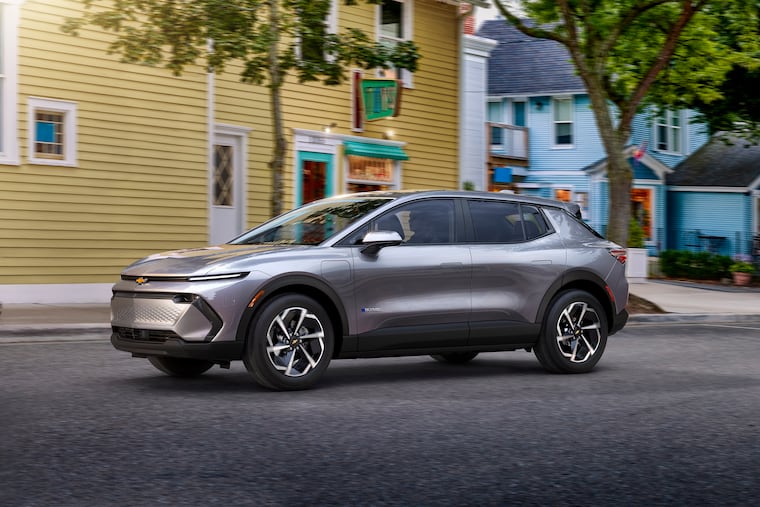
2026 Chevrolet Equinox EV LT front-wheel drive: A no-bells, no-whistles EV test.
Price: $36,495 as tested. No options on test vehicle; price is up by $1,500 from the 2025 model tested.
The all-wheel-drive model starts $5,000 higher and sacrifices about 10 miles of range.
Conventional wisdom: Car and Driver likes that it has “more range than rivals, competitively priced” and is “available with Super Cruise and other tech.” They didn’t love the “underpowered front-drive model, less cargo space than the gas model, no Apple CarPlay or Android Auto.”
Marketer’s pitch: “America’s most affordable 315+ mile range EV.”
Reality: Definitely affordable. Will it be worth the trade-offs?
Plug them in: Mr. Driver’s Seat has compiled a few EVs for comparison. So over the next two weeks you’ll see how this compares to more expensive electron-driven options from Hyundai and Volkswagen.
What’s new: The Equinox EV carries on pretty much unchanged since its 2024 debut, although all-wheel-drive models boast a range boost for 2026.
Competition: In addition to the above models, there are the Ford Mustang Mach-E, Honda Prologue, Kia EV6, Mini Countryman EV, Subaru Solterra, and Tesla Model Y.
Up to speed: Car and Driver got one thing right — the 0-60 time is not the stuff of EV legend. The Equinox EV in its barest front-wheel-drive form will not plaster you to the seat when it’s time to leave the red light, but it does move with ease. It’s worth noting that pickup for passing will still leave most drivers impressed, and this can be an important test.
Car and Driver puts the 0-60 time at 7.7 seconds, a not-unexpected number from a small SUV with 220 horsepower. All-wheel drive ups the ante to 300 horses, and it moves to 60 mph in 5.8 seconds.
Shiftless: The Mercedes-ish wiper stalk on the steering column requires a pull and up for Reverse and a pull and down for Drive. The pull is a nice touch, so you don’t feel like you’ll make any stupid mistakes while riding around, the kind I’ve made now and again with these shifters.
On the road: The Equinox EV handles with great ease, being pulled to the road by the heavy batteries in the floor. Highways are smooth, and country roads are nicely followed, with a touch of fun added as well.
Driver’s Seat: The cloth seats in the basic model tested provided plenty of comfort and support, although they felt a little warm as the humidity stayed up even as the temperatures fell to high 70s at the end of August.
(If you want heated and ventilated seats, you have to add $7,000 for the LT2 model, and then you have the privilege of paying extra for those options.)
The starter is in the seat sensor, which is not my favorite way to get going, but this one seemed to work more consistently than some I’ve experienced. GM also has added a touchscreen on-off icon for the times when the Equinox can’t tell you’re done driving.
Friends and stuff: Rear seat room is nice in the corners, but the center seat passenger will feel the hump and the console. The seat is designed presumably to make your passengers whine during the test drive, so you buy an upgrade. It’s firm and has weird indentations in the lumbar area.
You can always counter back from the Driver’s Seat that legroom, foot room, and headroom are all awesome so everyone back there should be thankful they’re not riding around in the back of 1980s front-wheel-drive Buicks, because there was a sad seat.
Cargo space is 57.2 cubic feet with the seat folded and 26.4 behind the rear seat.
Play some tunes: The infotainment center features a gigantic 17.7-inch display that’s clear and pretty easy to follow.
The volume dial is a wide shallow thing that GM keeps putting into cars. It reduces me to tears at least once a week after accidentally rubbing the touchscreen and changing something important.
Like maybe the music. Sound from the system is very good, about an A, so any interference becomes a personal affront. (Don’t interrupt the tunes, as the lovely Mrs. Passenger Seat and all the point-ohs know.)
CarPlay is gone, but my notes didn’t mention missing it, so maybe that’s not the end of the world after all.
Keeping warm and cool: Actual knobs control temperature and fan speed, and buttons let you do some of the simple functions. It’s nice that the big touchscreen didn’t eliminate the old-style controllers, even as temperature and fan control options reside in the bottom corners of the touchscreen.
You can really get some air out of the blowers, which is nice. The corners have the round vents that make me happy with their ease of direction and on-off control.
Range: A 319-mile range is great to have, but charging can be slow. InsideEVs tested one at three different chargers in February, and it averaged around 40 minutes to get from 10% to 80%, far slower than most competitors.
Chevrolet advertises just 285 miles of range for the AWD models from 2025 but 309 for the 2026 AWD models.
Where it’s built: Ramos Arizpe, Mexico. Mexico supplies 46% of parts; South Korea, 20%; the U.S. and Canada, 12%.
How it’s built: Consumer Reports predicts the reliability of the Equinox EV to be a 2 out of 5.
In the end: If you don’t mind missing some creature comforts, the Equinox EV can get you charging for a nice price.
Next week: Hyundai Ioniq 5.