Forman Arts Initiative promises to turn North American Street into a grittier version of the Parkway
At a time when legacy institutions are struggling, newer, more nimble arts groups are expanding.
Until just a few years ago, Philadelphia’s officials were adamant that manufacturing would once again flower on North American Street, the commercial artery that cleaves lower Kensington in half. But North American Street had other ideas.
The street’s surviving industrial buildings turned out to be perfect for artists, who were being pushed out of Old City by rising rents and a growing indifference to creatives from some local residents. In 2004, the owners of Crane Arts established what would become the template when they lightly renovated a massive plumbing warehouse for studios and galleries, making just enough improvements to satisfy building inspectors.
By the time the Clay Studio completed its stylish, architect-designed makerspace and gallery across the street in 2022, the trickle out of Old City had become a torrent. Moderne Gallery, which specializes in handcrafted art furniture, recently became the latest Old City refuge to make the move, establishing an elegant showroom in the Luxe apartments.
Those were relatively modest undertakings, however, compared to the newest arrival, an arts powerhouse called the Forman Arts Initiative.
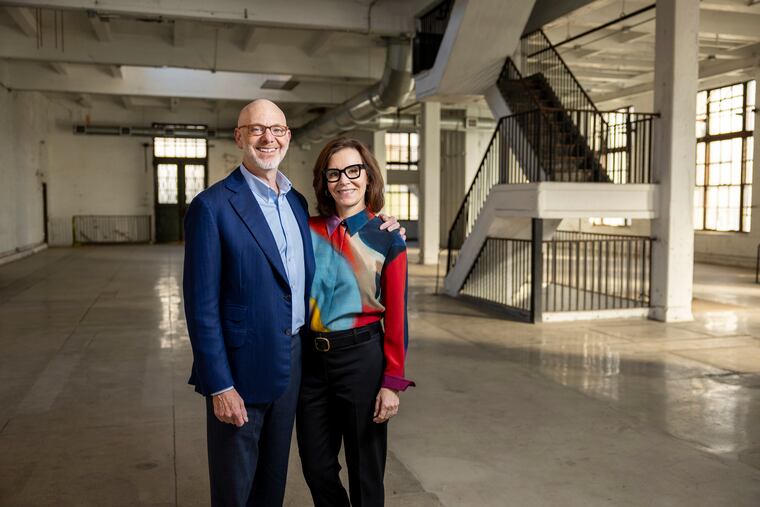
Founded by two of Philadelphia’s biggest and most influential art collectors, Michael Forman and Jennifer Rice, FAI has acquired a city block’s worth of industrial buildings between Susquehanna and Dauphin. Next month, the couple, who are married, will begin work aimed at fusing that eclectic assemblage into an 100,000-square-foot "arts campus."
What that means exactly is still a little unclear, even to Forman and Rice.
The Forman Arts Initiative will be much more than just another art gallery. Like the new Calder Gardens, the couple eschews the word museum. As Rice showed me the light-saturated white-box space of a former Peco substation, she conjured up a multidisciplinary venue that would house galleries, a cafe, an arts library, maker studios, community programs, a live music venue, and an events space capable of hosting everything from artist talks to dance parties.
“We’re building the plane as we’re flying it,” joked executive director Adjoa Jones de Almeida, who joined FAI after a decade at the Brooklyn Museum.
Most of the exhibits will come from the couple’s extensive collection, which is built around works by Black, brown, and women artists, and includes pieces by stars like Rashid Johnson, Simone Leigh, and Cindy Sherman. Since much of their hoard is now in storage, the couple see the project partly as an opportunity to put some of the most outstanding pieces on public display.
But Rice and Forman, who have been collecting together since they met, say they also want the arts campus to have a strong community-building component.
The presence of such a formidable arts institution seems likely to strengthen the street’s identity as an arts corridor and make a destination for people beyond Philadelphia. Think of it as a grittier version of the Benjamin Franklin Parkway’s museum row, but with people who produce art as well as show it.
The challenges on American Street
Unfortunately, American Street shares some of the Parkway’s less appealing qualities.
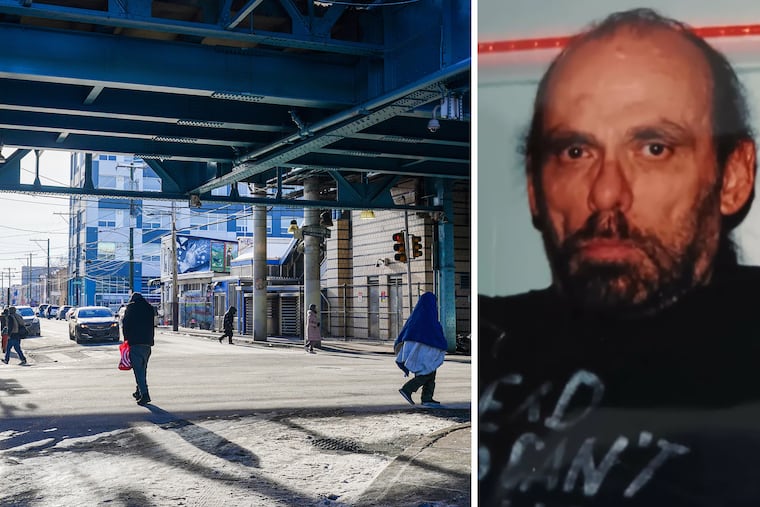
Even though the city has tried to improve the corridor by installing bike lanes and rain gardens, the street remains a wide, unfriendly speedway that is difficult to cross. Big tracts of vacant land add to the desolation. Although it’s less than a mile from the Crane to FAI — about half the length of the Parkway — walking is a slog.
In the last few years, activity on American Street has begun to pick up, thanks to the construction of new apartment buildings like the Luxe and the arts-themed Ray Philly. Several beer-driven restaurants, a climbing gym, and supermarket have set up shop in their wake at the southern end near Crane (along with an autocentric self-storage facility). NextFab, a coworking space for makers, reliably draws artists and visitors.
An attraction like FAI is almost certain to attract more development, filling the empty lots created when factories were demolished for the pie-in-the-sky dreams of industrial revival.
The effect on the neighborhood
But, to borrow from Isaac Newton, every action begets an equal and opposite reaction. The surrounding neighborhood has long been the heart of Philadelphia’s Puerto Rican community. Just a few steps off this wind-swept boulevard, the side streets brim with life inspired by Caribbean culture: impromptu music, colorful churches, and lush urban gardens.
Those rowhouse blocks around Norris Square are already starting to feel the stress of gentrification. As Fishtown-style development moves west, rents and real estate values have soared. Between 2013 and 2022, the percentage of Latino residents in Norris Square fell by 13%, while the white population grew by 16%, according to a study from the Penn State Center for Economic and Community Development.
How FAI proceeds will be crucial.
Forman is the founder of Future Standard, which manages over $86 billion in assets, and the couple have a track record in philanthropy in low-income communities, including Norris Square. They were deeply involved in the effort to renovate the city’s historic Cobbs Creek golf course, which nurtured Black golfers at a time when they were excluded from other greens. The Fitler Club, which they co-founded, will manage the clubhouse there, together with the Black-owned Strother Enterprises.
Rice and Forman initially started FAI during the early days of the pandemic as a way to disperse grants to struggling arts groups and makers, but they decided they needed a physical presence.
After acquiring the American Street site, they embarked on a listening tour in the neighborhood. Rice and Forman also hired Theaster Gates, a Chicago artist acclaimed for using derelict real estate as a community-building tool, as their adviser.
Besides being a canny real estate developer, Gates extracts deep meaning from old buildings and has a pitch-perfect way of treating architecture. His first comment to Rice was: “Don’t do too much. Let the architecture be what it wants to be,” she said.
Making Gates part of the project is a strong indication that they “are embracing the idea of true community engagement,” says Patricia Wilson Aden, who runs the Greater Philadelphia Cultural Alliance. “It’s not an add-on. It’s core.”
To help realize their vision, they also reached out to two local architects, Digsau, which designed the Clay Studio, and Ian Smith Design Group, which has completed several Rebuild projects for the city.
While FAI is evolving as a concept, it’s clear that the project is part of a trend in the art world: reinventing the art museum.
It’s no accident that the Philadelphia Art Museum just launched a controversial branding campaign to update its image. Like legacy art institutions around the world, its attendance has not returned to pre-pandemic levels, and it struggles to attract new audiences.
Rice, who also serves on the Art Museum board, believes a project like FAI will have an easier time appealing to people daunted by the columned temple on the hill.
Legacy museums “were founded with their focus on taking care of the objects and not necessarily taking care of the people,” Rice said. “We want to flip the priority. The art is the tool.”
Perhaps nothing impacts attendance so much as ticket prices, and Rice says FAI will not charge admission. I suspect the Art Museum would have gotten more mileage from adding free admission days than from spending big bucks on a branding campaign.
Even though the project is endowed with $83.5 million in assets, there’s still an argument for doing as little as possible to FAI’s buildings, which evoke Philadelphia’s lost industrial heritage. The architects plan amenities like restrooms and a catering kitchen, but no fancy interior design. To help the campus fit into the neighborhood, FAI allowed Busta, a neighborhood artist who received a grant from the Initiative, to adorn the back wall on Philip Street with a graffiti-style mural.
They’re also looking for ways to attract area residents. Rice and Forman, who managed to scoop up the University of the Arts’ entire 60,000-volume library — shelves and all — after its abrupt closure, plan to make the resource accessible to the public. FAI also hopes to start a robust program of residencies, classes, and lectures.
They know food will be the big draw, so they’ve engaged Càphê Roasters, a popular, Kensington-based coffee shop, to operate a cafe. Chad Williams, the award-winning chef, has signed on as “culinary advisor” for catered events.
Community leaders tell me they are excited by the promised offerings at FAI — but also nervous about how things will change.
“I’m very hopeful this will be a good anchor for us,” says Rachel Zimmerman, who moved her gallery, InLiquid, from Old City to the Crane Building two decades ago. “I was a pioneer on North American Street. I don’t want to pioneer another neighborhood.”
FAI won’t open its first phase until the winter of 2026. When I took a walk up North American Street recently, the street was so empty that I could see all the way up to the castlelike warehouses at York Street.
There is no doubt North American Street will change. It’s how it changes that’s important.