Trump’s Epstein scandal somehow got worse | Will Bunch Newsletter
Plus: Is black rain over Tehran a sign of the Apocalypse?
“And it’s 1, 2, 3/ What are we fighting for?/ Don’t ask me, I don’t give a damn …” Those lyrics that feel like they could have been written yesterday were actually penned in 1965 at the start of the Vietnam War quagmire by the San Francisco music legend Country Joe McDonald, of Country Joe and the Fish. It feels like some kind of cosmic joke that the singer famous for that protest song, “I-Feel-Like-I’m-Fixin’-To-Die Rag,” would be taken from us at age 84 this weekend, right as America waged an even more pointless and incomprehensible war. Like most younger boomers, I was exposed to the song on the Woodstock soundtrack. It’s preceded there by “The Fish Cheer,” where the crowd chants a slightly different four-letter word, one that Americans are muttering a lot these days. “Give me an F!”
If someone forwarded you this email, sign up for free here.
Buried bodies? A murder cover-up? A shocking sex crime? It’s Epstein files gone wild.
In a nation where political scandals are as routine as the common cold, it’s become something of a cliché to write that some lobbyist or insider-wheeler-dealer type “knows where the bodies are buried.”
That’s why it’s jaw-dropping to learn — some seven long years later — about the phone call that came into a popular Albuquerque disc jockey and was passed onto local authorities from a man who claimed he’d worked on a rural New Mexico ranch belonging to Jeffrey Epstein, the uber-connected financier and convicted sex offender.
The man said he knew where the bodies were buried.
Literally. Two of them, in fact — young girls whose lives of abuse in Epstein World allegedly ended in murder and were hidden somewhere in the hills near the ranch not far south of Santa Fe.
And yet, to this day, the sprawling estate that the late Epstein called Zorro Ranch has never been searched by law enforcement. New Mexico authorities were told back in 2019 not to investigate by U.S. Department of Justice prosecutors in Manhattan, who just as abruptly lost all interest in the matter.
The shocking, unaddressed murder allegation is one of the many threads around sexual abuse, financial shenanigans, and God-knows-what-else that were dropped like a hot potato when Epstein turned up dead in his federal jail cell in Lower Manhattan in August 2019.
As the scandal swells around Epstein, what the government has or doesn’t have in the so-called Epstein files, and the late sex trafficker’s longtime friendship with a future and now current president, I’ve tried as a columnist not to chase every little development. My focus has always been on the big picture — what the case tells us about the power elite that was recently rebranded as “the Epstein class,” their sordid relationships, and their impunity from consequences in a corrupt society.
But a flurry of smaller but significant details in the latest and supposedly last tranche of Epstein files has me convinced that 1) there might be some very active landmines in the case that haven’t been touched off yet, and 2) there definitely was, and still is, an active cover-up at the highest levels of government.
And as those of us who lived through Watergate remember well, it’s not the crime but the cover-up that so often topples corrupt governments. The New Mexico revelations are one of three major Epstein areas where I’ve seen some holy you-know-what disclosures.
The first batch is around what really happened in the early morning darkness of Aug. 10, 2019, when Epstein was discovered dead in Manhattan’s federal lockup. The fact that so many powerful associates of the financier benefited from his silencing has caused many to doubt the official finding that he’d ended his own life by hanging, and sparked the online rallying cry that “Epstein didn’t kill himself!” Epstein’s brother and the family’s prominent medical expert insist his injuries were more consistent with murder by strangulation, assailants unknown.
The recently released files contain some surprising discoveries from the FBI’s investigation, especially centering on the actions of one of the two guards on duty that night. Both were fired for failing to check on their famous inmate and for allegedly falsifying records.
The normally Trump-friendly New York Post reported last weekend that one of the two guards made an unusual $5,000 deposit just 10 days before Epstein’s death, and, perhaps even more suspiciously, googled “latest on Epstein in jail” twice, just 50 and then 40 minutes before her coworker discovered the body. (The guard has denied in a sworn statement that she had anything to do with Epstein’s death.)
Just hours later, my friend and former Daily News colleague Julie K. Brown dredged up more from an FBI interview with one of Epstein’s fellow inmates, whose name was redacted, who said he and other inmates overheard guards saying Epstein had been killed and talking about how to cover it up. The online commentator Alison Gill also notes that Epstein and his associates were discussing the possibility of blackmail material on Trump, presumably with the goal of ending Epstein’s criminal case, in the days right before he died.
Then there’s the matter of the woman who told FBI investigators that, as a 13-year-old in the early 1980s, she became entangled in Epstein’s web of sex trafficking, and claims that through him, she met Trump and had a sexual encounter that turned violent.
Everything I’d initially seen about the case convinced me that this was not something to write about or promote on social media. It wasn’t just that, as an adult, the woman had reportedly had a series of legal problems, including fraud allegations. I was more troubled by the timing — there’s no record of Trump knowing Epstein before the late 1980s, a few years after the alleged incident — and the geography of her South Carolina upbringing, since Epstein and Trump were mostly in New York.
In a powerful example of the so-called Streisand effect, the Justice Department actually called more attention to the woman’s allegations when it released only the first of the woman’s four FBI interviews and failed in an effort to hide the other three. When those three additional interviews were finally published under pressure, most outlets reported the most salacious stuff, stressed that her charges are unproven, and moved on.
But not one audacious local paper: the Post and Courier of Charleston, S.C., near where the accuser grew up. They assigned reporters to look at anything and everything that could either confirm or cast doubt on what she told the FBI — real estate records, court filings, old newspaper clippings, and more — and even sent a journalist out to the West Coast.
The result? The things they could check out pretty much checked out, including her family’s relationship with an Ohio businessman who she said introduced her to Epstein on Hilton Head Island, S.C. None of what the paper found relates to her veracity about the Trump encounter, but both its findings, confirming other details, and the fact that the FBI spoke to this woman four times bolster her credibility.
So we still don’t know definitively how Epstein died, whether the president committed sex crimes, or whether girls were murdered in New Mexico. But we do know this: In each of these cases, the U.S. government’s inclination was to shut off avenues of investigation rather than seek the full truth.
We know that during the fraught days between Epstein’s 2019 arrest and his death, the FBI ordered the New York Police Department and local Manhattan prosecutors to back off their own investigations into Epstein. Why? We know that in the New Mexico case, federal prosecutors hijacked the investigation, and then absolutely nothing happened. Why? And we know that the three temporarily missing FBI interviews with the Trump accuser are part of a much bigger pattern of disappeared files, constant slow-walking, and other Justice Department irregularities. Why?
We don’t know all of the crimes, but we can see the cover-up. And the common thread here is the U.S. Justice Department putting its finger on the scale to protect the Epstein class, because as long as Trump is president, it cannot be trusted. Congress has done better in probing the Epstein matter than most everything else in this crisis for democracy, but it needs to do more. And local prosecutors in New York, New Mexico, Florida, the Virgin Islands, and elsewhere need to step up.
The new findings suggest a much darker Epstein narrative than they wanted us to know about. The American people deserve the full truth about our kleptocracy, wherever we can find it.
Yo, do this!
When it came time to pick my March audiobook from Audible, I wavered between a desire to escape the hellish war in Iran or dive in deeper. I ultimately chose the latter, with Scott Anderson’s award-winning and exquisitely timed book, King of Kings: The Iranian Revolution: A Story of Hubris, Delusion and Catastrophic Miscalculation. The author’s thorough reporting into the corrupt Mohammad Reza Pahlavi’s reign as shah of Iran in the 1970s, which culminated in his 1979 overthrow in the Iranian Revolution, is indeed a study of arrogance, as no one saw the rising threat of Islamic fundamentalism. It’s a critical history that today’s U.S. leaders still ignore in their own hubris.
In an era when so many elites — from politics to business to the media and academia — have failed to meet the moment, religious and spiritual leaders have emerged as a moral force from Minneapolis’ immigration raids to the issues raised by our war with Iran. The most powerful piece I read this past week was a short essay from Cardinal Blase J. Cupich, the archbishop of Chicago, called “A Call to Conscience,” which addressed the White House-promoted videos that merged actual war destruction with Hollywood movies and NFL football. “Our government is treating the suffering of the Iranian people as a backdrop for our own entertainment, as if it’s just another piece of content to be swiped through while we’re waiting in line at the grocery store,” he wrote. “But, in the end, we lose our humanity when we are thrilled by the destructive power of our military.” Every American should take a moment to read his essay and reflect.
Ask me anything
Question: Assuming the republic survives to see a Democratic trifecta inaugurated in 2029, what’s the single most important piece of legislation they could enact to defend the republic against all this? — Zodda (@zodda.bsky.social) via Bluesky
Answer: This is a great question, and there are many potential good answers — from finally raising the minimum wage to U.S. Supreme Court reform to reversing the Trump regime’s war on the environment. But the fundamental building block of democracy is the right to vote, and it’s long past time for legislation that can both reverse the high court’s assault on our past protections while bringing elections into the 21st century and making it easier instead of harder for citizens to cast ballots. Better elections will mean a better Congress, which matters a lot because we need them to undo this giant mess.
What you’re saying about …
It turns out newsletter readers have no better ideas than I do about how this mess the Trump regime has created in Persia will finally end. But those who did respond predicted quite presciently that oil — its price and availability — will be the bottom line for this president. “I believe that the only thing Donald Trump really believes in is money,” Tom Lees wrote. “So I would keep an eye on prices at the gas pump and the stock market.” Stephen LoRusso added that Trump has “just some delusion that the key to being the richest man in the world is controlling all the oil, or most of it.” Yup.
📮 This week’s question: A brief break in the insanity. Sunday night brings the 98th annual Academy Awards from Hollywood. Did you see many (or any) of the nominated films for best picture, and if so, which do you think should win the Oscar? We can check next Tuesday on how you did. Please email me your answer and put the exact phrase “Oscar prediction” in the subject line.
Backstory on the ‘black rain’ apocalypse in Tehran
One of the many bizarre things about the war in Iran is the way Christian fundamentalists can cheer on bloodshed in the Middle East, because they believe it will hasten the Apocalypse and their long-prophesied uplift in the Rapture. Personally, I’m not in any rush for plagues of locusts and whatnot, but something did happen in Tehran this past weekend that looked very much like the end of the world as we know it.
Black rain fell from the skies.
“The rain is black, I can’t believe it, I’m seeing black rain,” a 44-year-old engineer who lives in Tehran told Time magazine after Israeli airstrikes on three separate large oil facilities on the outskirts of the Iranian capital created massive black clouds that darkened the city, and then triggered the thick, oily precipitation.
Even 70 miles north of Tehran, a university professor told the magazine he was shocked when he stepped outside on Sunday. “My white car was almost black,” he said, after struggling to even find it. “I just washed it yesterday.“ The hellish scenes in the city of 10 million people and its far-flung outskirts were matched by the struggles to breathe the acrid air in the wake of the bombings.
A 27-year-old teacher in Tehran told Time she’d gotten a headache after leaving home for 15 minutes. “The skin on my face, especially my lips, is sore and raw,” she said. “It burns and feels like diluted tear gas is in the air. It irritates my eyes, and I keep needing to clear my throat.”
Environmental scientists told the Guardian that the rain caused by the oil refinery attacks contained soot, smoke, oil particles, sulfur compounds, and likely heavy metals and inorganic materials from the buildings. Said the head of the World Health Organization, Tedros Adhanom Ghebreyesus: “Damage to petroleum facilities in Iran risks contaminating food, water, and air — hazards that can have severe health impacts, especially on children, older people, and people with preexisting medical conditions.”
The war might be over in a matter of days, but scientists are worried that the region will feel the environmental impact of such a wide conflict for years to come. But the end-time vibe from oil attacks on Tehran also seems metaphorical. American policy in the Persian Gulf, including U.S. involvement in Iran’s 1953 coup and the series of wars that began in Iraq in 1991, has always been driven by our addiction to fossil fuels, even after we learned the dire impacts of greenhouse gas pollution on the earth’s climate. A sane government would be spending billions on promoting clean energy instead of a war that has now resulted in a black, oil-stained Armageddon, in a fiery monument to human folly and greed.
What I wrote on this date in 2024
Remember Jeff Yass, Pennsylvania’s richest man? He was in the news again this week, when the New York Times reported on the insane total of his political contributions that included a whopping $100 million to federal candidates in the 2024 cycle. That March, I wrote about Yass’ flirtations with Donald Trump and whether that was behind the then-candidate’s flip-flop on saving TikTok, the social media site in which Yass is heavily invested. I wrote: “A presidency for sale to the highest bidder was the founders’ nightmare and the reason they wrote the emoluments clause of the Constitution.” Today, TikTok is alive, Yass is now worth $59 billion, and Trump? Well, you know what happened there.
Read the rest: “Pa.’s TikTok billionaire, Donald Trump, and ‘The Selling of the President 2024.’”
Recommended Inquirer reading
Crises abroad, and crises at home. In my Sunday column, I took a break from writing about the war to look at a domestic threat: expanding Republican-led voter suppression efforts ahead of the crucial 2026 midterm elections. A fiasco in Dallas, where perhaps thousands of Texans failed to cast votes in last week’s Democratic primary because of seemingly intentional confusion over polling places, felt like a trial run for November as the GOP looks to head off a political tsunami. Over the weekend, I took a deep dive into the bombing of an elementary school in Minab, Iran, that killed at least 175 people, mostly young children. I argued that any debate over whether an AI targeting error led to the cruise-missile attacks doesn’t change the bigger fact that human immorality is to blame.
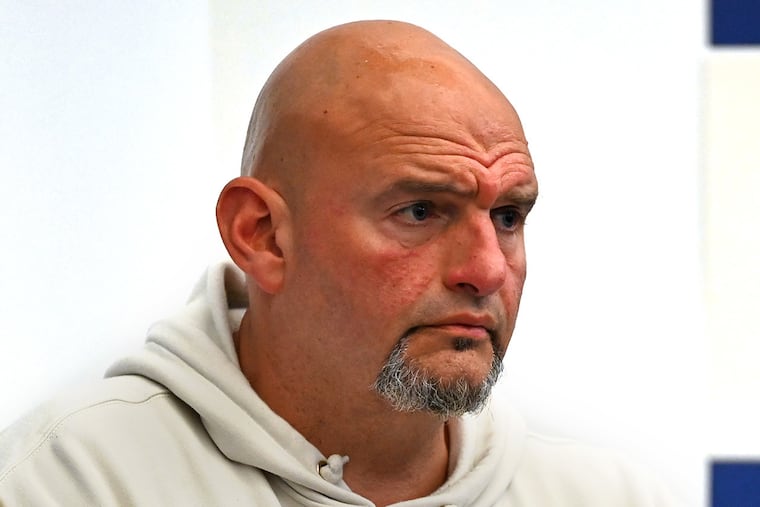
Here in Pennsylvania, an ongoing drama has been the steady rightward drift of nominally Democratic and one-time progressive U.S. Sen. John Fetterman, who now has a positive approval rating from the state’s GOP voters, even as Democrats scramble for a 2028 primary challenger. Fetterman has broken with his party to support Trump’s war in Iran, and quickly endorsed his controversial new pick for Homeland Security secretary. Last week, The Inquirer’s Aliya Schneider added a new twist: The senator’s wife, Gisele Barreto Fetterman, who came to the United States from Brazil without documents, has taken down her social media accounts, where she’d criticized the Trump regime’s immigration raids earlier this year. Given his betrayal of those of us who voted for him, I think Fetterman should resign and then run for his open seat as a Republican, the party he belongs to now. That won’t happen, but whatever does, I predict The Inquirer will be first with the story. Why not subscribe and read all about it?
By submitting your written, visual, and/or audio contributions, you agree to The Inquirer’s Terms of Use, including the grant of rights in Section 10.

Sign up for the Will Bunch Newsletter