Is Google a bigger threat to democracy than Trump? | Will Bunch Newsletter
Plus, Sen. Andy Kim deals with more trash: ICE.
The Rev. Dr. Martin Luther King Jr. said many memorable things, but none so profound as this: “I have decided to stick with love,” he said. “Hate is too great a burden to bear.”
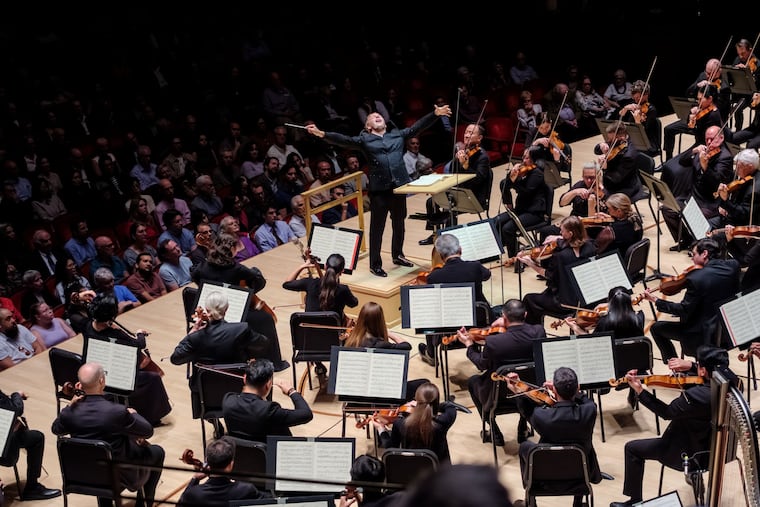
I wonder what MLK would have thought about the final broadcast of The Late Show with Stephen Colbert on CBS. With every right to be filled with rage over his ouster by the network’s new Donald Trump-kowtowing owners, Colbert’s last shows were filled instead with gentle humor and goodbye hugs, as his staffers joyously bounced onto the stage of the Ed Sullivan Theater for a moving rendition of “Hello, Goodbye” by Paul McCartney and an all-star band.
Trump later posted an AI video that fantasized about tossing Colbert in a trash dumpster. One of these men will probably live to be 100, while the other bears the burden of hate.
If someone forwarded you this email, sign up for free here.
Google’s irrepressible AI will answer your questions. Truth? That’s more elusive.
Google, the Silicon Valley giant that started in the more naively optimistic 1990s with the motto “Don’t be evil,” has been soft-launching a major overhaul that fully incorporates artificial intelligence into its search results over the coming weeks.
Users are finding that the new Google is impossible to disregard.
By which I mean, searchers find it impossible to specifically search for the word disregard and get the correct definition you’d find if you threw open your grandfather’s yellowing Funk & Wagnalls dictionary. Google’s unseen robot, it seems, thinks you are giving it a command — that you are telling it, fuhgeddaboudit.
“Understood,” Google told one user after he typed the word disregard in the search bar. “Let me know what you’d like to work on or explore today instead!” Another user was told, “Consider the prompt null and void!” while others have faced similar illogic when seeking an old-fashioned definition of the word ignore.
Mortified executives back at Google’s headquarters in Mountain View, Calif., immediately canceled the … just kidding, of course, nothing was canceled, there is no turning back for our new AI overlords.
Google, which spends an estimated $185 billion or more every year on those big, annoying data centers and other AI infrastructure, is plowing ahead with a revolution in what we see when we search for information or news on our phone or laptop.
And since 1789, it’s been impossible to have a revolution without chopping off a few heads.
If you’ve been using Google for the last 25 to 30 years, you know how a query has led to pages of resources — articles from mainstream news sources, government reports, music videos, etc. In the last year or two, however, you’ve probably noticed the page usually begins with a short summary provided by Google’s AI tool, Gemini.
Now, the tech monolith that renamed its parent company as Alphabet — probably to confuse you from wondering what happened with that “Don’t be evil” thing — wants to eliminate the middleman altogether. That would be the media, which literally comes from the Latin word for “middle.”
“In other words,” wrote Puck’s Julia Alexander recently, “a question like ‘where is the World Cup’ might yield a result that ties in a user’s Google Maps, Google Wallet, YouTube, and previous search history as it becomes ‘where is the World Cup, what are some of the lowest ticket prices, and which New Jersey transit option is the best for me if I’m coming from my apartment in Brooklyn.’ What once spurred 10 blue links to other websites will now surface more YouTube Shorts and ads. Technologists cheered. Publishers passed the antacids once again.”
The new and allegedly improved AI landscape at Google is confusing to us regular schmo users trying to figure out the difference between Gemini, the core of the company’s AI, and AI Overviews, which are the brief summaries at the top of a search query, and AI Mode, a kind of mash-up of the two. But Puck’s Alexander noted that the new changes amount to what one company critic has called “Google Zero” — the day that searches stop leading to publishers altogether.
For Google leadership, agentic AI is a matter of self-preservation. If other users turn to pure AI sites like OpenAI’s ChatGPT or Anthropic’s Claude for faster and more concise information, Google might see its roughly $250 billion a year in ad revenue dry up. The publishers who printed centuries’ worth of news and other knowledge that trained Gemini and its AI rivals are now chopped liver in this brave new world.
“Another sort of death blow” is how Roger Lynch, the chief executive of Condé Nast, the publisher of iconic titles like Vanity Fair and the New Yorker, recently described the drop in web traffic as Google continues to ramp up AI. He explained that Google was the source of the majority of traffic to Condé Nast websites a couple of years ago, but that plunged to 25% last year — before Google Zero.
Think about what this means. The New Yorker — to name just one magazine in Lynch’s portfolio — changed America with articles like John Hersey’s “Hiroshima,” Rachel Carson’s “Silent Spring,” and Seymour Hersh’s “Torture at Abu Ghraib.” Getting those stories took a great deal of time and resources, which require money, which requires ads or willing subscribers, which requires traffic.
I could throw a bunch of statistics at you, but everyone sees what is happening. I work at a traditional news organization, and I have friends scattered across the media landscape, and we can all see that fewer people are reading our work. This, after newspapers — the bread and butter of traditional media — have already lost at least 15,000 more jobs since the start of the 2020s. With AI, many of us are waiting for the other shoe to drop.
The biggest share of losses has come at smaller, very local newsrooms in the path of Google’s shredder. Want some irony? Many of these same out-of-the-way places are now seeing an upsurge in grassroots community activism from neighbors furious at the arrival of oversized, noisy, vibration-inducing, water-and-electricity-guzzling data centers that power AI for Google and its leading rivals.
What if no journalists are left to tell the public about Google’s data centers because their papers ran out of money? I don’t think Google’s CEO, Sundar Pichai, and his C-suite colleagues would be heartbroken. A Google AI robot can give you facts, or at least an approximation. You want the truth? You need a human journalist who has a heart in addition to a brain, and hopefully a conscience to boot.
That’s why a free press — with people asking questions and discovering new things, like the grim effects of the first nuclear bomb or spraying DDT as a pesticide — is written into the First Amendment of the Constitution, as a cornerstone of democracy. Google and some of its rivals have invented a tool for destroying that, to impose a dictatorial technocracy that keeps billions of dollars flowing to them, the chosen few.
This has captured the attention of someone important: Pope Leo XIV, who considers the threat to morality posed by AI so significant that he made this the topic of his 42,000-plus-word first papal encyclical, released to the world on Monday. It boils down to the same impulse that Google nurtured and then seemingly forgot: Don’t be evil.
The Chicago native formerly known as Robert Prevost did not specifically address the crisis of AI and journalism, but Leo might as well have when he wrote that AI agents do not have a moral conscience, “they do not judge good and evil, grasp the ultimate meaning of situations, or bear responsibility for consequences. They may imitate language, behavior and analytical skills, or even simulate empathy and understanding, but they do not understand what they produce, for they lack the affective, relational and spiritual perspective through which human beings grow in wisdom.”
There’s a powerful case that Google poses a bigger threat to democracy than Donald Trump, who rails against the media as “enemies of the people” but doesn’t have quite as much power as Silicon Valley to make that enemy disappear. Big Tech has revealed its one-word response to truth.
That word, ironically, is disregard.
Yo, do this!
The United States of America turns 250 in little more than a month, and there must be a better way to celebrate than ultimate fighting at the White House and Christian nationalism on the National Mall. The wildly popular historian Heather Cox Richardson has other ideas. She worked quietly with a high-profile network of allies to produce “250 for 250” — one-minute videos that highlight the best of American activism and innovation. The first batch out this week includes Pennsylvania U.S. Rep. Chrissy Houlahan on women in the military, and another on the 1970 killing of journalist Rubén Salazar.
MS Now’s Rachel Maddow managed to get Memorial Day off, and yet gave viewers a gift: a fascinating recorded interview from New York’s 92nd Street Y with author and historian Steven J. Ross about his new tome: The Secret War Against Hate: American Resistance to Antisemitism and White Supremacy. Ross, the child of Holocaust survivors whose last book, Hitler in Los Angeles, was a Pulitzer Prize finalist, takes a wider lens to the revival of white supremacy in the decades following World War II, and the unsung heroes who spied on the movement and fought back. I cannot wait to read this.
Ask me anything
Question: Can there be another 1/6? — @readrantrage.bsky.social via Bluesky
Answer: I have to feel that the answer is a solid yes, even though the waters ahead are about as uncharted as the western Atlantic was in 1491. My immediate concern is a kind of “mini-Jan. 6″ this January, aimed at stalling or preventing the all-but-certain arrival of a Democratic majority House, which would all but certainly impeach Donald Trump and otherwise make his life a living hell. In theory, the state-certified election winners are the new members of the next Congress, and there should be no way of stopping them from taking office, electing a new speaker, etc. Still, the presumably outgoing Speaker Mike Johnson could certainly try to muck things up, endlessly delaying the start of the new session or maybe refusing to swear in new Democrats, as he did for many weeks last year with then Rep.-elect Adelita Grijalva in a bid to delay the release of the Jeffrey Epstein files. None of that would be remotely constitutional. Will our thoroughly corrupted U.S. Supreme Court care? Stay tuned.
What you’re saying about …
There wasn’t a massive response to last week’s question about the wisdom of data center moratoriums, which apparently doesn’t punch as many hot buttons as a Donald Trump or a John Fetterman query. Those who did respond were pretty united in wanting to slow down the rush for AI infrastructure. “This will only benefit the guys at the top, big corporations,” wrote Louise Willis, who lives near a massive proposed site in Philly’s western suburbs. “Who will not benefit, who will sustain damage and losses, and pay for it? Everybody else.” Frequent correspondent Mary Ann Petro did think proposals should be judged on their merits, but added quickly: “The cooling process, water usage and the electricity required make some of these buildings untenable in the long run.”
📮 This week’s question: In a New York Times guest essay, Maryland Democratic Sen. Chris Van Hollen writes of “the hard truth my party needs to face”: that it’s time to stop taxpayer-funded weapons for Israel and formally recognize Palestine. Do you agree? Please email me your answer and put this exact phrase, “Funding for Israel,” in the subject line.
Backstory on Sen. Andy Kim, decency, and fascism
New Jersey’s freshman U.S. Sen. Andy Kim is a soft-spoken yet steady voice for progressive values with a background in diplomacy — and a knack for showing up to offer decency at democracy’s lowest moments. On Jan. 7, 2021, Kim — then a House member — was launched into a higher political orbit when photographers found him on his knees in the Capitol Rotunda, patiently picking up the debris left the day before by an angry mob of pro-Donald Trump insurrectionists, and placing it in a plastic trash bag. On Monday, Kim found himself confronting the flip side of this brand of fascism: the tyranny of Trump’s return to power.
The scene was outside Delaney Hall, a private prison operated by the GEO Group that houses detainees for U.S. Immigration and Customs Enforcement, not far from Newark’s international airport. Since the surge in ICE arrests after Trump’s return to office, Delaney Hall has turned into a flash point over both the inhumanity of mass deportation and the treatment of the detainees inside, who have complained of rancid food and a lack of medical attention. Kim went there on Memorial Day, as did New Jersey Gov. Mikie Sherrill, seeking access to the facility amid reports of an active hunger strike by 300 detainees.
Sherrill was denied access, but Kim, as required by federal law, was allowed to see the inside. When the senator emerged, he saw an increasingly chaotic scene. A crowd of angry protesters, chanting, “Trump has to go!” had linked arms and attempted to block ICE vehicles they believed were whisking detainees to other prisons. Kim tried unsuccessfully to de-escalate the situation, captured yet again in a viral photograph as he pleaded for peace in front of a van loaded with masked federal officers. As a sharpshooter atop an armored personnel carrier trained his weapon on the crowd, agents fired pepper balls and deployed pepper spray. Kim was seen getting his eyes washed by some demonstrators after the melee.
“What I witnessed and experienced today was shameful,” Kim wrote later on Monday. “Delaney Hall is a failure; it’s this administration’s failure. The only way to make this right for our communities is to shut it down and make sure the failures we’ve seen never happen again.”
This wasn’t the first time public officials have been attacked outside Delaney Hall; New Jersey Rep. LaMonica McIver continues to face trumped-up federal charges from a similar melee just over one year ago. The persistence of Kim, Sherrill, and others is a reminder that despite the recent lull in ICE raids and a downward trend in its detention headcount, thousands still face a humanitarian nightmare on U.S. soil. More than five years after Jan. 6, 2021’s attempted coup, Andy Kim is still laboring to clean up their trash.
What I wrote on this date in 2019
Donald Trump’s second term is so insane that it’s easy to forget what his first term was even like. It was not great. On this date seven years ago, I wrote about Trump’s bullying of a Democratic Congress to block it from getting access to records and testimony from administration officials about the cover-ups detailed in the Robert Mueller report, and other alleged misdeeds. I wrote: “The slow-motion House Democratic strategy of finally issuing some subpoenas after several months in power, then watching them get ignored and finally tied up in court as the clock ticks toward the 2020 election appears hopeless in the face of all-out Roy Cohn-ism.”
Read the rest from May 26, 2019: “Trump bullies Dems, other foes into cowardice. Without courage, America may be lost.”
Recommended Inquirer reading
Just one column last week, as I was able to enjoy at least a sliver of a raw, rainy Memorial Day weekend. In that piece, I looked at the runaway victory by progressive Chris Rabb in Philadelphia’s open Democratic congressional primary, and whether the party’s rising left flank is a sign of what I called a “double wave” election in which an angry base takes aim not only at Trump’s authoritarianism, but also at Dem elites they blame for not fighting back.
With the Sixers and Flyers gone, and soccer’s Union already cooked halfway through a dismal season, Philadelphia turned its full attention to its other favorite sport last week: brass-knuckle politics. Anchored by some surprising results in last Tuesday’s primaries, but also including the latest installment of the John Fetterman follies, the list of last week’s most-read Inquirer articles is almost all political. The most essential coverage told you what results like progressive Chris Rabb’s landslide win in Philadelphia’s 3rd Congressional District and the potential coattails of Pennsylvania Gov. Josh Shapiro mean for a November election that looks like a pivot point for the fate of democracy. Don’t let a paywall stand between you and the next five months of essential political journalism. Why not subscribe to The Inquirer right now?
By submitting your written, visual, and/or audio contributions, you agree to The Inquirer’s Terms of Use, including the grant of rights in Section 10.

Sign up for the Will Bunch Newsletter